There’s a moment that comes before every train journey in India. It doesn’t happen at the station. Neither does it even happen on the booking site. It happens quietly, usually at home, when someone says, “Let’s do a train fare enquiry first.”

Not the seat. Not the timing. The fare. Because deep down, everyone knows that train travel in India runs on assumptions and fare enquiry is what breaks those assumptions. People think Sleeper is cheap. They think AC is expensive. They think Tatkal is always outrageous. And sometimes they’re right. Sometimes they’re not.
That uncertainty is exactly why train fare enquiry matters more than it’s given credit for. It isn’t a formality. It’s a reality check.
What Is Train Fare Enquiry?
Train Fare enquiry refers to the price of a ticket for a certain train on a certain day. The ticket price also depends on different other factors like the Boarding and the Deboarding station. The class of the train selected also plays a vital part in determining the train fare.
It also quietly reveals things people don’t usually think about, like how much of the fare is just the base price and how much is added later. Or how a superfast tag changes pricing even when distance doesn’t change much.
For many travellers, fare enquiry is the first point where assumptions meet facts.
Why Train Fare Enquiry Is Important Before Booking
A surprising number of booking problems start because someone skipped this step. People book first and calculate later. Then they cancel. Or worse, they travel irritated, feeling they overpaid.
Fare enquiry helps avoid that. It tells you upfront whether the journey fits your budget or not. It lets you compare two trains running on the same route and see why one costs more. Sometimes it’s speed. Other times it’s class composition. Sometimes it’s just categorisation.
It also helps families. When you’re booking for children, parents, or elderly passengers, age rules and concessions change the final amount in ways people don’t always anticipate.
Fare enquiry isn’t about curiosity. It’s about control.
How To Perform Train Fare Enquiry Online (Step-by-Step)
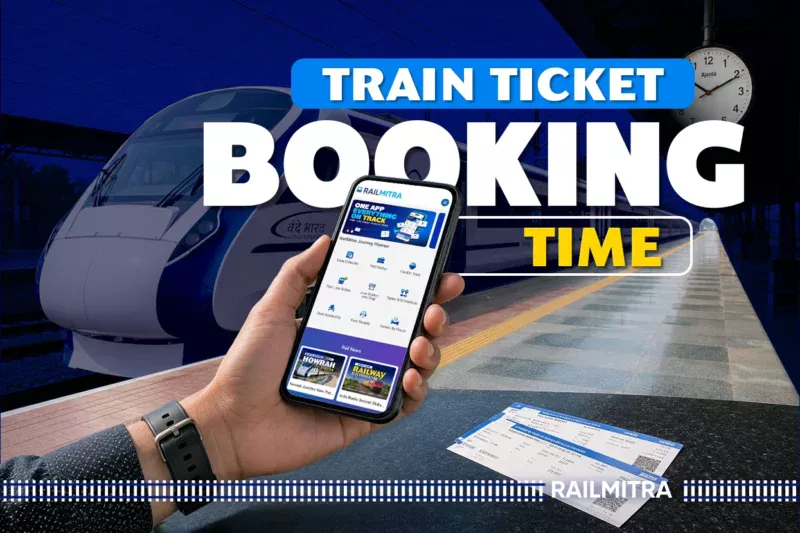
Online train fare enquiry works smoothly if you don’t rush it. Just open the RailMitra website or the train app which is available in Android as well as iOS.
Step 1: Open RailMitra Menu
Go to RailMitra website or install the application. Once you do that, go to the RailMitra home screen. At the top right, there will be Three Horizontal Lines, click on that. As you click the Three Horizontal Lines, you will be prompted to the RailMitra Menu.
Step 2: Select Fare Enquiry from Rail Tools
In the RailMitra menu there will be an option of RailTools. Click on it and a drop down menu will be shown. From this drop down button select Rail Tools option.
Step 3: Enter Train Name or Train Number
Train numbers are always safer. Names can be misleading, especially when similar services exist on the same route.
Step 4: Select From and To Stations
This part matters more than people think. Fare is station-specific. Boarding from a nearby junction instead of the main station can change the amount.
Step 5: Choose the Boarding Date
Fare depends on the date because quota availability and booking categories are date-linked.
Step 6: Select Travel Class
Each class is priced differently. This is where the biggest differences usually appear.
Step 7: View Fare Details
Now you see the actual numbers, not estimates.
Tools like RailMitra keep this process separate from booking, which is useful. You’re allowed to check without committing.
Components of Indian Railways Fare Explained
That final fare number isn’t random. It’s built piece by piece.
Base Fare
This is the foundation. Distance and class determine it.
Superfast Charges
If the train qualifies as superfast, these charges apply automatically, whether you notice them or not.
Reservation Charges
These are fixed and depend on class.
GST / Service Tax
Mostly relevant for AC classes. Once you understand this breakdown, fare variations stop feeling arbitrary.
Train Classes and Their Fare Differences
Choosing a class is often emotional. Fare enquiry makes it practical.
First AC (1A)
Private cabins, limited seats, and a high fare. Usually chosen for long journeys where privacy matters.
Second AC (2A)
Still premium, but less expensive than 1A. Quieter and more controlled environment.
Third AC (3A)
Probably the most balanced option. Comfortable enough without crossing into luxury pricing.
Sleeper Class (SL)
The default choice for millions. Cheap, crowded at times, but reliable.
Chair Car (CC)
AC seating, usually for daytime routes.
Second Sitting (2S)
The most basic option. Cheapest, but functional for short distances. Fare enquiry often shows that moving up one class isn’t as expensive as people assume.
If you want to see the seat availability for different classes in train, you can do so at the RailMitra platform.
IRCTC Fare Rules Based On Age
Age-based rules are straightforward but frequently misunderstood. Children under 5 travel free, but without a seat. Children between 5 and 12 are charged half fare.
Anyone above that pays full fare.Online fare enquiry reflects this automatically, which avoids confusion at booking time.
Indian Railways Fare Concessions You Should Know About
Persons with Disabilities (Divyangjan): 25%–75%
Patients travelling for medical treatment: 50%–100%
Students travelling for education-related purposes: 25%–75%
Selecting the right quota during fare enquiry shows whether the concession is being applied correctly.
Tatkal, RAC, and Waitlist: How Fare Works
Tatkal Tickets
When you book Tatkal tickets, they include an extra charge on top of the base fare. Booking opens at 10 AM for AC classes and 11 AM for non-AC classes.
RAC Tickets
Charged like confirmed tickets. Confirmation depends on cancellations.
Waitlist Tickets
Refundable if they don’t confirm. Fare enquiry helps decide whether paying Tatkal charges actually makes sense.
If you have booked a train ticket, you can check the PNR Status or Booking Status at the fast RailMitra website as well as the application.
Group Booking and Fare Enquiry
For groups larger than six, online booking isn’t allowed. But fare enquiry still plays a role.
It helps calculate total cost, assess affordability, and prepare before approaching railway officials for permission. Without fare clarity, group travel becomes guesswork.
Common Mistakes To Avoid During Train Fare Enquiry
People make the same mistakes repeatedly:
- Forgetting to choose the correct quota
- Assuming Sleeper is always cheapest
- Ignoring superfast charges
- Checking fares without locking the date
- Relying on outdated charts
Most fare issues come from rushing this step.
How Train Fare Enquiry Fits Into Smart Travel Planning
Experienced travellers don’t stop at fare enquiry. They usually check:
- seat availability
- train schedules
- live running status
- PNR updates
RailMitra combines these tools, which reduces uncertainty before travel.
Final Thoughts
Train fare enquiry isn’t just about money. It’s about understanding how the system works. When you check fares properly, you travel with fewer assumptions and fewer surprises. You make better choices about class, timing, and budget.
Before booking your next ticket, slow down for a minute. Check the fare. Look at the breakdown. Then decide. That small pause often changes the entire journey.