
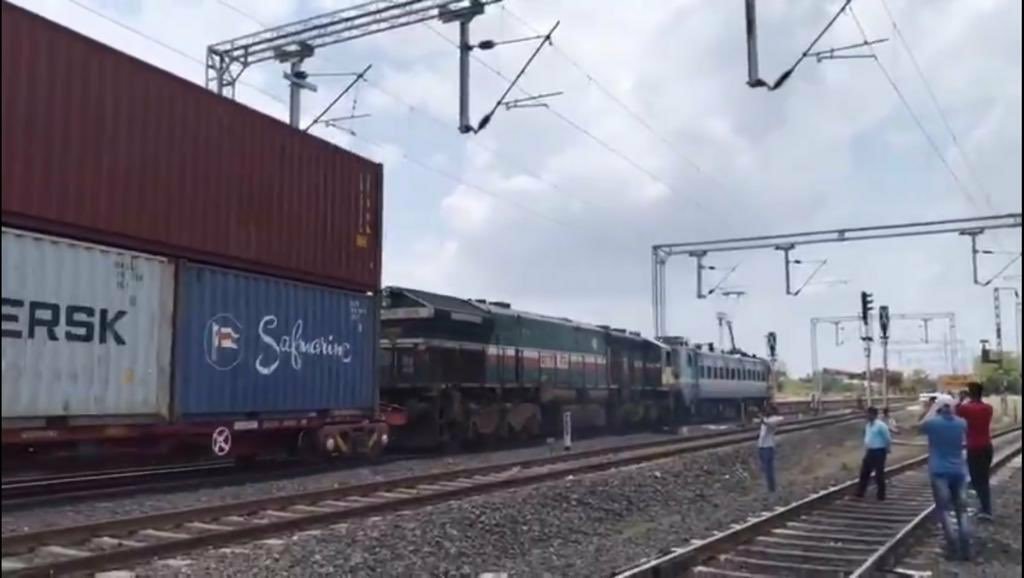
Indian Railways has recently operated a double-stack container train and set a new world record on the electric overhead line for the first time in the history.
Indian Railways has successfully run the first high-rise double-stack container service in the electrification of Western Railway with overhead equipment. By doing this, Indian Railways has created a new world record. This is the first of its kind in the world, which will lead to an ambitious campaign of Green India. The Ministry of Railways stated that “With this significant achievement in railway high-rise, the Indian Railways has become the first railway in the world to run double-stack container train with high productive pantograph facility in the Overhead Equipment Territory.”
Also Read: Indian Railways Has Deployed 500 Isolation Coaches in New Delhi
Rail Minister Piyush Goyal Tweeted This Information
The Railway Ministry said in its statement – It was successfully operated from Palampur and Botad railway stations of Gujarat on June 10. Railway Minister Piyush Goyal tweeted – Government led by Prime Minister Narendra Modi promotes innovation, speed and adaptation in freight operations. The ministry said the national transporter is focusing on compensating for the damage caused during the nationwide lockdown imposed to combat the spread of the coronavirus. The railways aim to collect more freight than last year’s transportation.
18 Lakh Wagons Operated During the Lockdown
Railways transported 17.8 million tonnes of goods from April 1 to June 10 this year. During the lockdown, supply was continued through more than 32.40 lakh wagons, so that the demand and supply chain in the country would continue. Out of these, 18 lakh wagons carried essential commodities like coal and fertilizers, petroleum products, fruits and vegetables, onions, edible oils, milk, sugar, salt and grains across the country.
12.74 Million Tonnes of Food Grains Have Been Loaded by Railways
Between April 1 and June 10, the Railways had loaded 12.74 million tonnes of food grains as compared to 6.79 million tonnes in the same period last year. Besides, the railways operated 3,897 parcel trains from March 22 to June 10. Out of these, 3,790 were special parcel trains, through which 1.39 lakh tons of freight were transported.