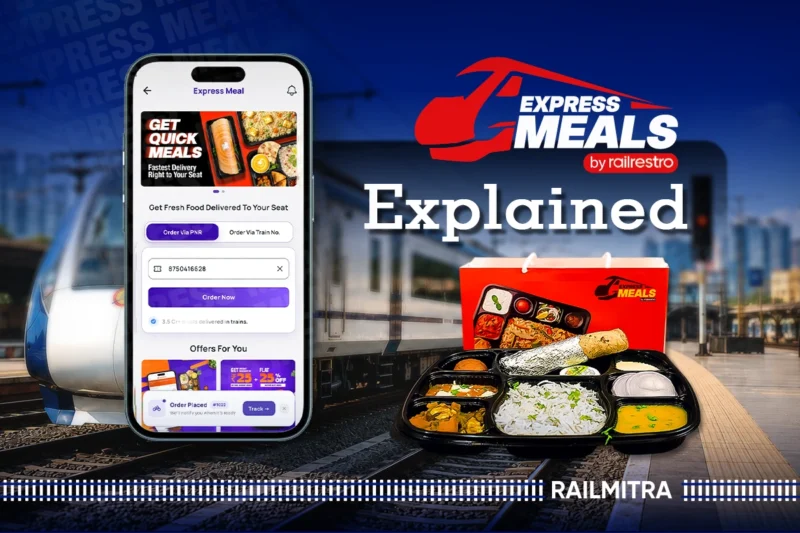
You are still checking your ticket details on your phone when the food tray lands on the table in front of you. No aisle vendor shouting out prices this time, no wondering if the pantry car ran dry three coaches back. Express Meals is the name for that shift, food reaching a moving train on schedule instead of by chance, and somewhere along the way it changed what eating on an Indian train actually feels like.

What Is Express Meals
Express Meals refers to the newer model of food delivery built around speed, order accuracy and predictable timing rather than the old system of onboard vendors and pantry cars. Instead of hoping a pantry attendant walks past your berth, you place an order in advance and it reaches you at a scheduled station stop. That’s the whole shift in one line. Food stops being a matter of luck and becomes something you can actually plan around.
Sounds easy enough until you count the stations. Hundreds of them, each running its own kitchen on its own clock, and none of those clocks quite agree with the train’s actual arrival time. Some platforms hand the delivery team barely two minutes before the whistle blows again. Miss that gap and there’s no do over, just a hungry wait until whatever station shows up next.
The Old Way Trains Fed Passengers
Pantry cars used to be the only option. A single kitchen, often cramped, cooking for hundreds of passengers spread across a dozen coaches. Quality varied wildly. Some pantry staff took real pride in their cooking. Others just wanted the shift to end.
Then came the vendors who boarded at intermediate stations, carrying baskets of samosas, tea and packaged snacks. Convenient, sure, but limited. You ate what was available that day, not what you actually wanted.
Stale food and inflated prices came up often enough in complaints that most seasoned travellers stopped bothering with onboard food altogether, choosing instead to carry their own tiffin from home. That habit alone says something about how little trust the old system had earned over the years.
From Pantry Cars to Preordered Plates
Somewhere between the pantry car era and now, e-commerce logic crept into railway catering. If you could order clothes online and have them arrive at your door, why not order a meal and have it arrive at your seat?
The technology existed already. What changed was the willingness to connect station side kitchens with real time train tracking, so a restaurant near Nagpur knows exactly when your train will pull in, down to the minute, and starts cooking accordingly. That timing piece is what separates Express Meals from a regular food delivery app. The kitchen isn’t just cooking for a fixed address. It’s cooking for a target that’s moving at ninety kilometres an hour.
How Express Meals Actually Works
Here’s roughly how it plays out on a real journey. It usually starts with checking the PNR to see which stations are still ahead, then picking a restaurant near one of them. The order gets placed, payment goes through online, and a confirmation comes back with a delivery time tied to when the train actually reaches that station. Cooking happens on that same schedule too, timed to the arrival rather than finished an hour early, since nobody wants a meal that’s gone cold waiting around.
A delivery agent meets the train at the platform, finds your coach and seat number, and hands over the packed meal. The whole exchange usually takes under a minute once the train has stopped.
What makes this workable at scale is that you can book food in train well before you’re even hungry, sometimes hours in advance, which gives the kitchen enough lead time to actually cook rather than assemble something rushed. Passengers who plan their meals this way rarely deal with the scramble that used to define pantry car ordering.
Choosing What Lands on Your Tray
Menus used to mean one thing on Indian trains: whatever the pantry had that day. Express Meals flipped that. Now you’re choosing from multiple restaurants near each station, each with its own specialities, ranging from a simple thali to biryani to regional snacks specific to that part of the country.
A stretch through Andhra Pradesh usually brings restaurants known for tamarind rice and proper Andhra thalis on the menu. Cross into Punjab and butter chicken with fresh parathas tends to show up instead, cooked by kitchens that have clearly been making the same dishes for years. Regional range like this simply didn’t exist under the old pantry system.
Meeting Every Dietary Need
Dietary restrictions used to be an afterthought on Indian trains, if they were considered at all. Vegetarian meant whatever vegetable happened to be in the kitchen that day, and anything more specific was simply unavailable.
That’s changed considerably. Restaurants participating in Express Meals now list dietary tags clearly, vegetarian, non vegetarian, and specific requirements like jain food in train orders, which excludes root vegetables and follows strict preparation rules. A Jain passenger travelling for a wedding or a business trip no longer has to carry packed food from home out of fear that nothing suitable will be available en route. That’s a small change on paper but it matters enormously to the people who need it.
Feeding a Whole Coach at Once
Weddings, school trips, office outings, whole coaches sometimes travel together, and feeding twenty or thirty people through individual orders gets messy fast. Different arrival times, different payment confirmations, someone’s order lost in the shuffle while everyone else already has their food.
A group order solves most of that mess in one move. Thirty seats, thirty meal preferences, all folded into a single order that names each berth instead of scattering thirty separate transactions across the app. The kitchen reads it as one job, not thirty small ones, and cooks accordingly. Delivery follows the same pattern. One drop, one coach, done in the time it would otherwise take just to sort out who ordered what.
The App Behind the Meal
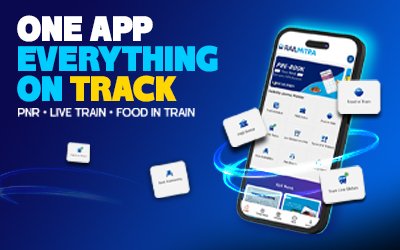
None of this works without something tying it together, and that’s where a dedicated train food app comes in. RailMitra’s app is built specifically around this problem, pulling your live train running status, matching it against restaurant availability near upcoming stations, and letting you place the order without juggling three different platforms.
The convenience isn’t just about avoiding hunger. It’s about certainty. You know what you’re eating before the train even reaches the station, you know roughly what it costs, and you know it’s coming from a kitchen that’s cooked for train passengers before and understands the tight delivery window involved.
Timing, Tracking and Trust
Timing is everything in this system. Order too late and the kitchen might not finish in time. Order too early and there’s a real risk the food sits waiting, losing whatever heat and freshness it had.
Most platforms handle this by locking order windows to actual train movement rather than a fixed clock time. If the train is running late, the kitchen gets notified and adjusts. If it’s running early, that same notification goes out the other direction. None of this looks glamorous from the outside, syncing kitchen timing against a moving train, but that unglamorous coordination is exactly what makes the passenger’s side of the experience feel effortless.
Hygiene Standards That Matter
Food safety complaints plagued the old pantry system for years. Cramped kitchens, inconsistent inspection, food sitting out longer than it should. Express Meals partners are generally held to sharper standards because the restaurants involved are established establishments with existing licenses and reputations to protect, not a makeshift kitchen bolted onto a train carriage.
That doesn’t mean every single order is flawless. Mistakes happen, delays happen. But the accountability structure, a named restaurant, a delivery record, a customer support channel, gives passengers somewhere to actually direct a complaint, which the anonymous pantry car system never really offered.
Regional Flavours on the Rails
One underrated part of this shift is what it’s done for regional food businesses near railway stations. A small thali restaurant near a mid-sized junction now has access to hundreds of passengers passing through daily, something that would have been impossible under the old centralised catering model.
For passengers, this means a train journey from Chennai to Delhi can taste completely different depending on which state the train happens to be crossing at mealtime. That’s a genuinely nice side effect of a system that was really built to solve a logistics problem.
Tips for a Smooth Meal Order
Lead time helps more than people expect, an hour or two before the station tends to keep the kitchen from rushing the order. Seat and coach numbers deserve a second look before confirming, since one wrong digit sends the delivery agent walking right past the correct berth.
Weaker network zones on longer routes can occasionally drop a transaction mid payment, so keeping cash or a backup method on hand avoids the scramble. Specific dietary needs are worth spelling out in the order notes too, rather than trusting the restaurant to guess correctly.
Conclusion
Something has genuinely shifted here. Express Meals took a system that ran on guesswork and gave it an actual structure. It added coordination, timing, and real choice on the plate. The passenger who used to pack a tiffin out of sheer distrust is now the same passenger waiting at their seat for a hot tray. The kitchens behind it answer to real standards now. The delivery window has gotten tight enough to trust.
Nobody expected catering to become something passengers looked forward to. It has anyway, one meal landing exactly on time, wherever the train happens to be that day.
FAQs on Express Meals
Q. Can I order food for a journey with multiple stops?
A. Separate orders work for each station along the route, so meals can be timed to when hunger actually shows up rather than bunched into one early order.
Q. What happens if my train is delayed?
A. Most platforms track live train status and adjust the kitchen’s preparation timing accordingly, so the food isn’t ready and cooling for an hour before you actually arrive.
Q. Is advance booking required?
A. An hour or two of lead time before the station gives the kitchen room to prepare the meal properly instead of rushing through it.