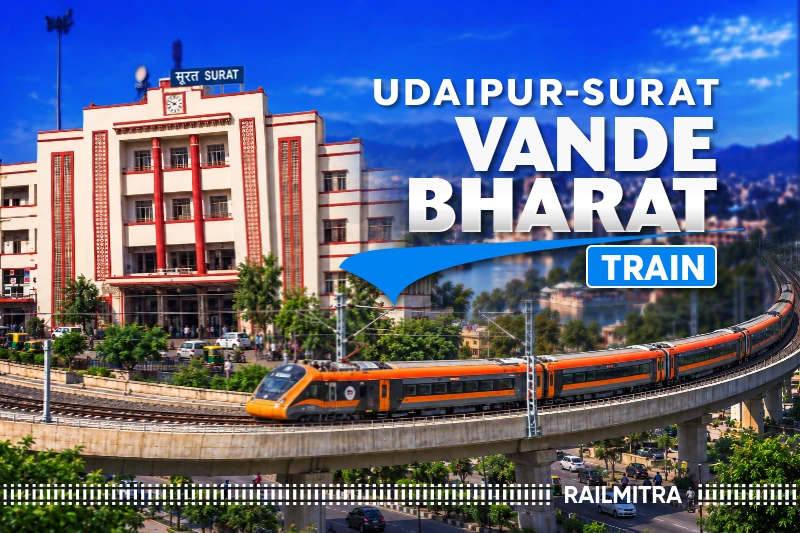

Indian Railways is planning to execute the biggest expansion in its operations in recent years. The passengers are increasing steadily. Indian Railways will also develop stations around major terminals to distribute train traffic and reduce pressure on single hubs. The aim is to fulfil the demand of the passengers to ease the congestion and strengthen the connectivity so that they can easily commute.

Quoted Union Railway Minister Ashwini Vaishnaw: Our focus is to increase the coaching terminals and uplift the sectional and operational capacity across different cities. The aim is to address the passenger demand and minimize the overcrowding. The initiative leads to upgrading the Indian Railway’s nationwide connectivity.
Growing Passenger Load Behind the Decision
The passengers’ travel demand has been increasing day by day in recent years. The pressure is all on Indian Railways to expand its network. Plenty of major cities are already operating at the maximum capacity of terminals, and now it is difficult to accommodate more growth in the future. Indian Railways will execute this plan in 48 major cities by the year 2030.
Indian Railways needs to urgently upgrade the present infrastructure to handle the foreseeable increase in traffic. The congestion at the main stations majorly affects the punctuality and operational efficiency. Indian Railways has focused on scaling up its current facilities, and these must be augmented to fulfill passengers’ travel requirements and ensure a smooth journey for them.
More and more people are choosing to travel by train. Workers, travellers, and holiday crowds use the same major stations at the same time, leading to severe congestion. Delays at originating points often affect the entire route, making Train Schedule adherence difficult and causing uncertainty around PNR Status confirmations.
What the Expansion Plan Includes
To reach the target by 2030, Indian Railways has already prepared a detailed infrastructure roadmap. This will lead to the additional platforms at existing terminals, expansion of stabling lines, pit lines, and Repositioning facilities, and the new terminals. This stability in major urban areas.
The development of mega coaching complexes has strengthened as the maintenance capacity increases. Indian Railways upgraded its traffic and signalling systems and will implement multi-tracking projects on heavy-traffic routes to increase sectional capacity. According to the officials with the upgradation and changes will improve the punctuality and make live train status updates more accurate for the passengers.
48 Cities Selected Across the Country
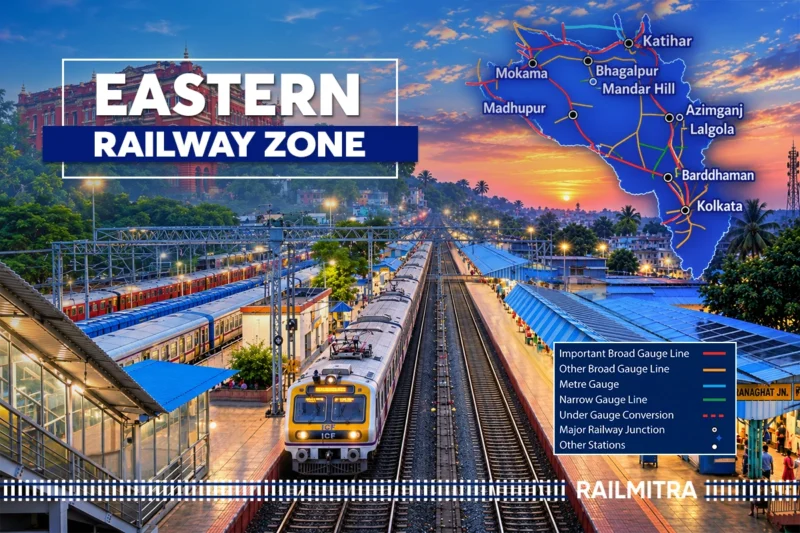
In these cities, double its capacity in every railway zone and it includes these major cities, Delhi, Mumbai (Central and Western Railway), Kolkata (Eastern, South Eastern and Metro), Chennai, Hyderabad, Bengaluru, Ahmedabad, Patna, Puri, Lucknow, Pune, Nagpur, Varanasi, Kanpur, Gorakhpur, Mathura, Ayodhya, Agra, Pandit Deen Dayal Upadhyaya Junction, Chandigarh, Ludhiana, Amritsar, Indore, Bhopal, Ujjain, Jammu, Jodhpur, Jaipur, Vadodara, Surat, Madgaon, Kochi, Bhubaneswar, Visakhapatnam, Vijayawada, Tirupati, Haridwar, Guwahati, Bhagalpur, Muzaffarpur, Darbhanga, Gaya, Mysuru, Coimbatore, Tatanagar, Ranchi, Raipur, and Bareilly.
Focus on Satellite Stations to Reduce Pressure
Indian Railways is planning the development of nearby stations to ease traffic pressure. The idea is to avoid over-dependence on a single hub.
In Pune, for instance, upgrades are planned at Hadapsar, Khadki, and Alandi stations. Additional platforms and stabling lines are also proposed at Pune station. Officials said other cities will adopt similar models, with surrounding stations developed to handle originating and terminating trains.
Phased Rollout Over the Next Five Years
The major aim is already set for 2030; this will be phased over for the next 5 years. The Project plan includes the required measures, short-term work, and most crucial infrastructure projects. With the implementation of this, passengers could see the beginning of improvement earlier. If you want to see the Train schedule, PNR status, and real-time tracking through the live train status system.
Railway authorities in India strongly believe these upgrades will reduce congestion at major stations. The predictability of operations increases, and the network helps to enhance future growth.