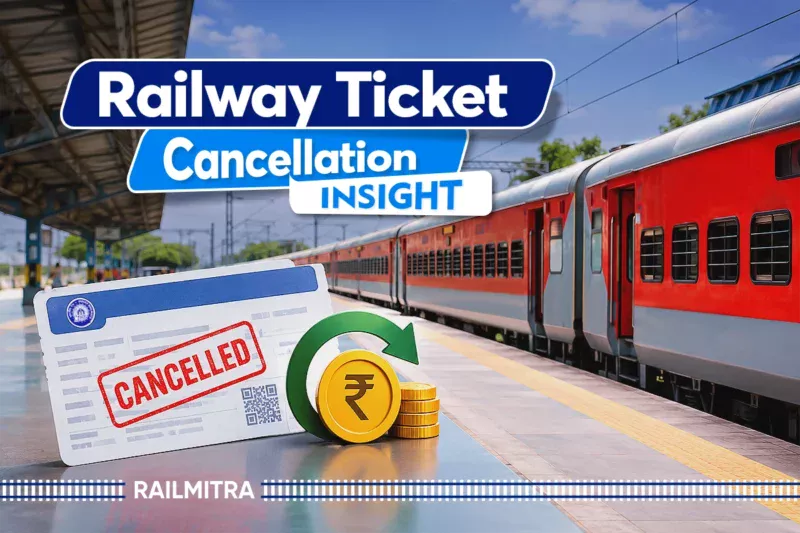
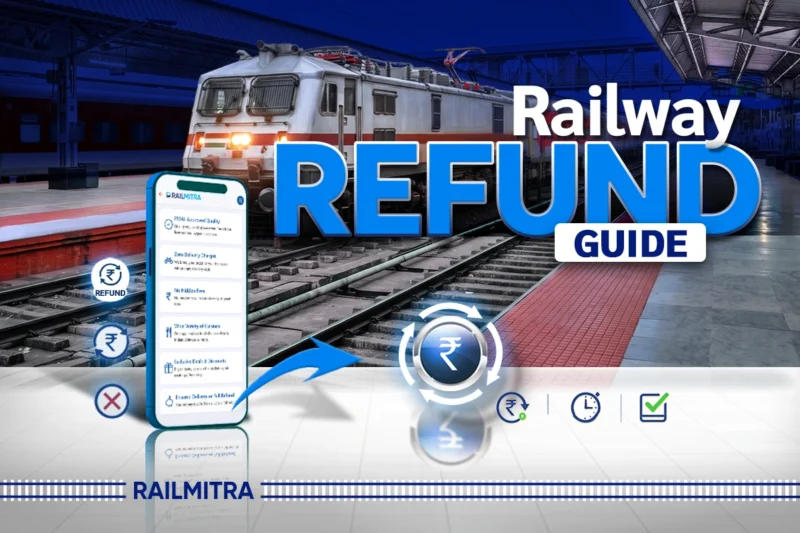
You miss a train, and the first thing your brain does isn’t guilt. It’s arithmetic: how much of that fare is coming back? Indian Railways changed the answer to that question in April 2026, without much noise about it. Whatever IRCTC refund rules you saved to your phone last year are probably wrong now. Whether you’re holding a confirmed berth, a waitlisted PNR, or a Tatkal ticket that went sideways, the amount you get back depends entirely on timing and ticket type. This blog gives a thorough explanation of the railway refund policies. It explains under what circumstances one could use travel document refunds (TDR). It also illustrates how the reader can check the train timetable and choose the optimal travel option before contemplating cancellation.

IRCTC Refund Rules for Confirmed Tickets (Updated April 2026)
April 1, 2026. That’s the date the cancellation windows moved, and most passengers still book like it’s the old system. If you cancel a ticket more than 72 hours before departure, you pay only a flat refundable fee: 240 for AC First, 200 for AC 2 Tier, 180 for AC 3 Tier and Chair Car, 120 for Sleeper, 60 for Second Sitting. If you leave it past that 72 hour threshold, the cancellation fees become much higher. Between 72 and 24 hours out, a quarter of the fare disappears. Get closer still, somewhere in that 24 to 8 hour stretch, and it’s half your money gone.
If your ticket gets canceled less than 8 hours before your train departs, there won’t be any refunds whatsoever. The deadline was previously 4 hours, so in essence, the railways almost quadrupled the time during which the railways will not issue any refunds, tricking passengers who thought they could still change their minds until the very evening or even the very last minute.
Here is the part people miss: these irctc refund rules apply only to confirmed tickets booked at regular fare. If your ticket is confirmed after being on RAC or waitlist, the same slabs apply once it shows as confirmed on the chart. And if you would rather not cancel at all, IRCTC now lets you reschedule a confirmed ticket to a different date on the same train, paying only the fare difference, with zero cancellation charge attached. For a lot of last minute plan changes, that quietly beats cancelling and rebooking from scratch.
Railway Refund Rules for Waitlisted and RAC Tickets
“font-weight: 400;”>Waitlist tickets play by a different rulebook, and this is the one part of the system that still works in the passenger’s favor. If your ticket never confirms and stays waitlisted by the time the chart is prepared, it gets cancelled automatically. The full fare comes back to your original payment method, no deduction, no TDR required.
RAC tickets sit somewhere in between. If a RAC ticket doesn’t move to be confirmed by chart preparation, it too gets the automatic full refund. Counter tickets booked at the station follow a slower path since the passenger needs to submit the ticket to a counter clerk for verification, but the outcome ends up the same.
One thing that trips people up: this automatic refund only applies if you didn’t cancel the ticket yourself first. Cancel a waitlisted ticket manually before the chart comes out, and you fall back into the regular cancellation slabs, calculated at the time you cancelled. So if your PNR shows a decent chance of confirming, and you can check that using RailMitra’s PNR Status tool, waiting it out might genuinely be worth it.
Train Refund Rules for Tatkal Bookings
Tatkal tickets are where the train refund rules turn unforgiving, and the April update didn’t touch this part. A confirmed Tatkal ticket carries zero refund on voluntary cancellation. You paid the premium for guaranteed confirmation during a rush window, and railways treats that premium as final once the seat is yours. Cancel it an hour after booking or eight hours before departure, the answer stays the same, you get nothing back.
Waitlisted Tatkal tickets are the exception worth remembering. If your Tatkal booking stays on the waitlist and doesn’t confirm by chart preparation, you get a full refund just like any other waitlisted ticket. The distinction is confirmation status, not the fact that you booked the ticket under the Tatkal quota in the first place.
There’s also the case where railways cancel the train itself. In that scenario, even a confirmed Tatkal ticket qualifies for a complete refund, since the cancellation isn’t the passenger’s doing. That single exception is really the only crack in an otherwise strict wall.
Train Ticket Refund Rules When the Train Is Delayed or Cancelled
“font-weight: 400;”>Delays complicate things in a way flat percentage slabs don’t cover, so railways handle them through TDR instead of the standard cancellation route. If your train runs more than 3 hours late from your boarding station and you decide not to travel, you’re entitled to a full refund, provided none of the passengers on that PNR travelled and you file the TDR online before the train actually departs. File it after departure, even by ten minutes, and the railways usually reject the claim.
That timing requirement is stricter than most passengers expect. A night train delayed by four hours doesn’t give you until morning to decide, it gives you until the scheduled departure time itself. Filing a TDR isn’t a rubber stamp either. Railways reviews each request individually, checking whether the delay crossed the threshold and whether the ticket went genuinely unused.
If the train is cancelled entirely by Indian Railways, the process gets simpler. E tickets get refunded automatically, no TDR filing, no counter visit. Counter tickets take the slower path back through the booking counter itself, physical submission, a clerk involved, the whole process. The refund amount doesn’t shrink because of that though, it stays the full fare no matter the ticket type or how close to departure the cancellation notice landed.
Checking Seat Availability and Alternative Trains Before You Cancel
“font-weight: 400;”>Cancelling is not always the solution that you have to choose, and in many situations it is quite reasonable to do nothing at all before considering cancellation. Railmitra’s train seat availability tool shows the seat status for each class at any time, meaning that if cancellation of original PNR is in your thoughts, you can just find out whether booking fresh ticket on the same train and different class, different date gets you a reserved seat at the cost of cancellation charges of your current ticket that you won’t use.
Sometimes the smarter move isn’t waiting on the same train at all. If your dates have flexibility, RailMitra’s trains between stations service lists every train running your route along with timing and class wise seating, so you can compare a couple of options before deciding whether cancelling is even the right call. A passenger stuck on a long waitlist for one train might find a nearly empty AC coach on a train departing two hours later, and that’s the kind of detail a quick search turns up.
This step matters more under the new refund structure than it did before. With the no refund window now stretching to 8 hours, a wrong guess costs more. Checking availability first, before your cancellation window narrows, is the cheapest insurance against losing the entire fare.
Train Food Delivery While You Sort Out Your Refund
“font-weight: 400;”>Refund paperwork has a way of eating into travel time you didn’t plan to lose, standing in queues or refreshing a status page instead of eating properly. RailMitra’s train food delivery service solves the smaller, more immediate problem: hot meals delivered straight to your seat at your next station halt, ordered from your phone while the refund process runs in the background.
It doesn’t touch your fare or your cancellation charge in any way. It just means the hours you spend deciding whether to file a TDR don’t also become hours without a proper meal. Order once you know your PNR or seat number, and the food arrives timed to your train’s halt at that station, no vendor haggling required. For passengers waiting out a long delay hoping to cross the 3 hour TDR threshold, it’s a small comfort, but the kind that makes an already frustrating day a little more bearable.
How to Cancel Your Ticket and Claim Your Refund
Start by logging into your IRCTC account and heading to My Transactions, then Booked Ticket History. Find the ticket. Hit Cancel Ticket, and you’re most of the way there. What a lot of passengers don’t realize is that you can cancel select passengers on a single PNR instead of the entire booking. That’s handy when it’s just one person’s plans that fell apart, not everyone’s.
Confirm the cancellation, and IRCTC displays the deducted charge and net refund right there before you finalize anything. So there’s no surprise later. A confirmation SMS and email follow within minutes. For e tickets, refunds typically land back in your original payment source within 5 to 7 working days. Banks occasionally take longer on their end.
One hard limit worth remembering: once the chart is prepared, usually around 4 hours before departure, tickets can’t be cancelled through the normal process. At that point your only route back is a TDR. That applies only if you qualify under the delay or non travel conditions covered earlier. Counter tickets follow a similar structure but need physical submission at a reservation counter. So factor in travel time if you’re cancelling a counter booking close to departure.
Railway Ticket Refund Rules and Refund Timelines
Every category above eventually answers to the same underlying railway ticket refund rules. The pace of the process differs by payment mode and ticket type. Online payments through UPI, cards, or net banking generally return within 5 to 7 working days. They are credited straight back to the source account. Wallet payments tend to move faster since there’s no bank intermediary involved.
For waitlisted and RAC tickets getting the automatic full refund, the timeline usually runs 3 to 5 working days. There’s no manual charge calculation slowing things down. TDR claims take longer, sometimes stretching to a few weeks. Each one gets reviewed individually before railways approve or reject it.
If a refund hasn’t shown up after the expected window, checking your registered email for the cancellation confirmation is the first step. Then, raise a query directly with IRCTC support. Have your PNR and transaction ID ready before you reach out. IRCTC support asks for both almost the moment you start the conversation.
Conclusion
Move early, and the April 2026 version of the irctc refund rules works in your favor. Wait until the last few hours, and it quietly works against you instead. There’s a real difference between knowing your cancellation window ahead of time and figuring it out mid panic while a train departs in twenty minutes. Confirmed ticket, waitlisted PNR, Tatkal booking, delayed train, four separate situations with four separate rulebooks, and yet the same idea sits underneath every one of them. Check what else is running before you cancel next time. A refund isn’t always the win it looks like. Often enough, a different train sitting two hours later solves the whole problem better than any refund could.