Sawan Somwar falls on a Monday, but for most of us it stretches into the whole week, doesn’t it. The fasting, the temple visits, the careful watching of what goes into the plate, all of it needs planning, and that planning gets tricky the moment you’re stuck on a train instead of at home.If any of you are going on a trip during Sawan Somwar this year, I know you are already thinking about how to do the vrat without being stuck with eating the undesirable food or not eating anything at all during the journey. RailMitra, a service that solves a major issue for most travelers, comes to your rescue in such a situation. The problem is solved so silently and efficiently that most of us would never have known that there could have been another way.

Every year around this time, the same question pops up on family group chats and travel forums. Someone’s got a wedding to attend two states away, someone else has a work trip they can’t postpone, and both of them are trying to figure out how a Sawan Somwar fast survives a six hour train ride. It’s a small worry in the larger scheme of things, but anyone who has actually gone hungry on a train knows it doesn’t feel small at the time.
Understanding Sawan Somwar and Its Spiritual Importance
People regard Sawan, or Shravan, as one of the most important months in the Hindu calendar because devotees dedicate almost every day of this month to Lord Shiva. Mondays hold special importance during this month because devotees consider Monday Shiva’s day and believe that fasting on Mondays brings good fortune. Devotees believe that fasting brings blessings, removes hindrances, helps single women find suitable partners in many cases, and allows married women to pray for their husbands’ well-being. Its not just about the food you don’t eat but the whole thing is more about the discipline that the fast takes of you.
What makes Sawan Somwar so very different from other days when people fast is the large number of people, throughout the country, who really take it seriously. During this time, the trains are regularly full of pilgrims going to Shiva temples, families going together for darshan, or just people working while keeping fast simultaneously. Somewhere between the temple queues and the train journey, the question of food keeps coming back. What can you actually eat, and where do you find it when you’re forty kilometres from the nearest station.
What You Cannot Eat During the Sawan Somwar Vrat
Sawan Somwar, which is one of the fasting days in the month of Sawan, brings with it dietary restrictions of quite strict nature. A lot, people who have been observing Sawan Somwar since childhood have their heads full of these restrictions. But still, first-timers often get caught off guard. People completely avoid daily essentials such as wheat, rice, and flour in fasting food. So is anything with onion or garlic, which honestly rules out a huge chunk of regular railway pantry food. People completely avoid non vegetarian food, obviously, and they also avoid alcohol.
What remains is a fairly specific set of ingredients. Sabudana (pearl sago), kuttu atta (buckwheat flour), singhare ka atta (water chestnut flour), potatoes, fruits, milk and milk products, as well as rock salt (also known as sendha namak in India), generally make up the ingredients used in fasting food items. A few individuals even refrain from using common table salt on the day of their fast, consuming only sendha namak. People usually allow dry fruits and nuts too, which is why you’ll notice makhana turning up in almost every vrat thali.
The problem isn’t understanding these rules. The real challenge comes when they need to find suitable food after settling into their coach, with three more hours left in the journey and nothing packed from home.
Travelling During Sawan Somwar? Here’s the Real Struggle
Ask people who’ve experienced fasting during travel; they will all give you the same response. The physical hunger is the least of your worries; it’s the lack of predictability that really gets to you. One thing you never get sure of is the station at which you will get to have a meal. You also wonder whether the vendor selling samosas is using onions in them. In most places, the food staff don’t receive enough training to give you details on issues like sendha namak versus regular salt.
This is where a lot of Sawan Somwar observers end up compromising. They either break the fast earlier than planned or survive on nothing but a banana and some water for the entire journey. Neither option feels great, and honestly, neither should be necessary in 2026. Food in train can be ordered straight to your seat with a few taps.
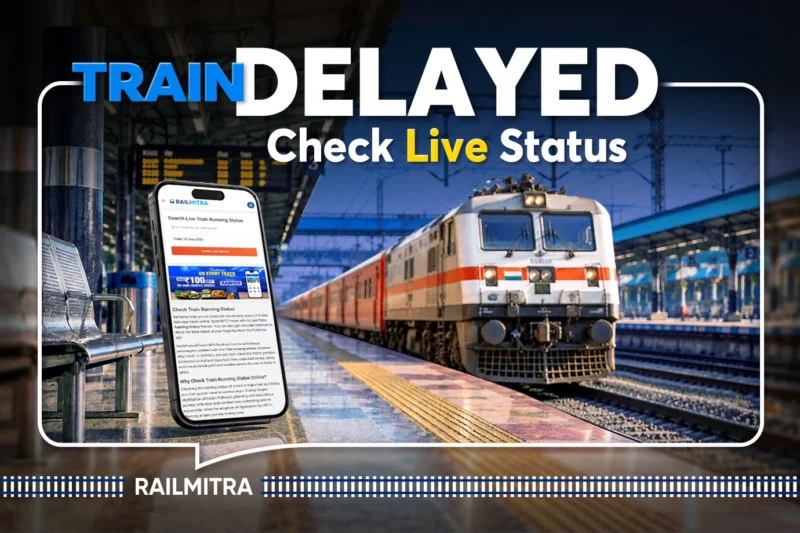
Monitoring the real-time train status turns out practically as significant as the meal you were looking forward to. A delayed train alters completely your plans about time and place of the next meal. Sawan Somwar travellers juggling all of this at once tend to arrive at their destination more tired than the fast itself should have made them.
Having to approach a vendor in the hustle and bustle of a busy station is awkward. You have to inquire if their dish is vegetarian. Meanwhile, twenty other passengers simultaneously make a rushed grab for the last bit of food in the two minutes that the train halts. It seems people either skip the food counter entirely, or opt to eat something they weren’t sure of completely. Both options are very much disconcerting. This is mostly when you have fasted for a valid reason that is dear to you.
How RailMitra Makes Sawan Somwar Easier for Train Travellers
RailMitra, as its name suggests, was a platform that took the idea that train journeys shouldn’t have you choosing your beliefs and your food to its extreme. It gave you the option of food made to satisfy spiritual food restrictions. During Sawan Somwar, this was mainly handy. Since you would be fasting, having food was a necessity. But you could not eat something like regular thali and just skip the onion and garlic. RailMitra helped you find the vendors who sold the vrat food near your route.
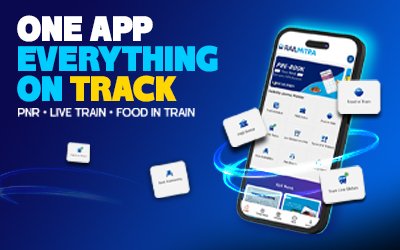
You check your live train status on the app, see which station is coming up next and roughly when, and place your order well in time. The food reaches your seat when the train halts. There is no running around on the platform trying to spot the right stall in a crowd of hundred other passengers. For someone observing Sawan Somwar with a strict eye on what touches their plate, this level of control matters more than convenience. It matters more than convenience alone.
The train food app also lets you filter by dietary preference before you even start scrolling through options. This saves the back and forth of calling a vendor to confirm ingredients. You know what you’re getting before you pay for it.
Vrat Friendly Food You Can Order in Train
Now for the part most people actually want to know. What can you realistically order through RailMitra during your Sawan Somwar fast? The options have grown a fair bit over the past year, and several vendors along major routes now prepare dedicated vrat menus.
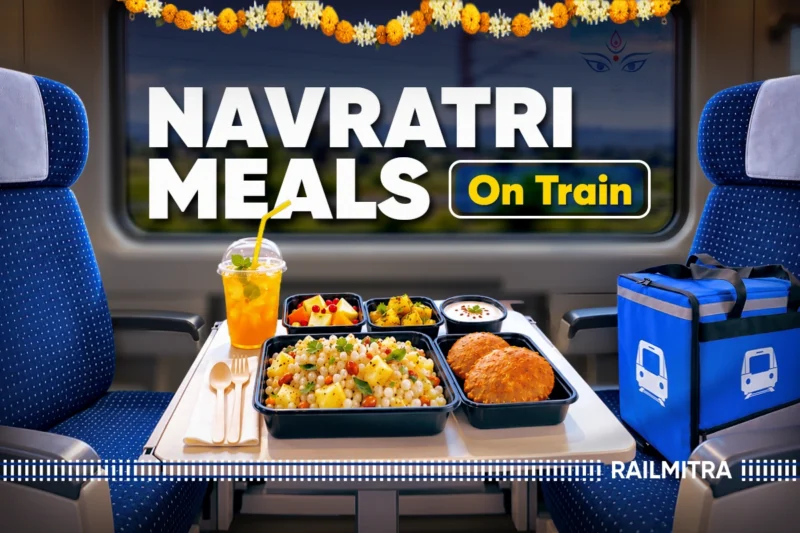
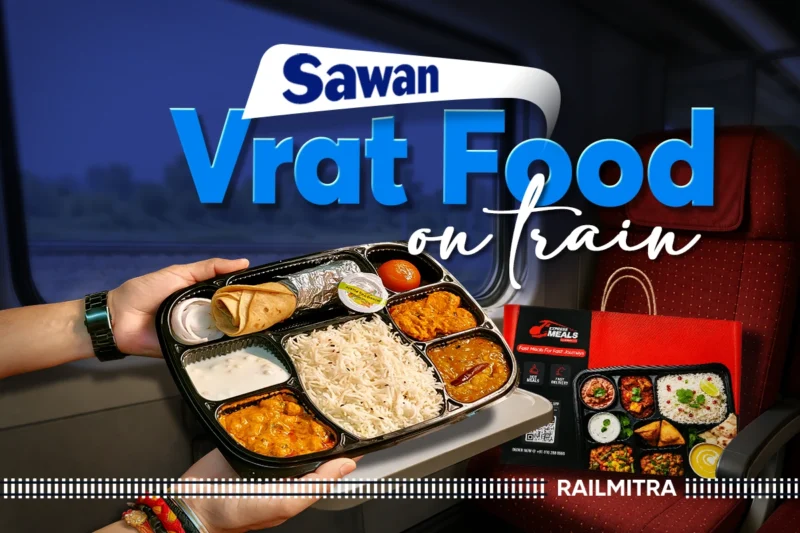
Sabudana khichdi is still the most ordered item during this period for a number of reasons. It fills you up, doesn’t weigh much, and can be packed in a sealed container. Kuttu atta puri with a simple potato sabzi is also another favorite, mainly on longer routes. People want something more substantial than a snack. People who like a cooler option will find that a fresh fruit platter or a bowl of curd works just as well. Most of all on hot Sawan afternoons when it makes heavier food undesirable.
Although the app does not widely advertise it, makhana kheer has become a popular vrat dessert item through the app. On its own, roasted makhana is a great in-between snack. Several vendors also offer a complete vrat thali combining two or three of these items together, priced reasonably for what you get.
If you’re travelling with family, RailMitra’s group order option lets everyone select their own vrat preferences under a single booking. This saves the hassle of placing five separate orders for one compartment. And because a lot of vrat cooking avoids onion and garlic by default, most of these menus double up as pure veg food in train options too. This makes it easier for families with mixed dietary needs travelling together.
Peanut chikki or roasted peanuts also show up fairly often on these menus, useful for nibbling on between meals without breaking any rule.
A Few Tips to Keep Your Vrat Smooth on the Train
A little planning goes a long way here. Try to place your order at least one station before you actually need the food, since vendors need preparation time and last minute orders sometimes miss the halt window entirely. Keep drinking water or coconut water all throughout the journey rather than only after you realize you are already dehydrated. The train compartment dries out the body at a rate that is unexpected even more so in Sawan’s humidity.
A packet of dry fruits is always advisable to carry along as a sort of backup. This is in case the stop at your favorite station is skipped due to schedule change. Also, while some train compartments have their own little stores these days where you can buy snacks, you do have to be a bit more careful about your choices in the matter of vrats.
Vendor listings of most trains via the app have become more transparent in the sense of ingredients these days. So, a little check before you order will help you avoid a big dilemma and regret later. That is what it is all about! Late night hunger during a fast catches people off guard more often than the daytime does. Having something already in hand beats searching for an open stall at a two in the morning halt.
Conclusion: Sawan Somwar Doesn’t Have to Stop for a Train Ride
Fasting is usually related to denial and abstinence but it doesn’t have to be that way. Rather it is all about a choice and the will that is behind those choices. If you observe Sawan Somwar or any other fast, you might often face the dilemma of finding food. You can eat it during the fast. This is mostly on long train journeys that you have no option but to take. RailMitra, an application by Rail Mad, has made that easier for you. The application allows you to do everything from checking live status of trains to ordering a proper vrat thali (fasting dish). It is delivered directly at your seat. The only requirement is to plan for your travel dates, use the app and your train seat. Next time, if you are travelling on a Sawan Monday, it’s going to be the perfect opportunity to experience this for yourself. So, book a seat, check the app, and wait for the food delivery right at your station, on the dot.