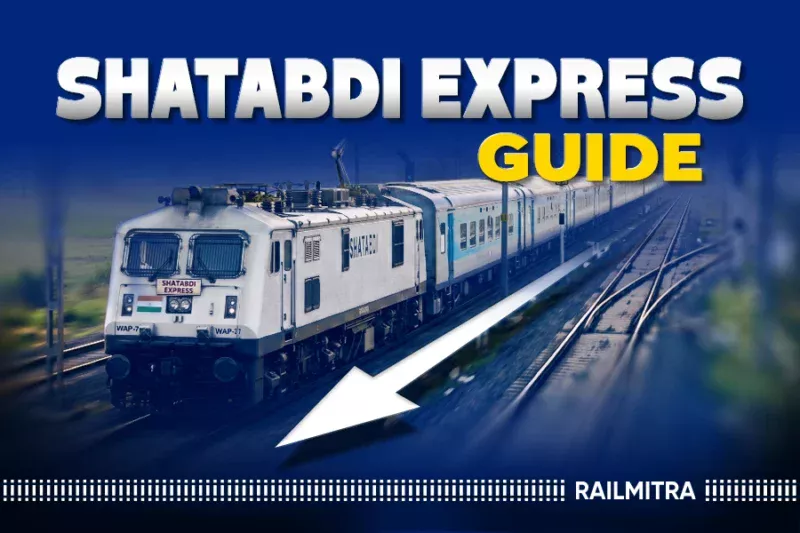
If you have ever boarded the Bhopal Shatabdi Express, the chances are that you will ride it again. Not because this train is extremely gorgeous or has some great interiors, in fact it is just like your everyday train. However, what separates this train is the effectiveness. You board the train in the morning and by the evening you can reach your destination and even return back. You can have your food in the intermediate stations like Mathura and Bhopal.

Shatabdi Express doesn’t have your normal coaches like Sleeper or 3A, 2A or 1A in train. This train has just chair car services and it is a day only train. It even completes the return journey during the course of the day providing an efficient intracity train option.
Indian Railways is launching faster train options like Vande Bharat Express trains. While the Shatabdi Express cannot match the facilities, speed and amenities of the Vande Bharat, it does beat the premium train on one ground. The modern trains are still to reach places where Shatabdi Express connects the passengers seamlessly.
Why It’s Called Shatabdi Express
One hundred years after the first Prime Minister Jawaharlal Nehru was born, a train named Shatabdi Express began its service. It was named after the Sanskrit word “Shatabdi” which literally means a century. Though Nehru would have reached his full century the next year, turning ninety-nine in 1988, officials still launched it then. The first journey started July 10, running from New Delhi straight to Jhansi.
Back when Rajiv Gandhi led the government, Madhavrao Scindia took charge of railways, holding office from 1986 until 1989. After viewing high-speed systems like Japan’s Shinkansen and France’s TGV abroad, inspiration struck – yet thoughts weren’t on copying bullet trains outright. Infrastructure here simply couldn’t support such models then. Instead, his vision focused on crafting a train built for velocity, not merely placed on quicker routes. Speed mattered by design. The debut Shatabdi Express rake hit 140 km/h. At that point, nothing else in India moved faster.
Bhopal was added to the route in 1989. Delhi to Lucknow the same year. By 1992 came the first non-Delhi Shatabdi Express such as Mumbai to Pune. Mumbai to Ahmedabad and Chennai to Mysuru followed in 1994. Six years from one experimental service to trains running across four different zones, not slow, for Indian Railways.
What Makes Shatabdi Express Different
Though often mistaken for Rajdhani or Duronto trains, Shatabdi Express stands apart, not merely an upgraded express. Its identity has remained distinct right from the beginning. What sets it apart hasn’t changed over time.
Every Shatabdi Express runs the same-day, only. Morning sees the train depart from one terminal, moving toward its opposite end before returning when darkness falls – sleeping accommodations absent since rest is unnecessary during such short trips. Anyone looking up Shatabdi Express trains expecting third AC or sleeper coaches discovers none exist, simply due to the schedule leaving no room for overnight travel. Those classes don’t exist on this train.
Included in the cost of the ticket are meals. When it launched, Shatabdi Express became India’s first train to offer food service as part of the ride – passengers receive water, tea, snacks, plus a full meal at their seat. One direction means breakfast; coming back, either lunch or dinner arrives tray by tray. Whether it lives up to the airline-service model it was apparently inspired by is another matter, but you’re not going hungry.
And the halts are few. A train running daily along this route might pause at fifteen or even twenty spots; by contrast, the Shatabdi Express halts only four or five times. Slashing stop count like this prevents sluggish averages. What saves speed isn’t power, it’s fewer breaks.
The Speed Question
Shatadi Express is often termed as a Fast passenger train. However we need to clarify what fast here means. This train is limited by its tracks, not by the train. Most of the times it runs on Group B rails which have the rating of 130 km/h. This cannot be called a fast train by international standards. The fastest Shatabdi Express is the Rani Kamplapati to New Delhi Shatabdi Express (12001/02) which reaches up to 150 kmph on Tughlakabad and Agra Cantonment section.
A better measure to train speed is its average speed rather than the maximum speed it achieves, after it is the net duration of the journey that matters to the passengers and not some random number. Shatabdi Express, at most of the locations, runs at an average speed of 75-90 km/h. This includes the times wasted on traffic, giving passes for faster and more premium trains as well as entering into overcrowded stations like New Delhi or Howrah. Although the speed is not comparable to the newly launched trains it is still better than many express trains.
Rolling stock is at least modern. ICF coaches got phased out in favour of German-origin LHB coaches as they are stiffer, anti-telescopic, disc-braked. Locomotives are typically WAP-5 or WAP-7 electric units. Railways have also removed diesel generators for powering the air-conditioning since 2019 as they were too noisy and heavy in fuel consumption. Now, the power for AC and light comes directly from the location with the help of Head-On-Generation.
Coaches: What You’re Actually Sitting In
Two classes. No sleeper, no 3A.
Chair Car (CC) is the standard with air-conditioning, reclining seats, meal included. For a 5–7 hour journey it’s comfortable enough. Not cramped, not luxurious, roughly a decent domestic flight seat that doesn’t require folding yourself sideways.
Read More: CC in Train
Executive Chair Car (EC) has wider seats, more recline, extra legroom. Some trains also carry Anubhuti coaches, which sit above even regular EC in terms of comfort, with personal screens and dedicated attendant service. Pricing reflects that accordingly.
Weekends see quick bookings for certain Shatabdi Express trains, those on the picturesque stretches between Mumbai and Ahmedabad, also from Guwahati to Naharlagun. Some feature Vistadome cars. Think wide windows wrapping around views, plus ceilings made of glass. Demand spikes sharply when leisure travel rises, no overstating needed.
All Shatabdi Express Trains, Broken Down by Region
Northern Corridor: Delhi to Bhopal, Lucknow & Kanpur
Start here because this is where the network began. Bhopal Shatabdi Express shuttles daily between Delhi and Rani Kamalapati, clocking close to eight hours forty minutes either way – fast, well-used, built to last. Lucknow meets Delhi via Kanpur thanks to Swarna Shatabdi Express, wrapping up in under six hours forty minutes, running once daily each direction. Kanpur Shatabdi Express looks like the rest but covers fewer miles, slipping past quietly while still ferrying people almost every single day.Running about 5 hours, this service skips Sundays, offering a calmer ride when the goal is reaching Kanpur itself.
| Train No. | Route | Departure | Arrival | Days |
| 12001 | Bhopal (RKMP) to New Delhi | 15:15 | 23:50 | Daily |
| 12002 | New Delhi to Bhopal (RKMP) | 06:00 | 14:40 | Daily |
| 12003 | Lucknow (LJN) to New Delhi | 15:35 | 22:20 | Daily |
| 12004 | New Delhi to Lucknow (LJN) | 06:10 | 12:50 | Daily |
| 12033 | Kanpur Central to New Delhi | 06:00 | 11:20 | Exc Sun |
| 12034 | New Delhi to Kanpur Central | 15:50 | 20:50 | Exc Sun |
The Swarna Shatabdi Express on the Lucknow corridor regularly runs at 20-coach capacity. A confirmed seat on short notice is genuinely hard to find, government holidays especially, when Lucknow traffic spikes.
Northern Corridor: Delhi to Punjab & Haryana
The Delhi to Amritsar corridor has more trains than it first looks. 12013/14 runs daily. 12029/30 runs except Thursdays. 12031/32 runs only on Thursdays, to cover the day 12029/30 is off, same timings, same stations, different numbers. If two trains look identical during your Thursday travel plans, remember this tip about schedules. A small timing detail might make one better than the other without showing at first glance.
Most days see the Chandigarh Shatabdi Express (12045/46) rolling out, just skipping Wednesday. A journey longer than three hours defines its short stretch. The trip holds the title for being shortest among peers.
| Train No. | Route | Departure | Arrival | Days |
| 12013 | New Delhi to Amritsar | 16:30 | 22:40 | Daily |
| 12014 | Amritsar to New Delhi | 04:55 | 11:02 | Daily |
| 12029 | New Delhi to Amritsar | 07:20 | 13:30 | Exc Thu |
| 12030 | Amritsar to New Delhi | 16:50 | 22:50 | Exc Thu |
| 12031 | New Delhi to Amritsar | 07:20 | 13:30 | Thu only |
| 12032 | Amritsar to New Delhi | 16:50 | 22:50 | Thu only |
| 12045 | New Delhi to Chandigarh | 19:15 | 22:35 | Exc Wed |
| 12046 | Chandigarh to New Delhi | 12:05 | 15:20 | Exc Wed |
Northern Corridor: Delhi to Uttarakhand
Heading to Dehradun goes one Shatabdi Express train, while another rolls toward Kathgodam – different paths, separate purposes. Daily runs they may have, yet those on board seek unlike destinations. People filling the Dehradun route often chase mountain escapes such as Mussoorie or holy spots around Rishikesh and Haridwar. Six hours nearly pass, each way, before reaching these places. Meanwhile, travelers aiming for Nainital or towns across Kumaon choose the Kathgodam route instead. Its duration matches closely, running nearly five and a half to six hours. Each train serves terrain, and purposes, far apart.
| Train No. | Route | Departure | Arrival | Days |
| 12017 | New Delhi to Dehradun | 06:45 | 12:55 | Daily |
| 12018 | Dehradun to New Delhi | 16:55 | 22:50 | Daily |
| 12039 | Kathgodam to New Delhi | 15:10 | 20:50 | Daily |
| 12040 | New Delhi to Kathgodam | 06:20 | 11:55 | Daily |
Leaving Delhi while it’s still morning means arriving in the hills by midday – timing makes a real difference when hunting for transport in Nainital past 2pm during busy times.
Northern Corridor: Delhi to Himachal (Kalka Shatabdi Express)
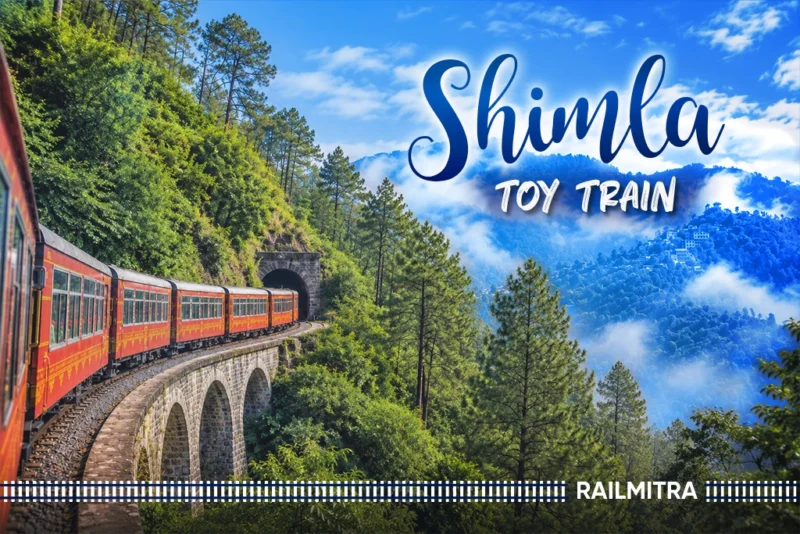
Most travelers pass through Kalka without staying long. From here, the journey continues on the narrow gauge railway to Shimla – a route recognized by UNESCO. The climb into mountain terrain begins once you switch trains at this station. Train connections matter: Shatabdi Express schedules align closely with toy train timetables. Two services cover this corridor.
| Train No. | Route | Departure | Arrival | Days |
| 12005 | New Delhi to Kalka | 17:15 | 21:15 | Daily |
| 12006 | Kalka to New Delhi | 06:15 | 10:15 | Daily |
| 12011 | New Delhi to Kalka | 07:40 | 11:40 | Daily |
| 12012 | Kalka to New Delhi | 17:45 | 21:50 | Daily |
Leaving Delhi early? Try train 12011 – it reaches Kalka by 11:40. From there, a small mountain railway runs each afternoon toward Shimla.
Northern Corridor: Delhi to Rajasthan (Ajmer Shatabdi Express)
One Shatabdi train serves Rajasthan. Daily, route 12015/16 connects Delhi to Ajmer, stopping at Jaipur – roughly six hours and forty-five minutes end to end. Most passengers head straight for Jaipur; reaching there around nine or ten in the morning opens up nearly the entire day, allowing travel back after dark.
| Train No. | Route | Departure | Arrival | Days |
| 12015 | New Delhi to Ajmer | 06:10 | 12:55 | Daily |
| 12016 | Ajmer to New Delhi | 16:00 | 22:40 | Daily |
Western Corridor: Mumbai to Ahmedabad
The 12009/10 is the last Shatabdi Express on the western side worth covering. Mumbai to Ahmedabad in 6 hours 25 minutes, all days except Sunday. Historically it’s drawn a lot of business travellers: textile trade, pharma, finance, and was among the first Shatabdis to get Anubhuti coaches installed.
The Mumbai to Pune Shatabdi Express from 1992 was the original non-Delhi service which no longer runs. Deccan Queen and various Intercity trains handle that corridor now.
| Train No. | Route | Departure | Arrival | Days |
| 12009 | Mumbai (MMCT) to Ahmedabad | 06:20 | 12:45 | Exc Sun |
| 12010 | Ahmedabad to Mumbai (MMCT) | 15:10 | 21:45 | Exc Sun |
Southern Corridor: Tamil Nadu, Karnataka & Telangana
From Chennai, four Shatabdi Express routes stretch across southern India. Off towards Bengaluru runs a popular line – trains 12027 and 12028, with trips nearly five hours long, though stopped each Tuesday. Moving farther west to Mysuru, services 12007 plus the return leg pass through Bengaluru, clocking almost seven hours while paused every Thursday. Another duo, numbered 12243 and 12244, connects Chennai straight to Coimbatore in roughly seven hours, but only skips service once weekly on Tuesdays.
| Train No. | Route | Departure | Arrival | Days |
| 12007 | Chennai (MAS) to Mysuru | 06:00 | 13:00 | Exc Thu |
| 12008 | Mysuru to Chennai (MAS) | 14:15 | 21:30 | Exc Thu |
| 12027 | Chennai (MAS) to Bengaluru | 17:30 | 22:25 | Exc Tue |
| 12028 | Bengaluru to Chennai (MAS) | 06:00 | 11:00 | Exc Tue |
| 12243 | Chennai (MAS) to Coimbatore | 07:10 | 14:15 | Exc Tue |
| 12244 | Coimbatore to Chennai (MAS) | 15:05 | 22:05 | Exc Tue |
The Pune to Hyderabad Shatabdi Express (12025/26) sits separately as the only one crossing into Telangana, around 8 hours 20 minutes, except Tuesdays.
| Train No. | Route | Departure | Arrival | Days |
| 12025 | Pune to Hyderabad | 06:00 | 14:20 | Exc Tue |
| 12026 | Hyderabad to Pune | 14:45 | 23:10 | Exc Tue |
Eastern Corridor: West Bengal, Odisha & Jharkhand
East of the network sits Howrah, launching point for three Shatabdi Express routes. From there, the train to Ranchi (12019/20) takes close to seven and a half hours, skipping Sundays entirely. Northbound travelers find the Jalpaiguri service (12041/42), clocking nearly eight and a half hours, active every day but Sunday too. That one slips past Siliguri, offering a solid daytime choice instead of night trains aiming at Darjeeling or hill areas across northern Bengal.
Running every single day makes the Puri Shatabdi Express stand apart, no other train in eastern India keeps that pace. While the rest take breaks, this one moves without pause. About 7.5 hours each way between Howrah and the Odisha temple town.
| Train No. | Route | Departure | Arrival | Days |
| 12019 | Howrah to Ranchi | 06:05 | 13:15 | Exc Sun |
| 12020 | Ranchi to Howrah | 13:45 | 21:30 | Exc Sun |
| 12041 | Howrah to Jalpaiguri (NJP) | 14:25 | 22:55 | Exc Sun |
| 12042 | Jalpaiguri (NJP) to Howrah | 05:30 | 13:45 | Exc Sun |
| 12277 | Howrah to Puri | 14:15 | 21:50 | Daily |
| 12278 | Puri to Howrah | 05:45 | 13:45 | Daily |
North-East Corridor: Assam & Arunachal Pradesh
Though trains 12087 and 12088 provide a Shatabdi Express link from Naharlagun to Guwahati, access remains indirect. Yet the capital of Arunachal Pradesh – Itanagar – has no working rail stop within city limits. Because of this gap, passengers make their way instead to nearby Naharlagun. That town lies just next door, serving as the closest point on the line. The journey takes nearly six hours to complete. That stretch moves through hills, then flattens near the Brahmaputra basin.
Strange thing about this timetable? The train operates on different days depending on which way it’s going.
| Train No. | Route | Departure | Arrival | Days |
| 12087 | Naharlagun to Guwahati | 06:45 | 12:30 | Mon, Tue, Fri |
| 12088 | Guwahati to Naharlagun | 13:45 | 19:45 | Mon, Thu, Sun |
The return journey for this place takes place only Monday as the day of operation of the Up and Down trains are on different days.Notice this before making your booking as passengers are habituated of returning on the same day using the Shatabdi Express.
Project Swarna: What Changed and What Didn’t
Project Swarna was an initiative by the Indian Railways for a complete overhaul of the train facilities and elevating the passenger experience. There is an interesting story behind why this train was launched. In the period of 2015-2016 the flight price between the Mumbai to Ahmedabad route fell by such a margin that it became comparable to the Executive Class of Shtabdi Express. Indian Railways was troubled by this and vowed to upgrade its services and facilities. The result of this resolution was Project Swarna.
Physical upgrades were real. New flooring, redone wall panels, better lighting, modular bio-toilets with occupancy indicators, satellite Wi-Fi on some trains, seat-back displays showing speed and upcoming stations. On a post-Swarna rake the difference is visible from the moment you walk in.
Catering improvements are harder to assess. The promise was better ingredients, better presentation and the passenger feedback has been inconsistent. Some runs are fine, others aren’t, and the physical infrastructure improved considerably more reliably than the food did. If you want something special and want to try restuarant style food delivery in train, choose RasilMitra. It provides food from FSSAI approved restaurants which will be delivered right on your train seat.
Jan Shatabdi Express: Same Idea, Lower Price
The Jan Shatabdi Express launched in 2002 after it became clear regular Shatabdi pricing was excluding a large chunk of travellers who still wanted something faster than an ordinary daytime service.
Same concept with same-day travel, no overnight run, but Jan Shatabdi Express trains include non-AC Second Seating (2S) alongside AC Chair Car, and food isn’t bundled. You order it or you don’t. Routes tend to be shorter, serving smaller cities connecting to regional hubs: the Purnagiri Jan Shatabdi from Tanakpur to Old Delhi, or the Siddhabali Jan Shatabdi from Kotdwar to Old Delhi.
These are corridors where a full Shatabdi wouldn’t fill up at full fares, but where demand exists for something faster than the ordinary passenger trains.
Shatabdi vs. Vande Bharat: The Honest Version
The Railway Board cleared production of 1,500 Vande Bharat chair car coaches in early 2026 with the manufacturing split between ICF Chennai (720 coaches), MCF Raebareli, and RCF Kapurthala, with build running through 2030. The plan is progressive Shatabdi replacement as rakes retire.
It would be interesting to compare these two trains. Therefore, here is the comparison table between the two:
| Feature | Shatabdi Express | Vande Bharat Express |
| Technology | Locomotive-hauled LHB | Self-propelled EMU |
| 0–100 km/h | ~2–3 minutes | 52 seconds |
| Max operating speed | 150 km/h | 160 km/h |
| Safety system | Anti-telescopic (passive) | Kavach (active signalling) |
| Interior feel | Traditional rail | Aircraft-style cabin |
Although you might not see much difference in the top speed of the two trains, the difference emerges in the acceleration or the time taken to reach 100 km/h from 0. Vande Bharat’s superheavy acceleration makes it reach the destination 10-15% faster than the Shatabdi Express. This is clearly evident by comparing the train travel time on the route common to both trains such as the Delhi to Varanasi and Chennai to Mysuru.
Shatabdi isn’t disappearing on a fixed date though. The phase-out depends on when each rake ages out, and some of the newer LHB conversions have another 10–12 years left in them. The transition is real, just slower than the announcements tend to imply.
Booking a Shatabdi Express Ticket
Seats fill fast on popular routes. Delhi to Bhopal, Delhi to Amritsar, Delhi to Dehradun especially book two to three weeks out on weekends or around public holidays. Tatkal opens 24 hours before departure for both Chair Car and Executive Chair Car.
There’s no 1A, 2A, 3A, or SL on these trains. Sleeper class simply doesn’t exist on a Shatabdi. For live running status, seat availability, or PNR tracking, RailMitra covers all of it without needing a login.
So Should You Take It?
Depends on the route and the timing. On corridors where Vande Bharat runs, that’s the better train: faster, smoother, better safety systems.
But Shatabdi Express still covers ground Vande Bharat doesn’t: Kathgodam, Kalka, Naharlagun, Puri, several South Indian routes. On those corridors it’s a reasonable way to travel. The day-return model works. Seats are fine. The food is unpredictable but rarely terrible.
It’s not the most exciting train in India in 2026. Doesn’t need to be, it just needs to run on time and get you there and back in a day, and most of the time, it does.