The platform crowd surges the second that the train rolls in, general quota ticket already in hand. No berth number to check, no seat chart to scan, just that scramble toward a coach usually parked at the very end or right behind the engine. That’s the UR coach in train, and it happens to be the oldest, least understood corner of Indian Railways travel.

This blog gets into what it actually means, how it functions day to day, and whether it’s worth boarding on your next trip.
UR Train Full Form: What Does UR Actually Stand For
UR stands for Unreserved. That’s the entire UR train full form, nothing fancier hiding behind the letters. No seat number gets allotted, no berth preference, no quota category attached to your name. You buy the ticket, board whatever coach shows up, and take whatever space happens to be free. Nothing about it gets more complicated than that, at least on paper.
First time travelers usually trip up on one thing: how does this differ from General class? It doesn’t, not really. Both of them mean the same thing and different railway zones pick any of these two names. On the train track the meaning of a General Class and UR coach in train is the same.
You can ask any passengers on the platform about what UR coach means on the train and they will just point towards the most crowded coach on the train. This actually isn’t far away from the truth. There is no fixed seat number allotted with each ticket. Your ticket in the UR coach ensures that you can be on the train, however it doesn’t guarantee a seat. This leads to the number of passengers being more than the number of seats on the train.
UR Coach in Train Means: Breaking Down the Basics
UR Coach in train means those compartments or coaches of the train that do not have a fixed reservation system. This means that a particular seat isn’t assigned to an individual passenger. Passengers can pick the seat according to the available vacant berths. This type of seating is designed for low cost unplanned travel options at the last moment, when no other travel options are available.
The UR coach in trains means a travel option where you don’t need to worry about seat availability, waiting list issues and a confirmed ticket. Just visit the station, book your Unreserved or General ticket and enter your train. That’s it, as simple as that. This level of ease and accessibility is the reason why most small towns and daily commuters depend on this type of seating.
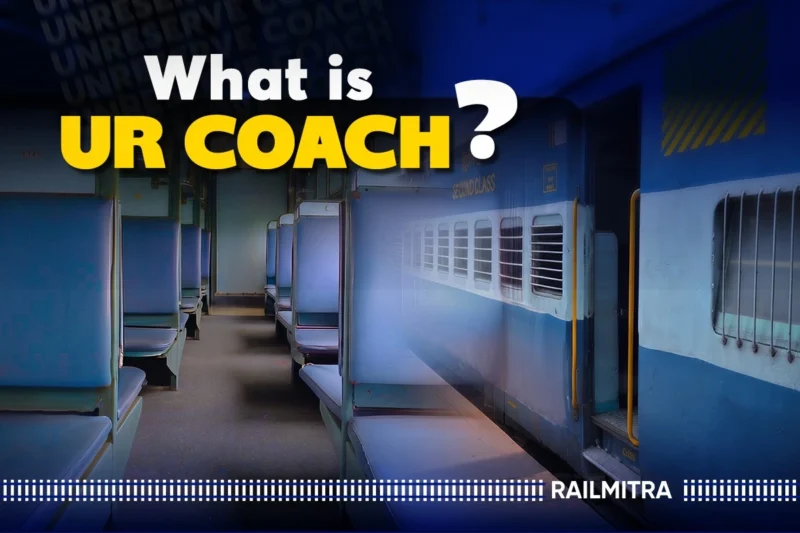
The seating arrangement in the UR train coach is composed of long benches that can be either wooden seated or the regular cushion used by the railways. There can be side seating berths as well. A common feature of this coach is 4 people sitting in the place where 3 passengers are supposed to sit. This invasion of personal space starts to make sense once you realise that these coaches weren’t made for comfort or privacy, but for affordable, urgent and short-distance travel.
UR Coach in Train: Features That Define This Class
The UR coach in train carries a few features that separate it clearly from reserved classes. First, ticket validity stretches beyond a single train, meaning a general ticket purchased for a route often lets you board any unreserved coach heading that direction within a certain time window.
Second, there’s no upper limit tied strictly to seat count. Railways allow standing passengers once seats fill up, something you’d never see permitted in a sleeper or AC coach. That single detail explains why UR coaches near festival season resemble something closer to a moving crowd than a train compartment.
Third, luggage racks sit lower and shallower compared to reserved coaches, built more for daily bags than trunks or suitcases. And fourth, most UR coaches attach either right behind the engine or at the very rear of the rake, a positioning choice railway veterans will tell you exists partly for boarding logistics and partly, unofficially, for ease of ticket checking near the platform edges.
What You Only Notice After Sitting in a UR Coach
You don’t fully understand a UR coach in train until you’ve actually spent three or four hours inside one. The theoretical description never captures how the noise changes character once the doors stay open through entire stretches of countryside, wind cutting straight through the compartment in a way sealed AC coaches never allow.
As soon as the doors of a UR coach opens for a full stretch, a new world opens up. Vendors start entering the coach with different kinds of snacks such as biscuits, roasted peanuts, sliced coconuts and packaged snacks. Some other would be bringing Tea and Coffee along with the rhythmic songs and calls attracting passengers to buy. Passengers themselves who have been sitting for hours with their shoulders brushing each other tend to develop a unique bond while munching on these desi eatables.
The heat hits differently as well. Somewhere around midday, especially in summer months, the coach turns into something passengers just endure rather than enjoy. Yet that same open window, uncomfortable as it sounds, offers views and smells of stations you’d otherwise miss behind tinted glass. Small stalls, local vendors, the particular chaos of a junction town, all of it comes through unfiltered.
The Real Advantages of Booking a UR Coach in Train
Cost sits right at the top. A UR coach in train ticket costs a fraction of sleeper or AC fare, sometimes less than a tenth for the same distance. For short routes especially, this makes it the default choice for daily wage workers, students, and anyone traveling under two or three hours.
The flexibility in booking an unreserved seat in the train is a major advantage of travelling in this coach. Unlike the reserved classes there is no anxiety of a confirmed ticket or looking at the PNR Status again and again to see if your waiting list has been confirmed or not. Anyone who has tried to book a railway ticket, especially the tatkal ticket understands the hassle of booking a confirmed train ticket. In a UR coach in train, passengers can book the tickets at the last moment and board the train without any problems. This flexibility is definitely a huge plus point.
It also works well for last minute plans or unplanned station stops along a route, since general tickets often permit boarding at intermediate stations without prior booking. Passengers checking train schedule on RailMitra before heading out can confirm which trains run this coach on their route and plan around the busiest hours accordingly.
Where a UR Coach in Train Falls Short
The crowding remains the biggest drawback, and no amount of romanticizing the experience changes that. During peak hours or festival travel, standing room disappears fast, and passengers sometimes travel pressed against doors for hours at a stretch.
Safety becomes a genuine concern too. Open doors, moving crowds near entry points, and the absence of any seat allocation mean elderly travelers or those with children often struggle more here than they would in a reserved coach. Theft risk also climbs slightly given the density and lack of personal space.
Comfort, or the lack of it, deserves honest mention. Hard seating, minimal legroom, no berths for overnight rest, none of it suits long journeys well. Anyone attempting an overnight trip in unreserved seating usually regrets the decision somewhere around the third hour past midnight, back aching, no proper place to lean.
How Passengers Can Get a Seat in the UR Coach in Train
Booking a seat in the UR coach in train is no hassle at all, what actually bothers passengers is getting a seat in these coaches. Experienced travellers reach their platforms up to twenty, even thirty minutes before the train’s arrival. They stand in the exact position where the UR coach will stop. These strategies increase the chance of getting a seat in the general coach.
Ticket counters, the newly launched RailOne app and UTS mobile booking all issue general tickets instantly, no waitlist process involved. Some passengers also board one station earlier than their actual origin if that earlier station sees a lighter crowd, then simply ride through to their intended stop.
Timing the journey outside rush hours helps considerably too. Early morning and late night unreserved coaches carry noticeably fewer passengers than the ones running through office hours or festival weekends. Checking live train running status on RailMitra before leaving home answers a simpler question too: is the train even on time? A delayed train usually means a longer, more crowded wait once it finally shows up.
Tracking Your Train Before You Board
Standing on a platform, unsure whether the train is ten minutes out or an hour late, wastes time nobody has to spare. RailMitra’s Live Train Running Status fixes that directly, pulling real time location data so passengers know exactly when to start heading toward the platform instead of guessing.
This becomes particularly useful for UR coach travelers since positioning matters. Knowing the arrival window down to the minute means claiming a decent spot near the coach entry before the rest of the crowd even gets there. Punch in the train number or name, and the tool returns current location, expected delay, and the stations coming up next.
Daily commuters feel this difference the most. One good piece of timing decides whether the trip starts standing in a queue or walking straight onto a seat that’s actually free.
Didn’t Get a UR Coach? Check What Else Is Running
Every so often the UR coach on your usual train is packed solid, or the train itself is running hours behind. That’s exactly when trains between stations on RailMitra earns its place, listing every train running your route rather than just the one you had originally planned around.
Suddenly there’s a passenger train leaving twenty minutes later with a lighter UR coach, or maybe an express still hours out that buys enough time to rethink the whole plan. Comparing departure times, expected crowd levels based on train type, and journey duration side by side saves the guesswork that usually happens standing confused at an enquiry counter.
It’s a small habit, checking alternatives before committing to one train, but it consistently pays off for anyone traveling unreserved on busy routes.
Food Inside the UR Coach in Train
Food inside a UR coach in train rarely comes from a pantry car, since most trains carrying this coach don’t run one at all. What you get instead is whatever vendors bring through the aisle, tea in small paper cups, packaged snacks, sometimes fresh vada pav or samosas depending on the region and station.
That unpredictability is exactly why pre booking through RailMitra’s train food booking service makes sense for longer unreserved journeys. Order ahead and your food arrives fresh at a station along your route, handed directly through the window or door rather than depending on whichever vendor happens to walk past your row.
Three or four hours into an unreserved journey, a hot meal arriving right on schedule beats depending entirely on whichever vendor happens to walk past. That gap matters most on routes where stations sit far apart and platform vendors simply aren’t guaranteed at every stop.
Conclusion
The UR coach in train was never built for comfort, and nobody boards one expecting cushioned seats or a guaranteed patch of space. What it offers instead is access, immediate and cheap, no reservation standing between you and the next departure. It works because it asks so little of the passenger stepping inside, whether that’s a short hop across town or a last minute trip nobody had time to plan. Knowing what the coach means, how it runs, and how to navigate its crowds turns a rough ride into something manageable. That’s worth carrying onto the platform long before the train actually pulls in.