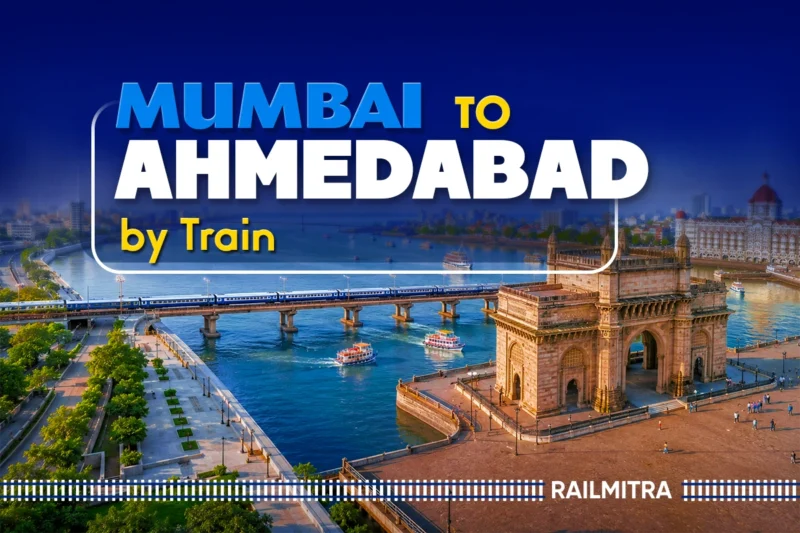
Past Borivali, the city finally loosens its grip. That is usually the exact point where a Mumbai to Ahmedabad train stops feeling like a stretched out commute and starts feeling like an actual journey. These are two of India’s busiest metros, and the track connecting them has been ferrying mill workers, cloth traders, students, and whole families, since before most of today’s passengers were born. Ask around the coach why anyone is actually travelling and the answers rarely match.

Why Mumbai to Ahmedabad Route Sees So Many Travellers
Business explains a large part of it. Ahmedabad and Mumbai both run on commerce, and a good chunk of the passengers boarding this train are people moving between the two cities for meetings, textile orders or supply chains that cannot wait around for a flight to get confirmed. Students form another visible group, usually recognisable by the backpack wedged under the seat and the earphones already in before the train has even left the platform.
For families, the reason is almost embarrassingly practical. Yes, the flight takes barely an hour in the air. But factor in getting to the airport, the queue at security, arriving early because you have to, and that one hour has a habit of stretching into three or four before you actually land. A Vande Bharat covers the same distance in about five and a half hours, door to door, with none of that waiting built in. You can carry your own food onto a train. Try doing that at airport security.
There is another reason that draws passengers for a train travel that has shaped mostly by habit, rather than comfort. The trading connection between Maharashtra and Gujarat isn’t something that is a recent event. These places have been important trading centres for a long time. This connection was inflated by the train connection, which soon became the go to method of travel between these two cities.
Nowadays if you pick a train on the Mumbai to Ahmedabad , you will find diamond merchants going to the Zaveri Bazaar, a cloth merchant who has been travelling from Surat or a farmer on which to sell his produce at the Vashi market. However, this connectivity is not new. People have used the trains for decades and it has become a natural method of transport for them.
What The Landscape Outside Actually Looks Like
The first twenty minutes barely register as scenery. Just suburb after suburb, water tanks crowding the rooftops, maybe a glimpse of the Arabian Sea if you got lucky with your seat. Real change waits until Vasai Road, where the buildings finally start to space out.
Somewhere between Vapi and Valsad, green takes over, and it always seems to surprise first timers on this route. Sugarcane, banana plantations, a river or two crossed on bridges that look older than the train itself. This is mango country too. Crack a window in peak season and the smell finds you, strong enough to wake someone who was half asleep a second ago.
Surat changes the picture again. Past it, the terrain flattens into the plains Gujarat is known for, cotton stretching out for minutes at a stretch, broken only by a distant textile chimney. Vadodara brings back some urban weight, the GSFC plant and the refinery visible if you know where to look. Then comes Anand, and with it, dairy country. It makes sense once you remember Anand is where Amul was born. The fields here seem to have organised themselves entirely around milk cooperatives, and once you know that, you start noticing it everywhere.
By the time Ahmedabad arrives, the window has moved through coastal density, green plantation belt, open plains and industrial sprawl, all inside roughly eight hours. Few routes in western India manage that much visible variety.
Conversations, Card Games And What People Eat
Trains loosen people up in a way airport lounges never quite manage. On this particular route, the pattern is fairly predictable. That first hour usually goes to shop talk among the business crowd. Surat’s textile rates come up. So does the state of Ahmedabad’s property market. Give it time though, and the topic always seems to wander toward something more personal. By Vadodara, strangers who boarded as strangers are usually deep in a cricket argument, or gently disagreeing over whose city actually has better street food.
Cards come out early, especially in sleeper and three tier AC coaches on the overnight services. A deck usually appears within the first hour, and by the time the train has crossed Bharuch, a game of rummy or teen patti is well underway on someone’s flattened blanket, half the berth doubling as a table.
Food depends heavily on when the train leaves. Morning departures bring thepla and khakhra wrapped in foil, a small jar of pickle that inevitably makes its way around the coach whether you asked for it or not. On the evening and overnight services, packaged snacks take over instead, mostly because dinner gets skipped in favour of sleep. Chai vendors are still working the aisles somewhere around Surat and Bharuch though, and that smell threading through a packed coach tends to stick in people’s memory long after the actual trip is forgotten.
Stations Along The Mumbai to Ahmedabad Route
Calling these mere stops undersells them. Every one of these stations has grown its own personality over the decades, its own crowd patterns, its own little cluster of vendors working the platform edge. Knowing this in advance is often the difference between an easy boarding and a rushed, sweaty one, particularly if you are getting on somewhere in the middle rather than from the starting point.
Mumbai End: Borivali And Beyond
Three stations handle most of the long distance departures on the Mumbai side, Mumbai Central, Bandra Terminus, and Borivali. Borivali has become the quiet favourite among regulars, and there is a simple reason for that. It sits further out from the choked city core. The queues reflect that too, usually shorter than whatever you would face at the main terminus. One thing to keep in mind though: halts here rarely stretch past five minutes, sometimes as little as two, and that window shifts by train category. Check the schedule before you walk over to the platform, not after. Unsure which trains actually connect your starting point to Ahmedabad? RailMitra’s Trains between stations tool lays every option out on one screen instead of forcing you through several booking sites.
Boarding at Borivali is fairly manageable on weekdays. Weekend evenings are a different story, particularly around long weekends and festival season, when Gujarati families travel home in bulk. An early morning departure, where your schedule allows for it, is noticeably calmer than the evening rush.
Vapi And Valsad
Vapi shows up early on this route, right after Mumbai’s outer edge finally gives way. The chemical units ringing the town give it a distinctly industrial feel. Do not expect a long halt here, often under two minutes on the faster services, so anyone planning to board needs to already be standing by the door. Vada pav, boiled corn, cold drinks, vendors work the platform edge fast enough to make even a two minute stop workable.
Valsad moves at a gentler pace. This is mango country, and depending on the season, small baskets of seasonal fruit show up right outside the general compartment doors. The crowd here is nowhere near what Vapi or Surat sees, which makes it one of the more comfortable boarding points if you happen to live along this belt.
Surat: Busy, But Worth Planning For
Surat is arguably the busiest intermediate station on this entire line, and it earns that reputation honestly. It runs on textiles and diamonds, and a significant share of passengers on any Mumbai to Ahmedabad train are either starting or ending their trip right here. Halts run longer than at the smaller stations, often five minutes or more, simply because of how many people are getting on and off at once.
This is also where the platform food scene wakes up properly. Locho, ghari, fresh khaman, all of it sold right there on the platform. Keep some change handy if you want to grab any of it without holding up the queue behind you. As for boarding, do it here with a lot of luggage or an elderly parent in tow, especially in the evening, and you will feel the crowd almost immediately. Still deciding when to leave for the station? A quick check of Live train status before you head out can save a fair amount of standing around, since delays on this stretch are common enough during the monsoon.
Bharuch And Vadodara
Bharuch sits on the banks of the Narmada, and crossing the bridge here, trains often ease up just enough for a proper look at the water below. Do not plan around boarding at this one though. Halts run under three minutes as a rule, and it earns its keep more as a view than a stop.
Vadodara is the opposite. A major junction, and honestly one of the more comfortable stations on this entire line to board from. Wider platforms, clearer signage, and a genuinely solid spread of food stalls make it a favourite among frequent travellers. Halts regularly stretch past five minutes here, long enough for a proper meal rather than a rushed snack. It does get crowded around college admission season and Navratri, given Vadodara’s own student population and its standing as a cultural centre for the festival, so a little extra planning helps during those weeks.
Anand And Nadiad
Anand is a smaller halt but a meaningful one, recognised nationwide as the home of the Amul dairy cooperative. Stops here are brief, and outside peak festival travel, the crowd stays manageable. A reasonably easy station to board from if you happen to be somewhere in central Gujarat.
Nadiad, right before the final stretch into Ahmedabad, tends to be one of the quieter stations on the route. Short halts, a thinner platform crowd compared to Surat or Vadodara, and a fairly comfortable last minute option for anyone travelling out of this belt. Already holding a ticket but want to confirm your berth before the journey? Checking Seat Availability ahead of time avoids a scramble at these smaller stations, where finding a TTE quickly is not always straightforward.
Arriving Into Ahmedabad
Whether your train is headed into Ahmedabad Junction or Gandhinagar Capital, the last stretch always slows right down as it works through the yard. That is usually the cue for bags to start coming down from the racks. The platform itself is large enough to absorb the crowd without turning into the chaos you might expect at a terminus this size, and prepaid autos along with app based cab pickups are both well organised just outside the main exit.
The Complete List Of Trains Running Between Mumbai And Ahmedabad
More than thirty trains connect these two cities in some form, everything from premium chair car services to overnight sleeper expresses that continue further towards Gujarat’s coast or push on into Rajasthan and Punjab. Try fitting thirty plus trains into a single table and nobody reads past row ten. So the list is split up by category below instead. And wherever a train actually operates as a matched pair, one leg leaving Mumbai, its counterpart returning from Ahmedabad, both show up together rather than buried in different parts of the list.
Vande Bharat Express Trains
Two Vande Bharat trains currently cover this corridor. Between them, they have quietly taken over as the first choice for anyone who wants to get there fast without sacrificing a comfortable daytime seat.
| Train | Origin, Departure | Destination, Arrival | Duration | Distance |
| 22961 Vande Bharat Express | Mumbai Central, 15:45 | Ahmedabad, 21:15 | Approx 5h 30m | Approx 493 km |
| 22962 Vande Bharat Express | Ahmedabad, 06:05 | Mumbai Central, 10:43 | Approx 4h 38m | Approx 493 km |
The second pair goes a touch further, running through to Gandhinagar Capital instead of ending the journey at Ahmedabad Junction.
| Train | Origin, Departure | Destination, Arrival | Duration | Distance |
| 20901 Vande Bharat Express | Mumbai Central, 06:00 | Gandhinagar Capital, 11:35 | Approx 6h 15m | Approx 522 km |
| 20902 Vande Bharat Express | Gandhinagar Capital, evening departure | Mumbai Central, night arrival | Approx 6h 15m | Approx 522 km |
Neither service runs daily. Both operate six days a week, so confirm the exact running day before you lock in a booking. Want to compare this against every other option on the route first? RailMitra’s Train Schedule page lists the full weekly pattern for each service in one place.
Premium Chair Car: Tejas Express
Slightly slower than the Vande Bharat but close to it on comfort, the Tejas Express is the other daytime premium option here.
| Train | Origin, Departure | Destination, Arrival | Duration | Distance |
| 82901 Tejas Express | Mumbai Central, 15:55 | Ahmedabad, 22:30 | Approx 6h 35m | Approx 493 km |
| 82902 Tejas Express | Ahmedabad, 06:35 | Mumbai Central, 12:17 | Approx 5h 42m | Approx 493 km |
This one tends to attract last minute bookers. Seats simply hold out longer here than they do on the more heavily booked Vande Bharat.
Duronto Category
Duronto trains skip intermediate commercial halts entirely, which keeps the journey time tight even without the full daytime chair car setup.
| Train | Origin, Departure | Destination, Arrival | Duration | Distance |
| 12297 Mumbai Ahmedabad Duronto | Mumbai Central, night departure | Ahmedabad, early morning arrival | Approx 6h | Approx 493 km |
| 12298 Ahmedabad Duronto | Ahmedabad, 00:35 | Mumbai Central, 06:40 | Approx 6h 05m | Approx 493 km |
There is another Duronto pair on this line, and it does not stop at Ahmedabad at all. It runs on to Hapa in Saurashtra, which is worth knowing if your actual stop lies somewhere past Ahmedabad.
| Train | Origin, Departure | Destination, Arrival | Duration | Distance |
| 12267 Hapa Duronto | Mumbai, night departure | Hapa, via Ahmedabad | Longer haul, continues past Ahmedabad | Beyond 493 km |
| 12268 Hapa Duronto | Hapa, return departure | Mumbai, via Ahmedabad | Longer haul | Beyond 493 km |
Shatabdi Category
Neither the Tejas nor the Vande Bharat existed when the Ahmedabad Shatabdi first started running this route. Decades later, it is still on the timetable, and still worth booking.
| Train | Origin, Departure | Destination, Arrival | Duration | Distance |
| 12009 Ahmedabad Shatabdi | Mumbai Central, afternoon departure | Ahmedabad, evening arrival | Approx 6h 25m | Approx 493 km |
| 12010 Mumbai Shatabdi | Ahmedabad, morning departure | Mumbai Central, midday arrival | Approx 6h 25m | Approx 493 km |
Only chair car and executive chair cars exist on this train, no berths at all, which suits daytime travellers who would rather sit through a full meal service than lie down.
Long Haul Mail And Express Trains Towards Punjab And Delhi
Some trains on this corridor do not stop at Ahmedabad at all. They pass through it on a much longer route north, and plenty of Gujarat bound passengers simply use them for the Mumbai to Ahmedabad leg and get off.
| Train | Origin, Departure | Destination, Arrival at Ahmedabad | Duration to Ahmedabad | Final Destination |
| 12903 Golden Temple Mail | Mumbai Central, morning departure | Ahmedabad, evening | Approx 9h | Amritsar |
| 12904 Golden Temple Mail | Amritsar, return working | Ahmedabad, en route | Approx 9h | Mumbai Central |
Paschim Express heads towards Amritsar on this same stretch, and Ashram Express towards Delhi. Plenty of passengers board at Mumbai and simply get off at Ahmedabad or somewhere along the way, since the partial fare on these long haul trains often beats what a dedicated Ahmedabad service charges once peak season prices kick in.
Mail And Express Trains Towards Saurashtra And Kutch
A different set of trains passes through Ahmedabad heading further west, serving a passenger base that looks a little different from the direct Mumbai Ahmedabad crowd.
| Train | Origin, Departure | Destination, Arrival at Ahmedabad | Duration to Ahmedabad | Final Destination |
| 19005 Saurashtra Mail | Mumbai Bandra Terminus, morning departure | Ahmedabad, afternoon | Approx 8h | Okha |
| 19006 Saurashtra Mail | Okha, return working | Ahmedabad, en route | Approx 8h | Mumbai Bandra Terminus |
Kutch Express and Jam Humsafar fall in the same bracket, both leaving Mumbai late in the evening and reaching Ahmedabad in the early hours before pushing on to Bhuj and Jamnagar. Overnight travellers tend to prefer these, sleeping through most of Gujarat and waking up close to wherever they are actually headed.
Regular Superfast And Mail Services
The remaining trains here are conventional superfast and mail services running directly between the two cities without continuing anywhere further.
| Train | Origin, Departure | Destination, Arrival | Duration | Distance |
| 12933 Karnavati Express | Mumbai Central, evening departure | Ahmedabad, night arrival | Approx 7h | Approx 493 km |
| 12934 Karnavati Express | Ahmedabad, morning departure | Mumbai Central, afternoon arrival | Approx 7h | Approx 493 km |
Karnavati Express deserves a mention of its own here. It consistently comes up as the cheapest fare on this route, which is exactly why students and frequent business travellers keep coming back to it, even when it is not the fastest option on the table.
| Train | Origin, Departure | Destination, Arrival | Duration | Distance |
| 12901 Gujarat Mail | Mumbai Central, night departure | Ahmedabad, early morning arrival | Approx 7h | Approx 493 km |
| 12902 Gujarat Mail | Ahmedabad, night departure | Mumbai Central, early morning arrival | Approx 7h | Approx 493 km |
Gujarat Sampark Kranti and Gujarat Superfast Express round out this list, alongside a handful of weekly special trains added around festival season. That weekly special list shifts noticeably close to Diwali and Navratri, so it is worth a quick check before assuming a particular train is actually running on your date.
What Passengers Eat On Board, And Where RailMitra Fits In
Food splits fairly cleanly by train type on this corridor. Vande Bharat and Tejas both include full catering in the fare, usually a choice between a Gujarati thali style meal and a more general North Indian spread, with tea and snacks served earlier in the ride. Passengers on these two rarely carry more than a bottle of water.
Overnight trains work differently. Pantry service exists on most of them, but plenty of regular travellers on this line still prefer carrying their own food, thepla, dhokla, a simple sabzi and roti packed before leaving home. It is something of an unspoken tradition on Gujarat bound trains. New to this route? Do not be surprised if a fellow passenger offers you a piece of their dhokla within the first hour. Sharing food across berths barely registers as unusual here.
For anyone who would rather not carry a tiffin, or simply forgot to pack one, ordering food on train has gotten a lot easier over the past few years. RailMitra’s food on train service lets you order a meal that gets delivered right at one of the upcoming stations, timed to arrive exactly when the train pulls in, particularly handy on longer halts like Surat or Vadodara where there is enough time for a clean handover at the coach door.
Conclusion
A Mumbai to Ahmedabad train ride manages something a lot of shorter routes simply cannot. It compresses coastal density, mango orchards, cotton fields, dairy country and industrial townships into a single day of travel, while still leaving room to eat properly, talk to strangers, and watch two very different states blend into one another outside the window. Whether you board the Vande Bharat for speed, the Shatabdi out of old habit, or a plain mail train because it happened to fit your day, the Mumbai to Ahmedabad corridor remains one of those journeys where getting there is genuinely part of the point, not just something to get through.