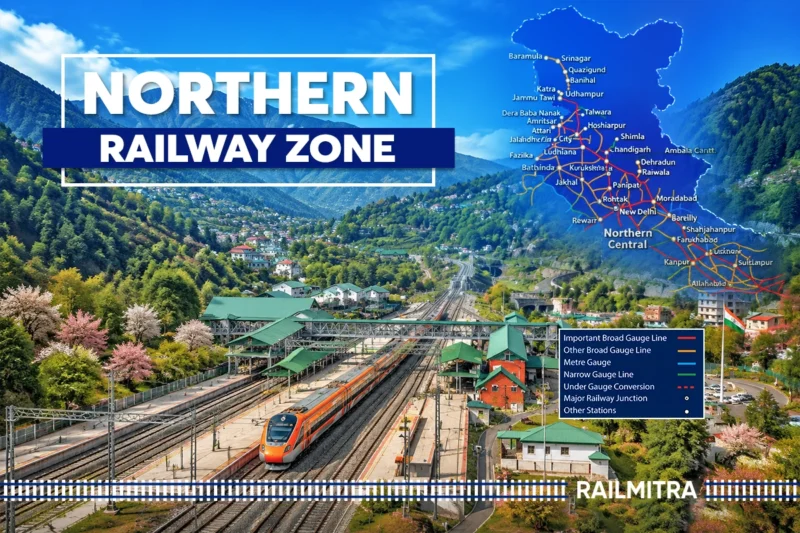
The Northern Railway zone is one of the most popular and important railway zones in India. It covers multiple states such as Uttarakhand, Uttar Pradesh, Haryana, Himachal Pradesh, Punjab, and Delhi, including the Union Territories of Jammu & Kashmir, Ladakh, and Chandigarh.

With the extensive rail network, the zone connects industrial centers, major cities, and pilgrimage destinations, including other regions in India. Northern Railway operates multiple trains, passenger services, and administrations.
This post will explore the history of Northern Railway, its headquarters, and its divisions. It also includes the main routes within this railway zone.
What is the Northern Railway Zone in Indian Railways
Indian Railways has an extensive rail network distributed in 19 operational zones. It helps to manage infrastructure, efficiency, and resources. Similarly, the Northern Railway is also one of the 19 railway zones and the longest zone by route length.
Northern Railway zone, also known as the NR railway zone, covers different states like Himachal Pradesh, Punjab, Uttarakhand, Haryana, Delhi, and Jammu and Kashmir. The zone operates hundreds of trains over 1021 railway stations, covering 7405 route kilometers. Passengers can check the train schedule and find whether an en route station comes under any of these states.
History of NR Railway Zone
The N R Railway developed during the British period and was notified on April 14, 1952, after independence as part of re-organisation, including integration of various independent regional railway systems.
- Talking about the origin of the zone on 3 March 1859, the opening of North India’s first passenger railway line between Allahabad and Kanpur falls under the Northern Railway.
- In 1864, the broad-gauge track connected Delhi and Kolkata. This was a rapid extension of major trunk routes, enhancing railway connectivity.
- In 1952, the Northern Railway zone was formed by consolidating several pre-existing railway networks such as Jodhpur Railway, Bikaner Railway, and Eastern Punjab Railway.
Northern Railway Zone Headquarters
The headquarters of the NR zone is located in Baroda House, New Delhi, near India Gate. Northern Railway headquarters manages the train operations, development, and maintenance of the extensive rail network.
New Delhi is strategically located at the centre, connecting major destinations across the country. It manages administration and passenger services to improve the railway facility for a comfortable journey.
Therefore, the zone handles large traffic every day. So, passengers need to check the PNR status to find whether their ticket is confirmed or not. Moreover, they should also check the arrival or boarding time to avoid missing the train.
Northern Railway Division
Talking about the Northern Railway zone list considers 6 divisions across Northern India. These divisions help the NR zone to manage railway stations, trains, operations, infrastructure, and other assets. So, let’s explore each division and major railway stations under each division.
Delhi Division under NR Railway
It is the most important railway division in the NR zone, serving the National Capital and surrounding areas. The major stations covering the nearby area are Hazrat Nizamuddin railway station, Old Delhi railway station, New Delhi railway station, and Anand Vihar terminal.
Ambala Division of Northern Railway
The Ambala division manages 135 railway stations, including Chandigarh, Himachal Pradesh, Haryana, Uttar Pradesh, Punjab, and nearby areas. However, major stations include Bathinda Junction (BTI), Chandigarh Junction (CDG), Ambala Cantonment Junction (UMB), and others.
Ferozpur Division in N R Railway
Ferozpur Division serves certain parts of Kashmir, Jammu, Punjab, and nearby areas. This division provides access to the Northern border and different cities. The Northern Railway covers 256 railway stations. Some of the major stations are Jalandhar City (JUC), Firozpur Cantt (FZR), Bathinda Junction (BTI), Kapurthala (KXH), and others.
Moradabad Division under NR Zone
The Moradabad division covers the Uttar Pradesh parts and its nearby areas. The station manages the operation of 207 railway stations. Major stations under Northern Railway are Bareilly Junction (BE), Haridwar Junction (HW), Laksar Junction (LRJ), Dehradun (DDN), Moradabad Junction (MB), and others.
Lucknow Division
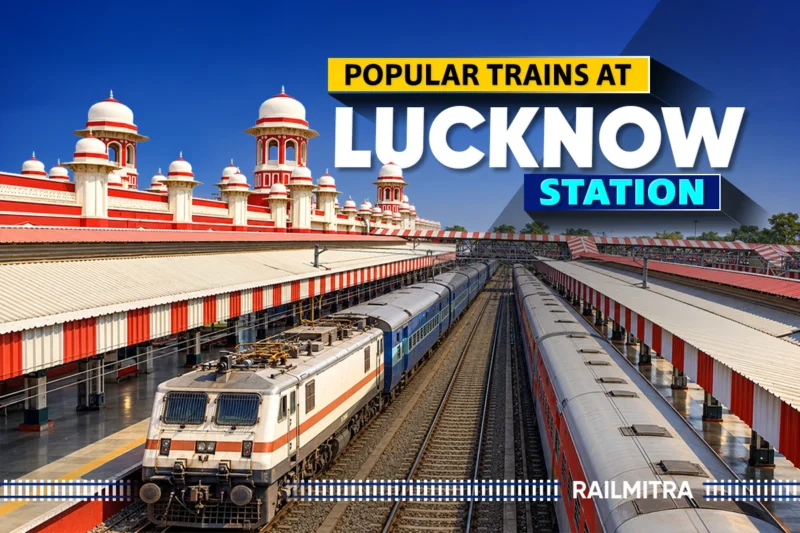
Lucknow Division is one of the important administrative divisions of Northern Railway. It is an important transportation hub considering passenger and freight movement on major routes. The division covers about 200 railway stations, including Lucknow Charbagh (LKO), Varanasi Junction (BSB), Amethi (AME), Alam Nagar (AMG), Prayag Railway Station (PRG), and others.
Jammu Division
Jammu Division is also a part of the Northern Railway zone, covering about 101 railway stations. However, the major stations include Jammu Tavi (JAT), Baramulla (BRML), Srinagar (SINA), Shree Mata Vaishno Devi Katra (SVDK), Hira Nagar (HRNR), Pathankot Cantt (PTKC), Choland (CGH), and others.
Popular Routes in Northern Railway Zone
NR railway has an extensive network, allowing passengers to reach destinations as fast as possible. Therefore, check the popular routes under this zone below.
Delhi-Amritsar Route
The Delhi-Amritsar train route is an important corridor connecting Delhi with Punjab. The route covers the major station Amritsar Junction, among others. Several trains like the 12013 Shatabdi Express, intercity trains, and other express services improve connectivity.
Delhi-Chandigarh-Kalka Route
This Northern Railway route is a popular route covering New Delhi, Sonipat, Panipat, Ambala Cantt, Kalka, and Chandigarh. However, the popular trains running on this route include the 12011 Kalka Shatabdi Express, 22455 Sainagar Shirdi-Kalka Express, and others.
Delhi-Jammu Route
The railway line connects Delhi and Jammu, including other major stations such as Ambala Cantt, Ludhiana, and Pathankot. So, passengers can choose the popular services such as 12425 Jammu Rajdhani and use the live train running status to track real-time updates.
Similarly, other popular routes are Delhi-Lucknow, Delhi-Haridwar-Dehradun, Delhi-Moradabad-Lucknow and Delhi-Varanasi Routes.
Conclusion
The Northern Railway Zone is one of the important railway zones in India, connecting major cities, pilgrimage destinations, and industrial centres. With headquarters in New Delhi, it handles a large volume of passengers every day.
The NR zone has multiple divisions such as Ambala, Delhi, Jammu, Lucknow, Moradabad, and Ferozpur divisions. It covers multiple routes like the Delhi-Jammu route, Delhi-Amritsar route, Delhi-Lucknow route, and many others.
Moreover, it connects major stations like New Delhi Railway Station, Chandigarh Junction, Ambala Cantonment Junction, Haridwar Junction, Moradabad Junction, Lucknow Charbagh, Amethi, Prayag Junction, Jammu Tavi, Srinagar, Hira Nagar, Pathankot Cantt, and others.
Read More: South Central Railway Zone: Headquarters, Divisions, and Routes
Read More: North Western Railway Zone: Headquarters, Divisions and Complete Guide