Rajasthan runs on rail more than most people realise, and North Western Railway is the reason why. This zone connects small desert towns to major cities, carries pilgrims to Ajmer Sharif and Pushkar, and moves freight across four states without most passengers ever thinking about who manages the tracks underneath them.

If you have booked a ticket from Jaipur to Jodhpur or checked a PNR status for a Bikaner bound train, you have already interacted with North Western Railway, whether you realised it or not. Before boarding, most travellers open RailMitra to check the train schedule for their route, since departure times on this zone can shift slightly during the winter fog season in Rajasthan.
What Is NWR Full Form and What Does It Cover
NWR full form stands for North Western Railway, one of the eighteen or so zones that make up Indian Railways. The zone came into existence on October 1, 2002, part of a larger reorganisation that split up older zones into smaller, more manageable regions. Before this restructuring, the areas now under NWR belonged partly to Western Railway and partly to Northern Railway. Two divisions came from each side. That merger is why the zone still shows traces of both administrative cultures in its stations, its signage, even in how older staff describe their postings.
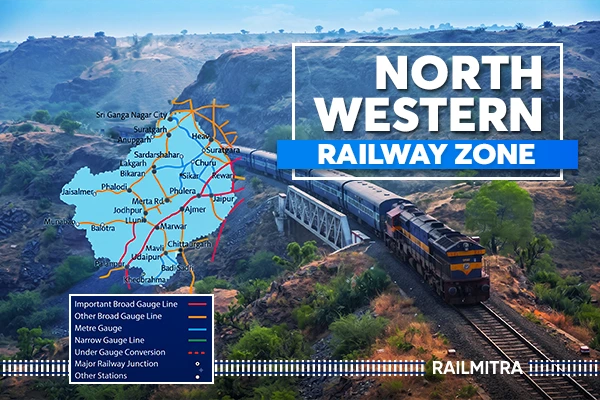
Ask a railway employee in Jaipur what NWR railway means to them, and you will likely hear something about connecting Rajasthan to the rest of the country. The zone stretches across Rajasthan, Gujarat, Punjab and Haryana, covering a route length beyond 5,700 kilometres. That is a lot of track for a region often associated with sand dunes rather than steel rails.
North Western Railway Headquarters
The north western railway headquarters sits in Jaipur, the pink city itself. This was not an accidental choice. Jaipur already functioned as a major junction before 2002, and placing the nwr headquarters here made administrative sense given the city’s central position within the zone’s geography.
From this headquarters, the General Manager oversees all four divisions, coordinating everything from timetable planning to safety audits. Passengers rarely see this side of the operation, but every train schedule you check on RailMitra traces back to decisions made within this office. The north western railway headquarters also handles coordination with the Ministry of Railways on larger projects, including electrification drives and station redevelopment work that has picked up pace across Rajasthan in recent years.
Interestingly, Jaipur’s role as headquarters predates the zone itself. The city was already an important railway hub under the old Jaipur State Railways, and that legacy carried forward when NWR railway zone was formally created.
Also Read: Prayagraj Junction Railway Station Food Guide: What and Where to Eat
Divisions Under the North Western Railway Zone
Four divisions make up this zone, and each one carries its own character shaped by geography and history.
Jaipur division formed after merging Jaipur State Railways with Rajputana Malwa Railway, and today it handles close to 200 stations. Heavy passenger traffic flows through here daily, partly because Jaipur connects onward to Delhi, Mumbai and Ahmedabad.
Jodhpur division covers the desert districts including Barmer, Jaisalmer and Pali Marwar. Anyone who has taken a train toward the Thar Desert has likely passed through this division’s territory. It also manages sensitive border areas, which adds a layer of operational complexity that other divisions do not deal with.
Bikaner division traces its origin back to 1924, making it older than the zone that now contains it. Freight moves heavily through here, carrying food grains, fertiliser and cement across Rajasthan, Punjab and Haryana.
Ajmer division sees enormous seasonal traffic thanks to Ajmer Sharif Dargah and Pushkar, both major pilgrimage destinations. If you are planning a trip through this stretch, checking trains between stations on RailMitra beforehand saves a lot of guesswork, especially during festival months when demand spikes without much warning.
Unique Features of North Western Railway
A few things set this zone apart from the rest of Indian Railways.
International connectivity: NWR operates the Thar Express, running from Jodhpur across the border toward Pakistan. Not many zones can claim an international route on their map.
Desert terrain engineering: Running tracks through sand dunes and extreme heat requires different maintenance approaches compared to other zones. Rail buckling in summer is a real concern here, and NWR’s engineering teams have developed specific protocols to manage it.
Freight corridor role: This zone forms a key stretch of the Western Dedicated Freight Corridor, part of the larger Delhi Mumbai Industrial Corridor project. That is a fairly big deal for a zone often overlooked in national railway conversations.
Heritage narrow gauge history: Parts of this network trace back to metre gauge lines built in the 1880s, later converted to broad gauge. Some old station buildings still carry that older architectural style, quietly.
Pilgrimage traffic management: Handling sudden surges during religious festivals in Ajmer and Pushkar takes coordination that few zones need to manage at this scale.
Also Read: Vaishno Devi Train Journey: Delhi to Katra Route
Border security coordination: Given its proximity to the international boundary, several stations under Jodhpur division operate with additional security protocols, something passengers might not notice but that shapes daily operations significantly.
Checking Train Schedule and Trains Between Stations on RailMitra
Planning a journey across NWR territory gets a lot easier once you know where to look. RailMitra lets you check the train schedule for any route within seconds, whether you are heading from Jaipur to Bikaner or trying to catch a connecting train from Ajmer.
Say you are unsure which trains run between two particular stations. The trains between stations tool on RailMitra pulls up every available option, complete with departure times and journey duration. This becomes especially useful for lesser known routes within the desert districts, where train frequency is lower and missing one connection can mean a long wait for the next.
Live train status is another feature worth using, particularly during winter months when fog delays are common across Rajasthan and parts of Punjab. Rather than guessing whether your train is on time, a quick check tells you exactly where it stands. Passengers travelling toward Ajmer during pilgrimage season especially benefit from tracking their train status before heading to the station, since crowd management at busy platforms can slow things down unexpectedly.
Book Food in Train
Long journeys across this zone can stretch for many hours, sometimes crossing an entire day depending on the route. Jodhpur to distant desert stations, for instance, involves substantial travel time where relying on station vendors alone gets tiresome fast.
RailMitra allows passengers to book food in train directly, with meals delivered right to your seat at scheduled stops along the route. This matters more on NWR routes than people expect, since several stretches pass through areas where reliable food options are simply not available at every stop. Ordering ahead means you are not stuck hoping a vendor shows up during a two minute halt.
Families travelling with children, elderly passengers, or anyone who prefers not to risk unfamiliar roadside food will find this particularly useful on longer desert routes where station infrastructure remains basic in certain sections.
Also Read: Popular Trains That Pass Through Ahmedabad Junction
Final Thoughts
North Western Railway does more heavy lifting than most travellers give it credit for. From connecting pilgrims to Ajmer Sharif, to running an international service toward Pakistan, to keeping freight moving along a critical economic corridor, this zone quietly holds together a huge part of Rajasthan’s transport network. Understanding its headquarters in Jaipur, its four divisions, and the unique challenges of running trains through desert terrain gives you a fuller picture of how Indian Railways actually functions on the ground. Next time you plan a trip through this region, checking the schedule, tracking live status, and arranging food in advance on RailMitra will make the whole experience considerably smoother.
Read More: East Coast Railway Zone: Headquarters, Divisions and Guide
Read More: Popular Trains Passing Through Dehradun Railway Station