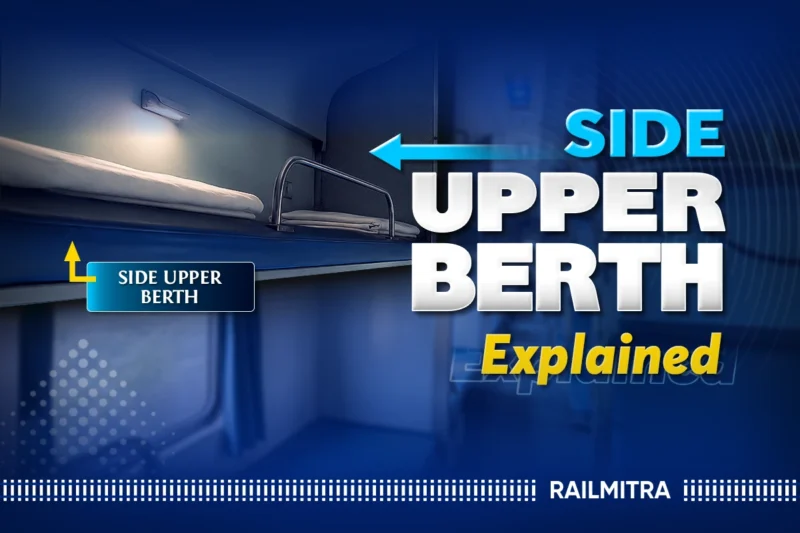
Book a sleeper ticket on Indian Railways and there’s a fair chance you’ll end up with a side upper berth in train coaches somewhere along the aisle. It’s one of those seat types that confuses first time travellers, mostly because nobody tells you what you’re getting until you’re standing in front of it with a bag in hand. The berth sits parallel to the train’s direction of movement, tucked against the corridor wall, and it comes with its own set of rules that most passengers only learn by checking their train schedule and then living through the journey itself.

This blog breaks down what a side upper berth actually means, who it suits, what works in its favour and what doesn’t, along with the exact process to check your berth allocation and seat availability before you travel.
What Does Side Upper Berth in Train Mean
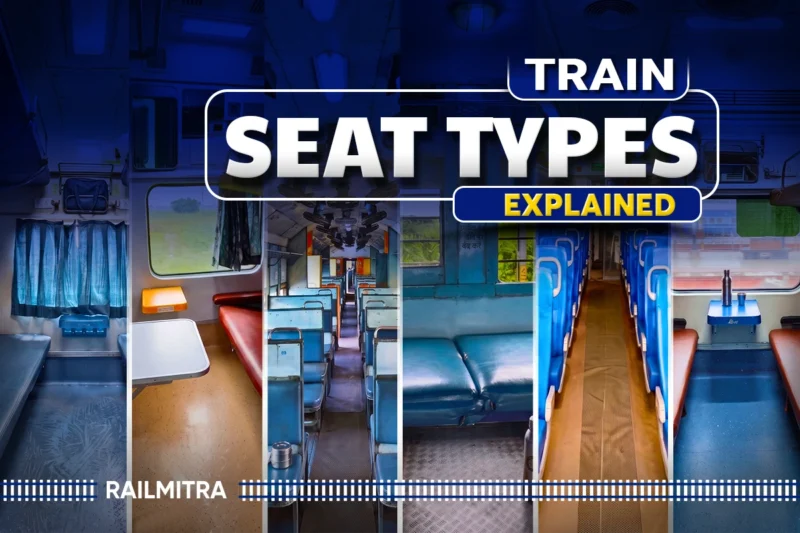
Every sleeper and AC coach on Indian Railways follows a set numbering pattern. One side of the compartment holds three tiers, lower, middle and upper, while the other side runs just two, fixed along the coach length right beside the aisle. These two seats are what get called side lower and side upper.
Unlike the main upper berths, the side upper stays fixed in its position throughout the journey. Passengers don’t need to fold it down or latch it up depending on the time of day, which means the passenger holding this berth can access it whenever they want, day or night, without waiting for anyone or adjusting anything.
Anyone checking a live train running status update while waiting on the platform will be able to track their trains live. Since it would take some time to adjust your luggages and comfortably sit at the top, it is better that you are aware of the train timings. Live train status helps exactly in that. Apart from that passengers also get to check the exact platform number on which the train will stop.
Advantages of a Side Upper Berth in Train Sleeper Class
There’s a version of this berth that only makes sense once you’ve actually used one. On paper it sounds like a compromise seat. In practice, a lot of frequent travellers request it specifically.
More flexibility than any other berth. Since the side upper stays fixed and isn’t shared with anyone, the passenger holding it can rest there at any hour, including daytime, without it affecting another traveller. On top of that, using the side lower as seating during the day is a right that comes with the berth, not something that needs a co-passenger’s permission.
Privacy without asking for it. Since the berth sits away from the main three tier block, nobody is climbing over you to reach their seat. Passengers are kept above the eye sight of the general public and they have the railway wall and open aisle around them. This clearly seems more private than being cramped in between two berths.
Better ventilation in non AC coaches. Since the side upper berth coach is in proximity to the window as well as aisle side this is much more ventilated. It gets more airflow than the main compartment as there is no space for the air to move around in the main compartments.
Fewer daytime disturbances. The side lower below often gets used as communal seating by co-passengers during the day, but the upper berth stays untouched unless the passenger chooses to use it. If you want to sleep through the afternoon, this is the one seat where that’s actually possible.
Slightly more headroom near the window. Passengers who’ve used both note the side upper feels less claustrophobic than the middle berth, mainly because the curve of the coach roof creates a small pocket of extra space near the window end.
Drawbacks of Choosing This Berth
It isn’t without its problems, and most of them show up only after boarding.
Getting up there isn’t always simple. The ladder or foothold near the side lower is narrower than the one built for the main three tier block, and on a moving train, that narrow step turns into a real problem for elderly passengers or anyone hauling heavy luggage.
Luggage is where it gets trickier. The main berths come with shared under seat space built in, but a side upper doesn’t get that. Bags end up under the side lower instead, and that means checking with whoever’s occupying that seat first, particularly in daylight hours when the same spot doubles up as a bench for two people who’ve never met. On top of that, the mattress itself runs narrower than what a standard upper berth offers. It follows the bend of the coach wall instead of sitting flat as a rectangle, so taller travellers sometimes wake up with their feet hanging just past the edge.
Side Upper Berth Rules Every Passenger Should Know
Indian Railways has specific side upper berth rules. They decide when the berth can be used and by whom.
Since the side upper doesn’t fold and belongs entirely to one passenger, there’s no restriction on using it only between fixed hours. A passenger can lie down and rest in their own berth at any point during the journey. This includes the morning or afternoon. It doesn’t inconvenience anyone else on the coach.
The side lower berth works differently because both passengers share it. If the side upper occupant wants to sit during the day, the railway rules allow them to use the side lower berth as seating. The side lower ticket holder cannot object to this arrangement. The railway includes this rule in its guidelines instead of leaving it to negotiation between two strangers. This clears up much of the confusion that first time travellers experience.
RAC rules give senior citizens, along with women travelling alone or with children, priority for lower berth allocation. This indirectly affects how often the railway assigns a side upper berth to someone who didn’t request it.
How to Get a Side Upper Berth in Train While Booking
Although there is no fixed way to get a particular seat in Indian Railways, you can however increase the chances of getting the desired significantly with the right steps. At the time of the booking, IRCTC asks for passengers to select a berth preference. This preference doesn’t insure that you will get the seat as the berth allocation depends on seat avaialability. But if the seats are availabel, then you can be sure that you will get the berth of your preference.
Booking early in the reservation window, ideally right when bookings open sixty days in advance, gives more berths to choose from. Side upper and side lower seats fill up faster on popular routes simply because regular travellers already know their benefits.
Checking train seat availability before confirming travel dates also helps. If a particular train shows more side berths open on one date compared to another, shifting the travel date by a day sometimes makes the difference between getting a preferred berth and getting whatever’s left.
Checking Seat Availability for Side Upper Berth
Knowing what’s actually open before you book saves a lot of second guessing later. RailMitra’s train seat availability tool handles exactly this. It pulls up berth wise availability for any train, class or date without needing a separate portal login.
Punch in the train number or name, choose the date and class. It lays out how many berths are left across every category, side lower and side upper included. Try this during festival season or a long weekend. The value becomes obvious fast. Side berths run out quicker than most. This is mainly because travellers reach for them over the middle tier almost every time.
For passengers still deciding between two nearby dates, comparing seat availability across both dates using this tool takes less time. It takes less time than checking the official portal manually.
Checking Your Berth Using PNR Status
The berth number and coach position don’t always show up right after booking. RAC or waitlisted tickets especially tend to leave this blank until later. That’s exactly when checking PNR status becomes necessary.
Type in the ten digit PNR number on RailMitra’s PNR status tool. It pulls up the current booking status, confirmed berth number, coach, and whether that seat turns out to be side upper, side lower, or one of the main tiers. RAC tickets get something extra too. They show a probability of confirmation as the travel date gets closer. It is useful information for anyone specifically hoping for a side berth while still stuck on the waiting list.
Since berth allocation can shift right up until chart preparation, checking PNR status a day before departure gives the most accurate picture. It shows the actual seat assigned.
Food Options for Side Upper Berth Passengers
Long journeys on a side berth, especially side upper, come with limited access to the pantry car. It is compared to passengers seated closer to the centre of the coach. Ordering food in advance solves this without requiring a walk down a moving train.
RailMitra’s train food booking service allows passengers to order meals from restaurants near upcoming stations. The meals are delivered directly to their seat number. Since side upper passengers already deal with tighter movement space, having food arrive makes a noticeable difference. It is better than having to fetch it on longer routes.
The service works by entering the PNR number. It automatically pulls the train’s route and estimated arrival times at upcoming stations. This lets passengers pick a stop where they’d like their order delivered.
Conclusion
Most people don’t choose a side upper berth in train bookings on purpose, not the first time anyway. But once someone’s actually travelled on one, it tends to become the seat they ask for on every trip after. It’s fixed, it’s private, nobody needs permission to use it, and the passenger holding it gets more freedom than any other berth on the coach, not less. Yes, the frame runs narrower and the climb takes a bit more care. Still, working through the side upper berth rules, checking availability ahead of time, and confirming the final seat through PNR status keeps the whole journey closer to what a passenger expects and further from unpleasant surprises.