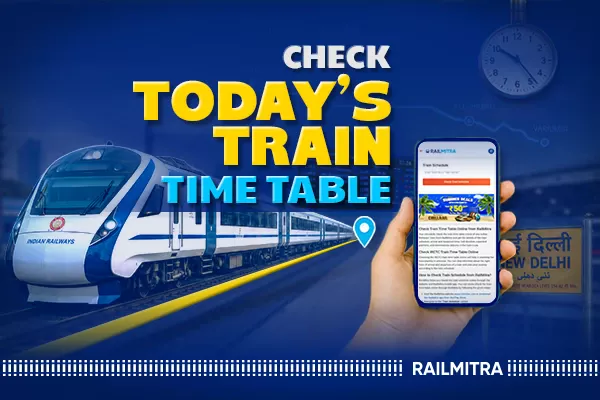
It is 7:04 am in the morning. The tea is still too hot to drink. And the phone is already open to check today train time table. Ask around and most Indian households will tell you some version of the same morning. This is the life of an average commuter whose daily travel depends on trains.

Someone is catching a train, someone else is receiving one, and the first move before anything else gets decided is a quick look at the schedule. Not because people enjoy checking it. Because a train that leaves the yard on time at 7:15 can quietly slip to 7:55 without a single announcement reaching the passenger sitting at home. That gap between what’s printed and what’s actually happening is where most of the anxiety around Indian train travel comes from. It’s older than any of us.
Indian Railways set up its first proper timetable system back in the 1860s, mostly to stop two trains from reaching the same stretch of track at the same time. The logic hasn’t changed much. What’s changed is how fast you can find out.
Why the Today Train Time Table Still Matters So Much
Think about the father standing at Kanpur, waiting to pick up his daughter. He doesn’t want the schedule out of curiosity. He wants to know if he should leave home now or if there’s another forty minutes to spare. Kanpur station traffic at pickup time is its own kind of chaos. Multiply that by the working professional who cannot miss a morning Shatabdi. Add the student heading home for Chhath who’s already anxious about the crowd. Then think about the taxi driver parked outside the station gate. He has been doing this for fifteen years and still checks his phone before every pickup.
There’s a second reason people check it too. It has nothing to do with actually catching a train. Fog rolls into Delhi in December and half the schedule falls apart. Mumbai’s suburbs flood every monsoon and trains crawl through waterlogged tracks at a fraction of their normal speed. None of that is something a passenger controls. Refreshing the schedule, oddly enough, is the one thing they can control on a day when everything else feels uncertain.
RailMitra cuts out a step that used to eat up a good fifteen minutes of anyone’s morning. Calling the station enquiry line and sitting on hold while someone reads out numbers off a register is no longer necessary. Search the train, and the train time table shows up with every halt station on the route. It also shows the arrival and departure timing at each one, along with the total distance covered. Simple enough that most people figure it out without needing to be told how.
How to Check the Today Train Time Table on RailMitra
Search by train number or by name. Either works. The primary information shown is the exact path for that day. This is actually a very influential detail, although most people do not realise it. Indian Railways schedules change a little based on the day of the week. It is quite common for a Tuesday schedule not to match the Saturday one for a specific train number. Relying on a general printed table someone photographed months ago is how people end up standing on the wrong platform at the wrong hour.
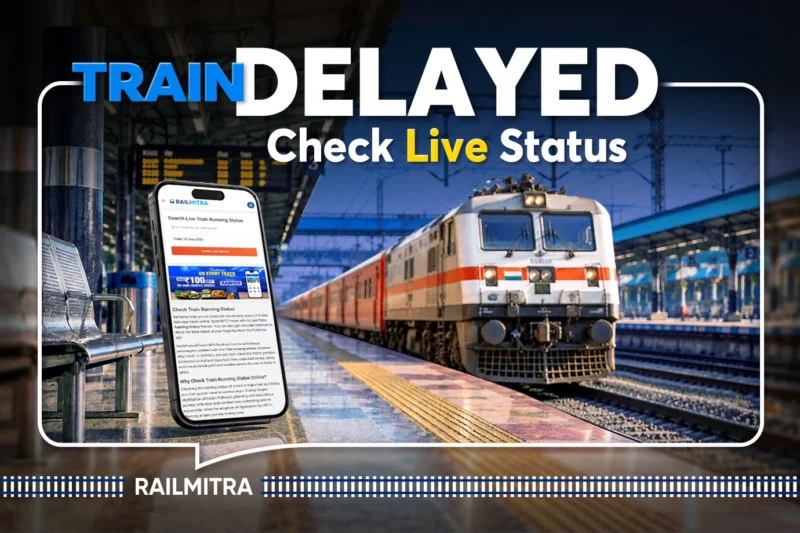
A printed schedule tells you what’s supposed to happen. It says nothing about what’s actually happening right now, on the tracks, at this exact minute. That gap is exactly what live train running status fills in. It shows the current location of the train, whether it’s running late and by how many minutes, and the expected arrival at the next few stops down the line. Anyone who has stood at a station not knowing this understands the difference. Watching every announcement in three languages and understanding none of it clearly is frustrating. Seeing on the phone that the train is twelve minutes out and closing fast feels completely different.
Most of this checking happens on a phone now, not a desktop. That is exactly why a decent train app matters more than people give it credit for. Station announcements get drowned out on a crowded platform. Network drops the moment the train enters a tunnel or a low coverage stretch. A paper schedule doesn’t know a diversion happened three hours ago. An app that refreshes on its own and still works on two bars of signal solves a genuinely annoying problem. It used to cost travellers real time and real stress.
Should You Stay Updated on the Latest Timetable Changes?
Indeed, those who use trains for transportation regularly would agree. The railway companies update their timetables frequently. They sometimes cancel a stop or two, or move a few minutes ahead or behind to free up the track. After all, a timetable that was perfect in March can be completely outdated by June.
If you are the kind of person that takes a train somewhere only once a year and happens to forget to check the updated schedule, you can end up waiting at the wrong platform for an excessively long time. You could also show up just after the train has departed.
Weather does its part here too. Winter fog across Delhi, Punjab and large parts of Uttar Pradesh pushes trains back by hours. Sometimes overnight, sometimes longer. Monsoon season does something similar along low lying and coastal routes. None of this shows up on a fixed printed schedule. It only shows up when someone actually checks the live status close to the date they’re travelling.
Festival season adds its own layer to this. Diwali, Chhath, the summer holiday rush: Indian Railways load far more trains onto corridors that are already stretched thin during these weeks. A delay that would normally run ten minutes can stretch past an hour without much warning. Special trains get slotted in. Some regular ones get rerouted for a few days. Platforms built to handle two trains an hour are suddenly handling four. People who assume festival timing matches the rest of the year are usually the ones caught off guard. They end up standing on the wrong platform wondering where their train went.
Check the scheduled timing. Then check the live running status again closer to the actual hour. It’s a small habit. Nobody notices it paying off until the one day it does.
Food in Train: Another Thing Worth Planning Around the Schedule
Once the timing question is out of the way, food comes up next on any long haul journey. Sixteen or eighteen hours across states is a long time to survive on biscuits picked up at whichever station the train happened to stop at. Knowing the arrival time at major stations along the route changes this completely. Instead of guessing, travellers can plan actual meals around actual stops.
RailMitra’s food in train service is built around exactly this. Once you know when your train reaches a particular station, order a meal timed to arrive fresh right at that stop. It is delivered straight to your seat. There is no need to step off or haggle with a vendor through a half-open window while the train is about to move. Families travelling with young kids benefit from this. Elderly passengers who cannot manage a crowded platform during a two-minute halt also benefit. Anyone who’d rather eat a proper meal than another packet of chips does too. They all benefit from timing the order against the schedule instead of scrambling at the last minute.
This is where the timetable and the food service really depend on each other. Without knowing the today train time table for your specific train, ordering food at the right station turns into a guessing game. Nobody wants their meal showing up twenty minutes after the train has already pulled out of that stop.
A Few Other Things Worth Checking Before You Travel
Seat availability deserves a quick look too, especially for anyone still deciding between two or three trains. Checking it alongside the schedule helps travellers pick something that fits both the timing they need. It also ensures the train actually has confirmed seats open. That is much better than finding out about the waitlist only at the booking stage. Nothing quite like discovering a perfectly timed train is fully waitlisted two weeks before you’re supposed to leave.
Closer to the date of travel, PNR status becomes just as important as the schedule itself. It confirms whether the ticket has gone through. It also shows what coach and berth got allotted, and whether anything changed on the railway’s end without much fanfare. Doing this a day or two out, alongside one last glance at the timetable, is the routine most experienced train travellers swear by. Even if they never sat down and thought about why it works.
Final Thoughts
Checking the today train time table stopped being about just knowing a departure time a while back. It’s become part of how people plan an entire day around one journey. That could mean picking up a relative, catching a connecting flight, or making sure a meal shows up at the right station instead of the wrong one. Schedules shift. The weather interferes. Platforms change without warning half the time. The only real defence against all of it is checking the timing that applies to today. Don’t rely on memory or some printed sheet from a previous trip. RailMitra aggregates the train timetable, real-time train running status, and other useful features like ordering food. That alone removes a large part of the stress of Indian train travel. It takes an extra minute to open the train schedule on your phone. You may decide to check today train time table before you leave the house. Such a minuscule habit goes on to save much more time and worry than people around would expect.