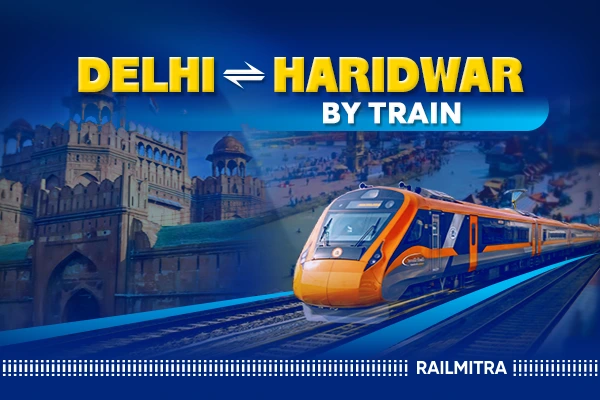
Delhi to Haridwar is one of the most popular train routes in the country. Most of the people travelling on this route are going for a religious journey to the holy land of Haridwar. Some travel and mountain enthusiasts also take this journey to take a glimpse of the mighty Himalayas. The journey is about 250 kilometres long and it takes somewhere between 3.5-7 hours to reach Haridwar from Delhi.

Another reason for the popularity of Haridwar is that when you travel to Haridwar, you just don’t travel to one location but three. Yes, popular travel destinations as in Rishikesh and Dehradun are within an hour’s distance from Haridwar. This means Haridwar can handle your travel plans from a weekend getaway to a full fledged week long family tour.
In this blog, we have provided detailed information on the experience and services on the Delhi to Haridwar. Usetrains between stations to check which services run from your boarding station to Haridwar, with day-wise availability and class-wise quota status.
Why People Take Delhi to Haridwar Train
Haridwar, the name translates directly: Gateway to God. The city sits at the point where the Ganges drops out of the Shivalik gorges onto the plains. That geography is the whole reason the city exists. Paassengers usually travelling to this Delhi to Haridwar usually includes devotees or students. The short duration of the jotnney between the two cities also makes it a perfect spot travellers looking to spend their weekend at some place peaceful and close to nature.
Pilgrims come to bathe in the Ganga, perform ancestral rites, or just be at Har Ki Pauri for the evening aarti before pushing further into the mountains. Some come for a day. Others are on their way to the Char Dham Yatra circuit: Yamunotri, Gangotri, Kedarnath, Badrinath. Haridwar is the base camp for all four. Board a night train from Hazrat Nizamuddin, and the Shivaliks are already outside the window when you wake up. That matters when you still have two more days of mountain travel ahead.
Pilgrims are not the whole picture. Roorkee draws IIT students and Bengal Engineer Group personnel. Rishikesh is 24 km past Haridwar. Weekend travelers have clocked that: three hours on the Vande Bharat from Delhi, and you are there before the evening aarti without burning a leave day.
The Landscape of Delhi to Haridwar Route
Two lines connect Delhi to Haridwar.
The Main Line runs north: Ghaziabad, Meerut, Muzaffarnagar. Double track, fully electrified, WAP-7 traction. Nearly all express and premium services use this route.
The Branch Line via Shamli breaks off at Delhi Shahdara, goes through Bagpat and Kandhla, rejoins the main line at Tapri. Single track. Slower. The halting passenger trains run here.
The View Outside Your Train Window
Leave Delhi and the view is dense. Brick structures pressing against the tracks, industrial estates, the Yamuna crossing at Ghaziabad with its riverside settlements packed below. It looks like Delhi for longer than you expect.
Then somewhere around Muradnagar, the city releases. The Indo-Gangetic Doab spreads out: flat, alluvial, cultivated in every direction. Sugarcane. More sugarcane. In winter the stalks go taller than a person standing on the platform. Between harvests, ploughed red-brown earth broken only by narrow irrigation channels and the odd row of eucalyptus.
Past Muzaffarnagar, mango orchards replace some of the cane. Brick kiln chimneys push up above the treeline. The train runs close to village paths; you see tractors loaded with cane turning slowly on unpaved tracks.
Near Roorkee, the flatness begins to break. Not dramatically: just a faint ripple on the skyline where the Shivaliks start. The air coming through the window is different. Cooler. The smog thins. By the time the train runs parallel to the Ganges Canal at Laksar, with grey-green glacial water moving fast between wide concrete walls, you know you have crossed into something else.
For passengers using the branch line through Shamli: the view here is true agrarian India. Low-level brick platforms shaded by banyan trees. Fields of mustard and wheat beginning at the platform edge. There are not food plazas or fast foods here. The snack of this regions is the fresh agricultural produce consisting of juicy Sugarcane stalks as well as freshly cut Giavas sprinkled with black salt.
Atmosphere Onboard Delhi to Haridwar Route
The vibe and atmosphere of Delhi to Haridwar travel is of community, service and devotion. You can find strangers having a conversation as Sleeper as well as second sitting coaches. AC travellers tend to be more private and secluded from the others, not in this route but on most of the routes in the country. Some pilgrims would be discussing whether the family Panda or priest is still present at the ghats. Travellers can find themselves fiercely debating on whether to visit Haridwar or Kedarnath first. Some passengers even begin playing devotional music on the train.
Food follows the destination. Haridwar is a dry, meat-free city by law, and passengers heading there tend to adjust before they arrive. Metal tiffin stacks come out around Meerut: puris, dry aloo sabzi, parathas, a little mango pickle in the corner compartment. The smell reaches two rows in either direction and nobody minds.
You can check thetrain schedule for your specific service to plan meal stops and confirm the halting pattern at key stations.
Stations on Delhi to Haridwar Train Route
Delhi Terminals: New Delhi (NDLS) / Old Delhi (DLI) / H. Nizamuddin (NZM) / Anand Vihar (ANVT)
Four Delhi stations on this corridor, and none of them are interchangeable. Vande Bharat: Anand Vihar. Shatabdi and Jan Shatabdi: New Delhi. Long-distance overnight trains: mostly H. Nizamuddin or Old Delhi. A wrong station means a missed train. Worth confirming before you leave home.
Halt: 30 to 45 minutes at origin before departure.
Boarding experience: Steep footbridges, heavy luggage, unreserved coach scrambles. Premium class boarding is calmer, but platforms are loud regardless.
What to buy: Chole bhature from licensed food plazas, bedmi poori, bottled water, newspapers. Delhi stations have the widest food range on the entire route.
Sahibabad Junction (SBB)
It sits on the Delhi-Ghaziabad border. Most express trains skip it. For locals, it is a daily commute point.
Halt: 1 minute.
Boarding experience: Very congested during commute hours. Avoid boarding if possible.
What to buy: Tea, packaged biscuits from small wooden stalls.
Ghaziabad Junction (GZB)
The junction where Delhi’s rail network branches into the North-Central trunk lines. The Ghaziabad loco shed keeps WAP-7 engines here that haul trains all the way to Haridwar and beyond.
Halt: 2 minutes.
Boarding experience: High passenger density. Best avoided for boarding if starting a comfortable journey.
What to buy: Spiced bread toast, rabri with pistachios, kachoris. Jain Shudh Bhojnalya near the station does Kadhai Paneer and Tandoori Naan. Two minutes is not enough to walk there, but pre-ordering through RailMitra gets it to your seat.
Muradnagar (MUD) and Modinagar (MDNR)
Factory towns and college centers on the western UP stretch. Not every train stops at both.
Halt: 1 minute.
Boarding experience: Moderate. Mostly students and factory workers. Boarding is quick.
What to buy: Freshly fried potato samosas, packaged chips.
Meerut City Junction (MTC)
Cantonment city, big market, heavy passenger volume. One of the busier stops on this line.
Halt: 2 minutes.
Boarding experience: Crowded. Large volumes enter and exit simultaneously. Challenging for unreserved class.
What to buy: Aloo tikki, chaat, and Nagori Shikanji: a traditional lemonade sold cold from street-side stalls just outside the platform gates. Pre-ordering a Gujarati Thali from local outlets here via RailMitra gets it delivered to your coach on arrival. Authentic Paneer Butter Masala is also available from partner restaurants at this stop.
Meerut Cantt (MUT)
Tree-lined platforms, colonial-era station building, noticeably quieter than Meerut City two stops back.
Halt: 1 minute.
Boarding experience: Low to moderate. Considerably calmer than Meerut City. Worth using if you are in the cantonment area.
What to buy: Cucumber slices with salt, hot tea.
Daurala (DRLA), Khatauli (KAT), and Mansurpur (MSP)
Small agrarian stations serving the sugarcane belt. These are quiet stops.
Halt: 1 minute each.
Boarding experience: Low congestion. Peaceful.
What to buy: Sugarcane juice in the winter crushing months, Gajak (sesame brittle), roasted chickpeas from farmers who walk up to the coach windows.
Muzaffarnagar (MOZ)
District headquarters. Jaggery capital of this part of UP. The platform is genuinely well-maintained: high-level boarding, wide footbridges, working electronic boards. Hygiene rating of 4 out of 5, which is better than most stations this size.
Halt: 2 minutes.
Boarding experience: Moderate to high volume but organized. Wide footbridges handle the crowd well.
What to buy: Muzaffarnagar Gur in raw blocks or cardamom-fennel sweetened variants, creamy Kheer in clay pots.
Deoband (DBD) and Nagal (NGL)
Darul Uloom seminary is here, one of the most cited Islamic educational institutions in South Asia. The station reflects that. Quiet, orderly. Students in kurtas carrying books. Local textile merchants. Not a noisy stop.
Halt: 1 minute.
Boarding experience: Calm and quiet. Very easy to board.
What to buy: Soan Papdi, spiced Mathris.
Saharanpur Junction (SRE)
Three rail lines meet here: Delhi, Punjab, Uttarakhand. For trains running via this junction (the Dehradun Shatabdi being the main one), this is where the locomotive reversal happens. The electric loco uncouples from one end of the rake, the engine runs around through the yard, and re-couples to the other end. 25 to 40 minutes, typically.
Passengers step off to stretch legs. Children watch the loco manoeuvre. Vendors work the platforms hard.
Halt: 25 minutes for trains requiring reversal.
Boarding experience: High density but completely stress-free due to the long stop. You have time to find your coach.
What to buy: Saharanpur wooden handicrafts at small platform stalls, fresh Paneer Pakoras, Jaljeera in clay urns.
Note on bypass: Several services, including the Vande Bharat and Jan Shatabdi, skip Saharanpur entirely by using the Tapri bypass chord. This saves up to 40 minutes.
Tapri Junction (TPZ)
The operational bypass station south of Saharanpur. Bypass-route trains thread through here instead of Saharanpur.
Halt: 1 to 2 minutes.
Boarding experience: Very low crowd. Excellent option for passengers from Saharanpur’s southern suburbs.
What to buy: Tea, packaged snacks. Nothing regional.
Roorkee (RK)
IIT Roorkee and the Bengal Engineer Group cantonment define this station’s character. The crowd here is noticeably different from the sugarcane belt stations: students with backpacks, officers, academics.
Halt: 2 minutes.
Boarding experience: Orderly and clean. Students with backpacks, IIT faculty, cantonment personnel. Notably easier than any station between here and Delhi.
What to buy: Aloo Puri, Kachori-Sabzi, Stuffed Parathas, Gulab Jamun, Rasgulla, Ghevar. Roorkee is genuinely good for food. Pre-ordering from partner restaurants at this stop viabook food in train is worth doing if you have skipped eating since Delhi.
Laksar Junction (LRJ)
Oldest and largest junction in Uttarakhand. Six platforms, multiple intersecting lines: routes to Dehradun, Saharanpur, and Moradabad all branch here. The sound is constant: heavy diesel engines, track switching, porters moving cargo.
Halt: 2 minutes for expresses; up to 35 minutes for passenger trains waiting for locomotive crossings.
Boarding experience: Chaotic and congested. The mix of local and long-distance travelers makes unreserved boarding difficult. Not recommended for casual boarding.
What to buy: Aloo Puri on leaf plates, Kachoris with spicy potato-stew gravy, fresh dairy Pedhas.
Jwalapur (JWP)
The western suburban edge of Haridwar city. A quiet platform with clean concrete and cool air from the nearby Shivaliks.
Halt: 2 minutes.
Boarding experience: Low crowd. A genuinely good alternative to Haridwar Junction for passengers staying in the western ashram zones. Auto-rickshaws available outside.
What to buy: Samosas, Pedhas, tea.
Haridwar Junction (HW)
The terminal for most pilgrims. Sanskrit and Hindi announcements overlap. Orange-clad sadhus move between platforms. Thousands of people carry brass Gangajali vessels. During the Kanwar Yatra or Kumbh Mela, the crowd at Haridwar Junction is not something you can describe easily. You experience it physically.
Halt: 5 minutes for passing trains; terminal stop for many.
Boarding experience: Extremely crowded during peak pilgrimage seasons. Physically demanding. If you are continuing onward rather than arriving, use Jwalapur instead.
What to buy: Brass Gangajalis, Rudraksha beads, religious literature, Sattvic thalis, thick Lassi in clay pots.
The Branch Line via Shamli
For the halting passenger services on the Shamli route, the alignment runs:
Old Delhi → Delhi Shahdara → Noli → Khekra → Bagpat Road → Baraut → Kandhla → Shamli → Nanauta → Tapri → Haridwar
Single track. Mostly unelectrified. Trains hold at siding loops to let faster services pass in the opposite direction. Those waits are unscheduled and can be long. No organized food plazas at any station on this line. Farmers sell directly on the tracks: raw sugarcane, guavas with black salt, roasted mungfali in newspaper cones, cold buttermilk.
Worth taking once if you want to see what the interior districts look like from a train. Not practical if you are in a hurry.
Trains on the Delhi to Haridwar Route
Most services on this corridor run as synchronized pairs. The train that goes up one day returns the next using the same rake. A few appear unpaired in booking databases. Bi-weekly services whose return runs on a different day. Rake-sharing setups where the same coaches come back under a different number. Seasonal pilgrimage specials where the empty rake goes straight to its home yard after dropping passengers. If a return train seems missing, one of these is usually the reason.
CheckLive Train Status for real-time running position before you leave for the station.
Premium Air-Conditioned Services
All-AC, LHB rakes, onboard catering, few halts. These three cover the full premium range on this corridor.
| Up Train | From / Departure | Down Train | To / Arrival at HW | Distance | Duration | Classes |
| 22457 Vande Bharat Express | Anand Vihar (ANVT) 17:50 | 22458 Vande Bharat Express | Haridwar (HW) 08:09 | 250 km | 3h 21m (up) / 3h 36m (down) | EC, CC |
| 12017 Dehradun Shatabdi Express | New Delhi (NDLS) 06:45 | 12018 Dehradun Shatabdi Express | Haridwar (HW) 18:07 | 266 km | 4h 50m (up) / 4h 43m (down) | EC, CC |
| 12055 Dehradun Jan Shatabdi Express | New Delhi (NDLS) 15:20 | 12056 Dehradun Jan Shatabdi Express | Haridwar (HW) 06:29 | 253 km | 4h 07m (up) / 4h 36m (down) | CC, 2S |
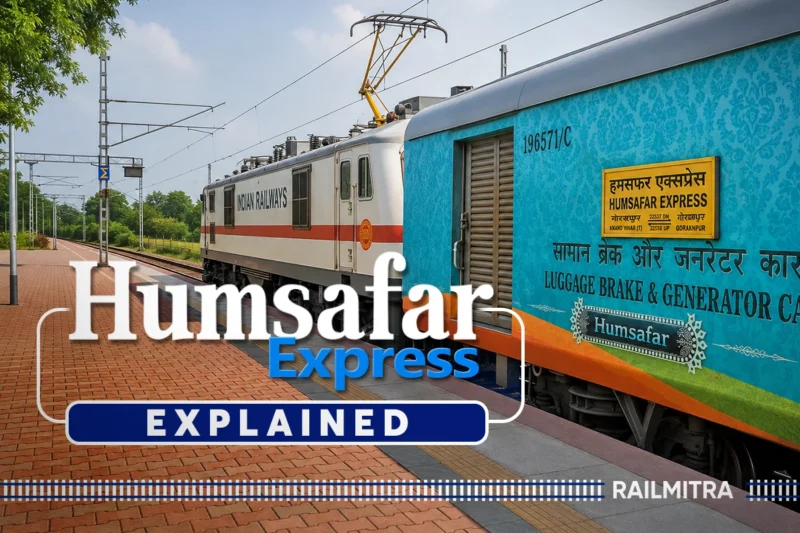
22457/22458 Vande Bharat: Tapri bypass, no Saharanpur stop. Delhi to Haridwar in 3.5 hours. Fastest service on this route.
12017/12018 Dehradun Shatabdi: runs via Saharanpur Junction, full loco reversal included. Add 35 minutes roughly. Spacious LHB chair-car coaches and the reversal itself is worth watching once if you have never seen it.
12055/12056 Jan Shatabdi: same network, same Tapri bypass as the Vande Bharat, but the 2S second-sitting option makes it the budget choice among the premium three.
Long-Distance Express Services Connecting Western and Central India
These trains start well outside Delhi, coming in from Maharashtra, Gujarat, Rajasthan, Kerala, and Odisha. Full sleeping accommodation. Most reach Haridwar in the early morning or depart in the evening.
| Up Train | From / Departure | Down Train | From HW / Departure | Distance | Duration | Classes |
| 19019 Mumbai Bandra (T) Haridwar Express | H. Nizamuddin (NZM) 02:50 | 19020 Haridwar Mumbai Bandra (T) Express | Haridwar (HW) 13:30 | 250 km | 5h 00m (up) / 5h 10m (down) | 1A, 2A, 3A, 3E, SL, GN |
| 12171 LTT Haridwar AC Express | H. Nizamuddin (NZM) 06:55 | 12172 Haridwar LTT AC Express | Haridwar (HW) 17:20 | 251 km | 5h 40m (up) / 5h 05m (down) | 1A, 2A, 3A |
| 12911 Valsad Haridwar Express | H. Nizamuddin (NZM) 08:50 | 12912 Valsad SF Express | Haridwar (HW) 18:30 | 250 km | 5h 40m (up) / 4h 40m (down) | 2A, 3A, SL, GN |
| 22917 Bandra (T) Haridwar SF Express | H. Nizamuddin (NZM) 08:50 | 22918 Haridwar Bandra (T) SF Express | Haridwar (HW) 18:30 | 250 km | 5h 40m (up) / 4h 45m (down) | 2A, 3A, SL, GN |
| 12401 Kota Dehradun AC Express | H. Nizamuddin (NZM) 23:50 | 12402 Dehradun Kota AC Express | Haridwar (HW) 00:14 | 250 km | 4h 05m (up) / 4h 16m (down) | 1A, 2A, 3A |
Note: 12911 and 22917 both depart NZM at 08:50. These are separate train numbers but share the same departure slot. Check availability for both when planning.
Long-Distance Express Services Connecting Eastern and Northern India
Trains connecting Odisha, Jharkhand, Rajasthan, Uttarakhand, and Uttar Pradesh to the corridor.
| Up Train | From / Departure | Down Train | From HW / Departure | Distance | Duration | Classes |
| 18477 Kalinga Utkal Express | H. Nizamuddin (NZM) 13:20 | 18478 Kalinga Utkal Express | Haridwar (HW) 06:54 | 250 km | 6h 48m (up) / 4h 51m (down) | 1A, 2A, 3A, 3E, SL, GN |
| 19031 Yoga Express | Old Delhi (DLI) 05:05 | 19032 Yoga Express | Haridwar (HW) 15:59 | 250 km | 6h 15m (up) / 6h 54m (down) | 1A, 2A, 3A, 3E, SL, GN |
| 19609 Udaipur Yog Nagari Rishikesh Express | Old Delhi (DLI) 03:15 | 19610 Udaipur Express | Haridwar (HW) 19:03 | 245 km | 5h 15m (up) / 5h 57m (down) | 2A, 3A, SL, GN |
| 22659 Kochuveli YNRK SF Express | H. Nizamuddin (NZM) 06:00 | 22660 YNRK Kochuveli SF Express | Haridwar (HW) 07:45 | 250 km | 6h 43m (up) / 5h 15m (down) | 2A, 3A, SL, GN |
The Yoga Express (19031/19032) and Kalinga Utkal Express (18477/18478) both extend to Rishikesh beyond Haridwar. Passengers for Rishikesh should stay on board.
The Kochuveli YNRK Express (22659/22660) covers the longest origin-to-destination distance on this corridor, coming from Kerala through Karnataka, Goa, Maharashtra, and Rajasthan before reaching Haridwar.
Overnight Expresses and Slow Services
For travelers who prefer to board at night in Delhi and arrive at Haridwar in the early morning, or for those with heavy luggage and no urgency.
| Up Train | From / Departure | Down Train | From HW / Departure | Distance | Duration | Classes |
| 14341 Mussoorie Express | Old Delhi (DLI) 22:25 | 14342 Mussoorie Express | Haridwar (HW) 23:16 | 283 km (via Bijnor loop) | 7h 25m (up) / 7h 59m (down) | 1A, 2A, 3A, SL, GN |
The Mussoorie Express takes a longer route via the Bijnor loop, which explains the extended duration despite the relatively short distance. It is a full sleeper service: unreserved, sleeper, and AC classes all present. Useful for overnight travel with heavy pilgrimage luggage.
CheckSeat Availability for current quota status on these trains before booking, especially for SL and 3A classes during the Char Dham season.
Unreserved and Passenger Services
These are the slow trains. They stop at every station. No reservation required. Used daily by traders, farmers, and local commuters.
| Up Train | From / Departure | Down Train | From HW / Departure | Distance | Duration | Classes |
| 14303 Delhi Haridwar Express | Old Delhi (DLI) 17:45 | 14304 Haridwar Delhi Express | Haridwar (HW) 09:00 | 249 km | 5h 45m (up) / 5h 40m (down) | GN |
| 14305 Delhi Haridwar Express | Old Delhi (DLI) 10:20 | 14306 Haridwar Delhi Express | Haridwar (HW) 07:30 | 232 km (via Shamli) | 7h 35m (up) / 7h 35m (down) | GN |
| 54475 Delhi Haridwar Passenger | Old Delhi (DLI) 10:30 | 54476 Haridwar Delhi Passenger | Haridwar (HW) 04:25 | 245 km | 11h 35m (up) / 11h 40m (down) | GN |
The 54475/54476 Passenger Service is the slowest service on this corridor. Over 11 hours for 245 kilometres. Every halt, every siding loop, every crossing. The rake also operates under different train numbers on parts of the return route, which is why some booking portals show it as unpaired. The physical train exists; the return number is just different in the system.
14305/14306 uses the Shamli branch line alignment, which adds distance and time but passes through the deep agricultural interior of Bagpat and Shamli districts.
Food on the Delhi to Haridwar Train Journey
Most long-distance trains on this corridor have pantry cars, but the quality varies considerably. On the Jan Shatabdi and Vande Bharat, catering is onboard and reasonably consistent. On the mail and express services, the pantry quality is unreliable.
RailMitra delivers fresh food to your seat at major stations along this route. Place your order using your PNR number. The system checks your coach and seat, confirms the train’s running status, and selects partner restaurants only at stations where the halt is long enough: Meerut City, Saharanpur, Roorkee, and Laksar are the key delivery points on this corridor.
Order 60 minutes before your train reaches the delivery station. The kitchen prepares fresh when the order is confirmed. A delivery agent boards at the designated station and brings the food directly to your berth. Payment is by UPI, card, or cash on delivery.
What RailMitra Delivers on This Route
Because Haridwar is a meat-free, alcohol-free city, the majority of passengers on this corridor observe vegetarian food choices for the entire journey. RailMitra covers the specific dietary categories this route requires:
Note: These are tentative prices. Actual price may vary from restaurant to restaurant.
Standard Vegetarian
| Item | Price | Contents |
| Veg Mini Thali | Rs. 119 | Steamed Basmati Rice, Dal Fry, 1 Dry Seasonal Vegetable, 3 Tawa Rotis, Mango Pickle |
| Veg Deluxe Thali | Rs. 179 | Steamed Rice, Dal Fry, Paneer Butter Masala, Mix Veg Sabzi, 4 Tawa Rotis, Curd, Gulab Jamun, Salad, Pickle |
| Veg Maharaja Thali | Rs. 229 | Premium Basmati Jeera Rice, Dal Makhani, Paneer Kadai, Mix Veg Sabzi, 4 Butter Rotis, Curd, Sweet, Salad, Papad, Pickle |
Sattvic Menu (No Onion, No Garlic)
Many devotees aren’t satisfied with just avoiding non- vegetarian items. During religious events or while visiting holy locations Ayurvedic dietary codes are followed. Non-vegetarian items like meat, fish, eggs, etc. are not allowed. Along with this even vegetarian items like onion, garlic, or mushrooms are excluded as well. Devotees are expected to consume fresh farm grains, legumes, dairy products and salt rock food only. Thanks to RailMitra there are numerous budget friendly options for pure veg food in train:
| Item | Price | Contents |
| Satvik Veg Biryani | Rs. 129 | Long-grain Basmati dum-cooked with carrots, beans, peas, and mild spices. No onion or garlic. Served with spiced Raita |
Jain-Compliant Menu
No root vegetables: no potatoes, onions, garlic, carrots, radish, or ginger. Prepared in completely isolated cooking zones with dedicated utensils.
| Item | Price | Contents |
| Jain Thali | Rs. 180+ | Steamed Rice, Jain Yellow Dal Tadka, 2 Root-Free Dry Vegetable Dishes, 4 Plain Rotis, Salad, Pickle |
Vrat (Fasting) Menu
For Navratri, Shravan, and lunar fast periods. No grains. Sabudana, Kuttu flour, Singhara flour. Rock salt (Sendha Namak) instead of iodized salt.
| Item | Price | Contents |
| Sabudana Khichdi | Rs. 120 | Tapioca pearls sautéed with cumin, roasted peanuts, curry leaves, and green chillies in pure ghee. Served with fresh Curd |
Station-Wise Regional Food Delivery
Ghaziabad: Kadhai Paneer, Tandoori Naan, Rabri from local outlets.
Meerut City: Gujarati Thalis with Khaman Dhokla and Tuver Dal sweetened with jaggery, or standard North Indian thalis with Paneer Butter Masala.
Roorkee: Aloo Parathas with thick curd, Chole Bhature, Dal Makhani, Ghevar, Kaju Katli. Roorkee partner kitchens are among the most consistently rated on this corridor.
Laksar: Dhaba-style thalis, Aloo Parathas, Dal Fry, Kadhai Paneer.
Before You Travel
The Delhi to Haridwar train route is not complicated. Most confusion comes from which terminal to depart from in Delhi: the Vande Bharat uses Anand Vihar, the Shatabdi uses New Delhi, the overnight expresses mostly use H. Nizamuddin or Old Delhi. Check the specific train number before heading to the station.
A few practical notes:
If you want to avoid Haridwar Junction’s crowd during peak pilgrimage seasons (Kanwar Yatra, Kumbh Mela, Somvati Amavasya), Jwalapur station is 2 minutes before Haridwar and has a fraction of the foot traffic.
Roorkee is the cleanest and most comfortable mid-route boarding option on the main line. If you are joining the train there rather than Delhi, it is a good experience.
For families with elderly travelers, the Shatabdi (12017/12018) remains the most comfortable daytime option despite the Saharanpur reversal delay. Spacious LHB chairs, consistent onboard service, and a structured timetable.
Plan your Delhi to Haridwar journey with RailMitra. Checktrains between stations to compare timings, classes, and availability across the full range of services on this corridor.