
Bollywood and Punjab have a deep rooted history and connection. The Kapoors were among the first and are still the most important elements of Bollywood. Along them came other Punjabi actors that helped build the industry to the level that it is today. Paschim Express is central to this Punjab-Bollywood connection.

This train connects the Bandra Terminus of Maharashtra with the Amritsar Junction in Punjab. It departs at eleven forty from the Bandra Terminus. The Paschim Express is filling up and the first announcement hasn’t even played yet.
From Mumbai to Amritsar, it connects five states end to end. It follows a route this train has run for decades now. Is it worth booking? Depends what you want out of a train ride, honestly, but if you are weighing it against a flight, keep reading. Stations, timings, food stops, the odd bit of history nobody tells you. That’s what follows.
What the Paschim Express Actually Is
Paschim means West in Hindi. That’s the entire idea packed into one word. There was the demand of a train connecting the western states of Maharashtra, Gujarat and Mumbai and Paschim Express fulfilled that demand. Before the launch of this train passengers need to change two to three trains for completing this journey. The changing of the trains itself took half of the day. Indian Railways thus launched the train on December 24, 1956, under the name Deluxe Express.
Initially this train was launched as an Air-conditioned only train catering to premium customers. Thus, it was named Deluxe Express. Slowly, the demand for the train grew and kept growing. Railways eventually added non-AC sleeper coaches to this train for maximum outreach. Once non AC coaches were added, the term “Deluxe” was found inappropriate for the train and was changed to Paschim Express.
There was a real gap this train filled. Workers and traders moving between Gujarat’s mill towns and Punjab, that was one half of the demand. The other half was Punjabi families in Mumbai who wanted to get home for a wedding without burning three days of leave on the travel alone. Paschim Express answered both. And then, somewhere along the way, it turned into something people just prefer, faster trains or not.
Western Railway runs it, superfast tag intact after all these years, which says something about how the railways still rank this corridor. Sleeper, third AC, second AC, first AC, all on the same rake: a student counting rupees and a family booking a wedding trip end up on the identical train. That range is part of why it has stayed relevant while shinier trains came and went. Not every route needs a bullet train solution. Some just need one dependable service that shows up every single day, and that is what Paschim Express has quietly been since it started running this corridor.
What Riding It Actually Feels Like
Board at Bandra, afternoon heat already sitting on the platform, and for the first hour or two this barely registers as a long journey. Suburbs blur by, Borivali comes and thins out into something less crowded. Then Gujarat opens up. Somewhere around Surat the light changes, flatter and more golden, and by evening the train is running through fields that go on longer than conversations do.
Night on this train has its own rhythm. Berths come down somewhere near Ratlam. Chai vendors thin out, and the compartment gets that specific quiet you only find on overnight trains, nowhere else. Rajasthan shows up dry and pale by morning, then Mathura and the Yamuna belt, and Delhi arrives having already covered more ground than a flight would ever let you see.
Day two is when things actually pick up. Punjab announces itself well before Ambala, somehow, in the way stations start sounding different and the food carts change what they are selling. Fields turn greener. People get louder, in the good way. Amritsar shows up close to eight in the evening, and it feels earned, not just arrived at.
What catches first timers off guard is how social the coach turns by hour twenty. Strangers who boarded silently at Bandra are swapping food, phone chargers and opinions on cricket by the time Kota passes. Sleeper class especially has this effect, packed enough that isolation just stops being an option. When you take a flight, you miss all of this. A flight is definitely faster than a train, but that experience of togetherness of train can be matched by its quick speed.
Route and Stopping Stations
Nearly 1887 km, 7 states, almost 40 stations from Bandra to Amritsar: First Maharashtra, then Gujarat, Madhya Pradesh Rajasthan Uttar Pradesh, Haryana, and Punjab at the end. Halts get changed from time to time, so it’s better to get the latest train schedule for your travel date instead of given an old printout. Here is the general run for train 12925, Mumbai side to Amritsar.
| Station | Arrival | Departure | Halt |
| Bandra Terminus | Origin | 11:30 | Start |
| Borivali | 11:48 | 11:50 | 2 min |
| Surat | 16:00 | 16:05 | 5 min |
| Vadodara Jn | 18:15 | 18:25 | 10 min |
| Ratlam Jn | 22:35 | 22:45 | 10 min |
| Kota Jn | 02:10 | 02:20 | 10 min |
| Mathura Jn | 06:03 | 06:05 | 2 min |
| Hazrat Nizamuddin | 08:50 | 08:55 | 5 min |
| New Delhi | 10:40 | 11:05 | 25 min |
| Ambala Cantt Jn | 14:25 | 14:35 | 10 min |
| Chandigarh | 15:35 | 15:40 | 5 min |
| Ludhiana Jn | 17:00 | 17:10 | 10 min |
| Jalandhar City | 18:05 | 18:10 | 5 min |
| Amritsar Jn | 20:10 | Destination | End |
These are tentative and official timings. However, trains in India are subject to diversions and delays. Therefore, there might be a shift between the timings provided and the actual time at which the train arrives. Use live train running status to track the current location of the train and be aware of the train timings as in whether they are on-time or delayed.
Where to Shop and What to Eat
New Delhi is the longest halt on this route, standing at 25 minutes. Passengers have enough time to pack any food items such as Parathas, Chole Kulche or get a cup of Coffee along with your favourite newspaper.
Vadodara and Ratlam are other important halts. Especially for vegetarian food lovers. Passengers can buy Fafda and Khaman at Vadodara Junction. Similarly the stalls for Dal Bafla can be easily found at the Ratlam Junction. The halt at the Kota Junction is at Midnight so, even though the station has a lot to offer, you might only get some snacks or a hot cup of Chai on better days.
Then arrives Punjab, the food hub of all of India. Amabal and Ludhiana bring the flavours of Paranthe, Roasted Makai (Corn) or Lassi served in Kulhads. Chandigarh is also on the stoppage list, but the halt time is so small that you won’t be able to explore much.
If your berth is not confirmed and you are on a waiting list, RailMitra’s PNR Status check can come in really handy for you. With this service you can track your booking status in real time and see if your berth has been confirmed or not.
Food Delivery Through RailMitra
Standing on a dark platform at two in the morning hunting for edible food is not most people’s idea of a good time, which is why pre ordering matters on a route this long. RailMitra’s meals on wheels service solves this: order from restaurants near your upcoming stop, timed to land right as the train pulls into Vadodara, Ratlam, Kota, New Delhi, Ambala or Ludhiana. Pick the meal hours in advance, pay online, and it gets handed through the window or brought straight to your coach. No guessing what the platform vendor is selling that day, no cold parathas bought in a hurry. For a journey that stretches past thirty hours, that kind of planning changes the whole experience.
Classes of Travel and Comfort Levels
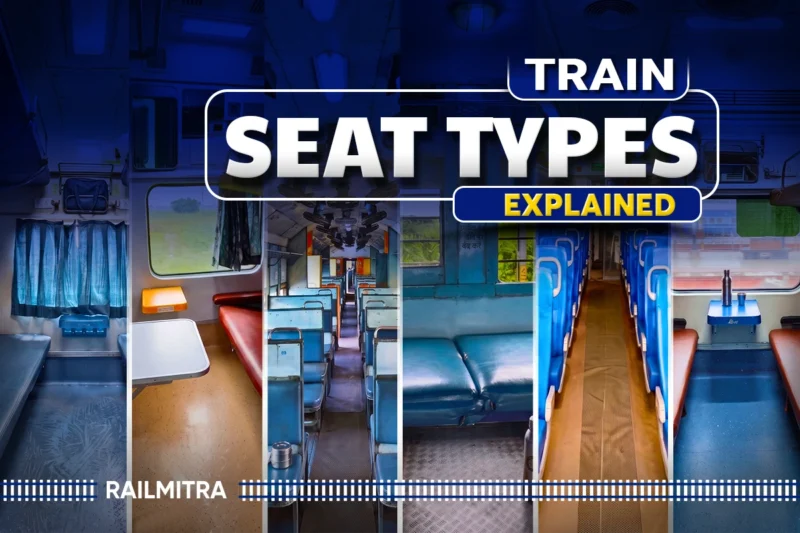
Most rakes carry sleeper, third AC, second AC and first AC, a wider spread than plenty of long distance trains offer. Sleeper costs the least and, oddly, feels the most alive of the four: windows open, chai vendors leaning in at every stop, conversation that does not quit. Third AC suits families who want the same social energy with a curtain of privacy and working air conditioning through the Rajasthan stretch, which gets properly hot by afternoon. Second AC and first AC are quieter, better for anyone travelling with elderly parents or trying to actually sleep through the Ratlam to Kota overnight run. None of the classes are luxurious in a five star sense, but for a journey this long, having the option to choose your comfort level rather than being stuck with one is worth something.
Who Actually Rides This Train, and Why
Migrant workers, home for harvest season in Punjab. A college student from Gujarat, going to see family settled somewhere between Delhi and Amritsar. Retired couples who have taken this exact train for twenty years and see no reason to switch to flying now. Pilgrims routing toward Amritsar for the Golden Temple, sometimes extending onward. What ties them together is not speed, because faster trains exist on parts of this route. It is the fact that this one goes the whole distance without forcing a change, and for people carrying luggage, children, or elderly parents, that single detail matters more than shaving off a few hours would.
There is also a slower, harder to explain reason people keep choosing it. Something about watching five states pass by your window, in order, feels different from landing in one and driving to the next. You notice the shift from Gujarat’s flatness to Rajasthan’s dust to Punjab’s green in a way a flight simply erases.
Booking Your Ticket the Smart Way
Book as early as your travel plans allow. Sleeper and AC classes vanish fast around wedding season and the bigger Punjab festivals. The advance reservation window goes out sixty days, and using most of that window actually helps here. Check Train Seat Availability across classes before you commit to a date, since 3AC tends to open up quicker than sleeper on this exact route, which never quite makes sense but is worth knowing. Missed the advance window? Tatkal opens the day before travel: ten in the morning for AC, eleven for sleeper. It moves fast enough that passenger details need to be typed in and ready before the clock actually hits.
Ticket booked, keep half an eye on your PNR the day before, and switch to live status tracking on travel day itself. Nobody wants to be standing on platform four wondering if the train even left Ratlam yet. Meal pre booking, if you plan to use it, works best when set up a day or two in advance rather than at the last minute. And if your plans shift, checking the updated train schedule a day out saves you from arriving at a platform an hour too early or, worse, too late.
Conclusion
Paschim Express was never trying to be the fastest way between Mumbai and Amritsar. What it does instead is cross the country in one stretch, no changes, with enough stops built in to eat properly and stretch your legs and watch the land outside keep turning into something else every few hours. Heading home, chasing a festival, or just curious what thirty hours on a train actually does to you: Paschim Express is still one of the better ways to watch India go by, a state at a time, out the same window.