Anyone can conduct a survey and ask regular individual passengers as to which berth in the train they like the most and which they want to book. You will always get the same answer: Side Lower Berth in Train. There is a reason why this seat berth is popular with passengers, especially the ones travelling solo.

If you look closely at the side lower berth, you will realize it has all the things that people want. A big window seat by default with unhindered access. You don’t have anyone to slide a little just so that you can go to the Washroom. If you are travelling in AC coaches , you can also pull down the curtains and your berth becomes your own personal space.
In this blog, we will look into what is a side lower berth in train, what are its pros and cons, railway rules and the booking tips for this berth.
What Does Side Lower Berth in Train Mean
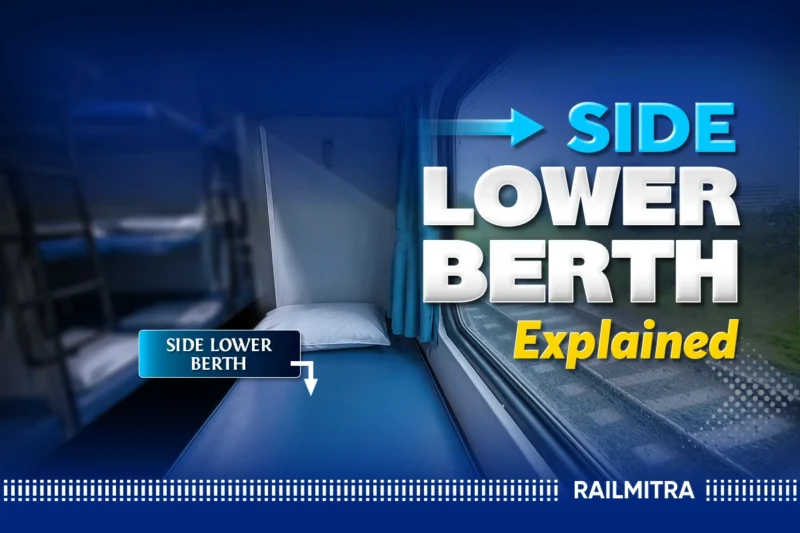
There are eight berths in every single bay, that’s the standard layout in Indian Railways coaches. Six berths face each other, each in a three tier style. The remaining two run parallel to the aisle, tucked against the side wall. That pair is called the side upper and side lower berths.
So what does the side lower berth in train mean exactly? It means the ground level bunk, positioned along the coach’s length rather than regular 3×3 berth pairs across it.
Mix ups happen constantly with the main bay lower berth and side lower berth though. They both have different orientations and different widths. Used differently too, since the standard lower berth doubles as shared daytime seating for three, while side lower usually manages with two sharings only.
That narrow width is the first thing new travellers notice, and the first thing they either love or resent depending on their build and how much luggage they are carrying.
Why Side Lower Feels Different Once You Have Actually Sat On It
Nobody explains this part in advance, and that is exactly why it needs explaining here.
The side lower position runs along the coach wall, right next to the window. Sit on it for even one hour and the difference from a middle or upper berth becomes obvious. Nothing boxing you in here. Lean back against the wall if you want, stretch your legs out into the aisle whenever it clears up, take in the whole coach without twisting your neck to do it.
Overnight journeys mean washroom trips, maybe two. Station stops mean stepping out for tea. That closeness to the door matters more than anyone realizes until they’re the one stuck up top, trying to climb down at 2 AM without waking three strangers below. Natural light too, more of it, more air near that window (for non AC coaches) through the day, before berths fold down for the night.
Advantages of Side Lower Berth in Train
The comfort case here isn’t vague preference, it rests on a few concrete points.
- Legroom tops the list. Side Lower Berth runs along the wall, open aisle space sits right in front of it, and passengers stretch out there in ways a traveller on the middle berth in train never gets to.
- Access comes next, and it’s easy. No climbing the ladder or waiting on the upper berth passenger to fold their seat down first. You are always one step away from getting up.
- Then there’s visibility, and this one matters more than people expect. Facing into the coach means you catch every boarding, every stop, every glance toward your own luggage without having to crane for it. Women travelling solo mention this one a lot, that extra bit of awareness. Hard to put a price on it, honestly.
- Window access rounds it off. Even though the side lower window is smaller than the main bay window, it still offers a view and a source of ventilation that middle and upper berths do not get.
The Other Side: Drawbacks of Side Lower Berth
No seat is perfect, and the side lower has its own set of adjustments passengers need to be ready for.
- The side Lower berth in train is narrower. That’s the complaint you’ll hear most, and it’s a fair one, since taller or bulkier travellers do find the sleeping space tight compared to the main bay lower. Then there’s the aisle problem: sit right next to it and feet brush against you occasionally through the night, luggage too sometimes, worse on routes with frequent stops where people are constantly up and moving.
- There is also the seating arrangement during the day. Side lower and side upper together form a shared two seater bench, so during daytime hours you may end up sitting quite close to a stranger for a long stretch, unlike the main bay where space is more evenly spread.
None of these are dealbreakers for most travellers. They are simply the tradeoffs that come with the legroom and access side lower offers.
Side Lower Berth Rules Every Passenger Should Know
Railways has specific rules around how side lower and side upper berths are used, and knowing them avoids awkward moments mid journey.
During the day, both side lower and side upper passengers are expected to sit only on the side lower berth. This is standard practice across the network and is meant to save space, since the side upper berth is folded and locked until night.
At night, once berths are opened for sleeping, usually somewhere between 9 PM and 10 PM depending on the route, each passenger returns to their own allotted berth. After this, the passengers on the side lower berth do not have to share their berth with any other passengers and have their seat to themselves only.
Passengers who are travelling with a side lower berth in train in sleeper coach must be aware that there will be reduced privacy in sleeper coaches. AC Coaches have curtains, so your berth space isn’t public in these coaches. Sleeper Berths don’t have curtains, therefore anyone who is passing by the aisle would be able to see you and your berth. Passengers must be aware of this critical coach distinction for this berth.
The space beneath your side lower berth is for luggage. However, this space is not exclusive to the lower berth passengers and is shared with the side upper berth passenger as well. Try to adjust your luggages early in the journey to avoid any mid journey luggage space crisis.
Side Lower Berth in Sleeper Class Versus AC Coaches
The experience of a side lower berth in train sleeper class differs from AC three tier or AC two tier in a few practical ways.
Sleeper class side lower berths tend to be busier. Since sleeper coaches are more crowded overall and often used for shorter distance travel by more passengers per bay, the shared daytime seating on the side lower sees more turnover.
AC coaches do have better privacy as they have curtains to offer. However, 3AC in train does not have the same privacy for the side lower berth in train as there isn’t a curtain rod on the side berths.
Sleeper berth have an advantage that side lower berth also means uninterrupted access to window air. One can feel a little relaxed by the window side during the summers, however open windows also bring smoke and dust with them as well. AC Coaches cool the whole seat without the interruptions of dust and smoke.
Whichever class you pick, the fundamental structure, one berth along the coach wall, close to the aisle, remains the same.
How to Get a Side Lower Berth While Booking
Getting this seat is not guaranteed, but a few habits improve the odds.
Book early. Side lower is one of the first berths to disappear once a train opens for reservation, particularly on popular routes.
Use the berth preference option at the time of booking. While the system does not promise your exact choice, selecting a preference does influence how the auto allocation engine assigns seats, especially if you book well before the chart is prepared.
Group of two travelling together? That helps too, since side lower and side upper often get billed and booked as a connected pair, easier to lock down both at once that way. Worth checking Train Seat Availability before dates get finalized either way, just to know what’s actually open and which berth categories still have room. No guessing involved.
Checking Seat Availability for Side Lower Berth
Refreshed regularly, broken down by berth type, that’s how availability data works on most reliable platforms, RailMitra included. Search Train Seat Availability and the exact count shows up: side lower, side upper, window, aisle, whatever’s left in each class for your train and date.
Festival season is where this matters most. Long weekends too. Side lower berths vanish within hours once bookings open. Check two or three times across a few days instead of once, and a cancellation might hand you a side lower slot that wasn’t there an hour earlier.
No side lower on the first choice train? Compare nearby trains on the same route, same date. A slight schedule shift sometimes gets you exactly the seat a middle berth would have denied you.
How to Check Which Berth You Got Using PNR Status
Berth allotment isn’t final at booking, not really. Reservation chart preparation settles it, usually a few hours before departure. Want to confirm whether that side lower berth in train actually came through? PNR Status gets you there fastest.
Enter your ten digit PNR number, and the result shows your confirmed berth number along with the coach. If your ticket was in the waiting list or RAC at the time of booking, PNR Status helps you track whether it has been confirmed. It also shows your allotted berth type once the ticket is confirmed. Since side lower and side upper are often allocated together, check your status a day before travel. This gives you time to plan your luggage and seating without last-minute surprises at the station.
Combine this with live train running status closer to your journey date. You’ll know not just your seat, but also the right time to reach the platform.
Food Options for Side Lower Berth Passengers
Side lower comes with one practical advantage that often goes unmentioned: easy access to food during the journey.
Right next to the aisle, close to the entrance too, so vendors and deliveries reach you without the fuss a middle or upper berth passenger deals with. Train food booking ahead of time takes it further still, meal lands at your exact seat, no stepping out, no chasing down a vendor when the trolley’s nowhere in sight. Pantry stock runs thin on longer routes anyway, so pre ordering sidesteps that gamble entirely.
Side lower passengers who plan their meals ahead generally report a calmer journey overall, since one less thing needs figuring out mid route.
Final Thoughts on Side Lower Berth in Train
The side lower berth in train coaches remains a favourite for a reason that only becomes obvious once you have actually travelled on one. Legroom, easy access, a clear view into the coach, together they add up to something less confined than the alternatives. Width runs narrower, yes, and daytime seating gets crowded sometimes. Small costs though, against everything gained.
Chasing a side lower on your next trip? Book early, check availability before dates lock in, and once the chart’s out, a quick PNR Status check tells you if it actually came through. That’s really the whole game. Hoping for a good seat versus knowing you’ve got one.