
Somewhere around the Bharuch bridge, most compartments go quiet for a bit. Anyone who takes the Surat to Mumbai train often will recognise that stretch, the landscape’s about to change its mood and everyone seems to sense it before it happens. Nobody ends up on this route by default either. It gets chosen, and once you’re crossing the Tapi with the Arabian Sea somewhere off in the distance, a fairly plain train ride starts turning into something you actually notice.

Why the Surat to Mumbai Route Sees So Much Traffic
Ask around and you’ll hear ten different reasons for why someone’s on this train, though a few of them keep coming up. Business, usually first. Surat runs on diamonds and textiles, and that keeps people shuttling to Mumbai for meetings, supplier visits, whatever trade fair happens to be on that month. It’s not one directional either, Mumbai buyers make the trip the other way just as often.
Family comes a close second. There are enough Gujarati households with a foothold in Mumbai, and enough Mumbai families tied to Surat through marriage or old business partnerships, that this line sometimes feels less like an intercity route and more like an oversized local.
Then there’s the group that’s just tired and wants a change of scene for the weekend. Mumbai is the glamour and fashion capital of the country studded with shopping malls, film sites and the Bollywood. All of these aspects about Mumbai, attracts thousands of Surtis to those who prefer a train journey over the traffic on the expressway. Flight services are available but the time wasted in boarding is off-putting and train journey is mostly preferred. This becomes an even more obvious choice when you compare the commute time to the railway station which is in the heart of the city compared to the nearest airport which is a bit distant.
What the Window Actually Shows You
The first half hour out of Surat is nothing special. Flat land, cotton fields, a textile unit here and there with a chimney that isn’t doing the view any favours. Then somewhere past Valsad, the land changes its mind. The greenery gets thicker, and by the time you’re passing through the Vapi belt, the industrial plots have started giving way to patches of forest that look almost out of place next to everything else.
The real shift though, that happens closer to Vasai Road. Water starts showing up on both sides of the track now, creeks and backwaters holding the evening light long enough that even the most distracted commuter glances up from their phone. Talk usually turns to food around here, or the weekend, or some cricket match nobody’s really watching but everyone’s tracking anyway. It rarely stays serious for long. Business talk fades into wedding gossip, or into the ongoing and never actually resolved argument over whether Surat’s locho beats Mumbai’s vada pav. Nobody wins that one. Nobody ever has.
By Borivali the scenery has gone fully urban. Buildings crowd in closer, the platforms fill with the usual Mumbai suburban crush, and it becomes hard to miss that you’ve crossed into a different city’s rhythm altogether.
Station by Station: The Halts That Shape the Journey
Ask a regular which stations to watch for and which to avoid with luggage or kids in tow, and you’ll get a full opinion, not a shrug. Here’s a rundown of the major halts, Surat side to Mumbai side.
Surat Railway Station
Surat Railway Station kicks things off for most trains on this corridor, and it holds up better than a lot of Gujarat’s other stations. Wide platforms, food stalls selling everything from khaman to packaged thepla, and boarding that stays fairly calm outside festival season. Most express trains halt here for anywhere between three and ten minutes.
Bharuch Junction
Bharuch Junction gets a shorter halt, usually two to five minutes, but it’s worth grabbing a Surti snack here before the Gujarat leg of the trip winds down. Boarding is moderate most days, though it does pick up around Navratri.
Vapi Railway Station
Vapi is popular with anyone who takes their chai seriously. The halt is brief though, often under five minutes, so this isn’t the platform to wander far from your coach.
Valsad Railway Station
Valsad tends to get a slightly longer halt, sometimes past ten minutes when there’s a crew change involved. Local vendors sell chikoo here, the region’s signature fruit, along with roasted corn depending on the season.
Vasai Road Railway Station
Vasai Road is where things start getting busy. Several long distance trains heading south and along the west coast branch off from here, so footfall on this platform runs heavy. Delays on this route have a habit of piling up right around this station during the evening rush, so it’s worth glancing at the Live Train Status before you even leave for the station.
Borivali Railway station
Borivali, on the other hand, is basically crowded no matter when you show up, worse in the evenings. If any single station on this route deserves a skip for a calmer boarding experience, it’s this one at peak hours. Suburban and long distance trains share platforms here, and the crush can get fairly intense.
Halt durations move around depending on the train and even the day of the week, so it’s worth pulling up the Train Schedule before you plan a trip too tightly around any single stop.
The Complete List of Trains on the Surat to Mumbai Route
This corridor is one of the busiest on Western Railway, which explains the sheer spread of trains running on it. To keep things manageable, the list below has been broken into smaller groups by train type, class, and the region each one is headed toward. Most trains run in pairs, one direction each way, and both legs show up together wherever a confirmed schedule existed for each side.
Vande Bharat Express Services
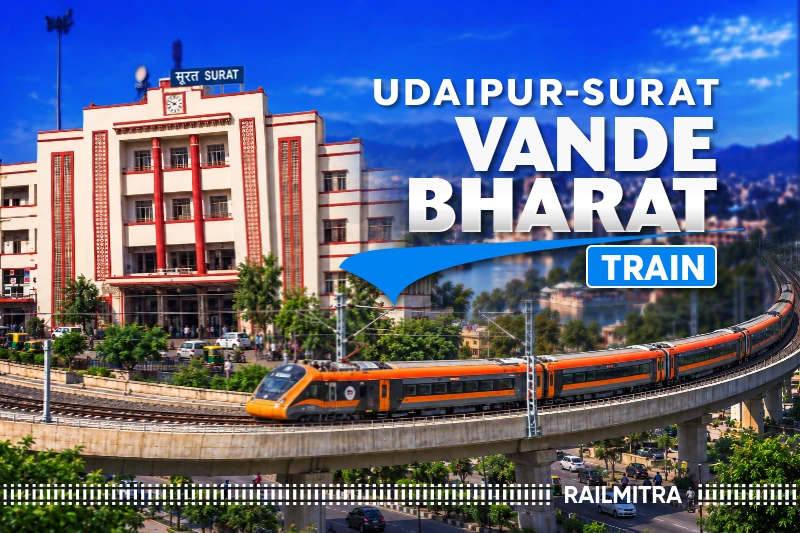
Two Vande Bharat pairs run this stretch right now, and both have turned into the go to option for anyone wanting a fast, chair car only trip between the two cities.
| Train | Origin, Departure | Destination, Arrival | Duration | Distance |
| 20901 | Mumbai Central 06:25 | Surat 09:05 | Approx 2h 40m | Approx 263 km |
| 20902 | Surat 17:08 | Mumbai Central 20:35 | Approx 3h 27m | Approx 263 km |
| 22962 | Surat 08:20 | Mumbai Central 11:45 | Approx 3h 25m | Approx 263 km |
The return working of 22962, numbered 22961, leaves Mumbai Central early afternoon on the same rake. Its published timing kept shifting depending on which source you checked, so rather than print a number that could be wrong by the time you actually travel, it’s been left out here. Better bet anyway is checking Seat Availability closer to your travel date, since Vande Bharat seats on both services go quickly on weekday mornings and Friday evenings.
Shatabdi and Double Decker Express
Want AC seating without paying the Vande Bharat premium? Most people land on the Ahmedabad Shatabdi or the Double Decker, both of which have been running this corridor long enough to have a loyal following.
| Train | Origin, Departure | Destination, Arrival | Duration | Distance |
| 12009 | Mumbai Central 06:20 | Surat 09:21 | Approx 3h 01m | Approx 263 km |
| 12010 | Surat 18:15 | Mumbai Central 21:45 | Approx 3h 30m | Approx 263 km |
| 12932 | Surat 09:12 | Mumbai Central 13:05 | Approx 3h 53m | Approx 263 km |
The Double Decker’s return working, 12931, runs out of Mumbai Central in the afternoon, though the exact departure minute varies by season enough that it wasn’t worth pinning down here. Both these trains run daily, and neither has much of a reputation for the kind of last minute cancellations that plague some of the longer distance options further down this list.
Tejas Express
There’s also a single premium day service on this stretch, priced somewhere between the Shatabdi and the Vande Bharat, comfort wise too.
| Train | Origin, Departure | Destination, Arrival | Duration | Distance |
| 82902 | Surat 09:24 | Mumbai Central 13:20 | Approx 3h 56m | Approx 263 km |
The return working, 82901, is meant to leave Mumbai Central in the late afternoon, but the schedule wasn’t consistent enough across sources to print here with any real confidence. Booking this one? Worth pulling up the Trains between stations tool first, just in case the timing’s moved since this was written.
Rajdhani and Long Distance Mail Trains Toward the North
Here’s where the Surat to Mumbai stretch stops being its own thing entirely, since these trains keep going on toward Delhi, Punjab, and further north still.
| Train | Origin, Departure | Destination, Arrival | Duration (this leg) | Distance |
| 12953 August Kranti Rajdhani | Mumbai Central 17:10 | Surat 20:30 approx | Approx 3h 20m | Approx 263 km |
| 12904 Golden Temple Mail | Surat 19:46 | Mumbai Central 23:55 | Approx 4h 09m | Approx 263 km |
The August Kranti Rajdhani’s return leg, 12954, comes through Surat early morning heading back into Mumbai, but the exact minute jumps around too much with running status to fix it here for good. The Golden Temple Mail’s counterpart, 12903, leaves Mumbai Central toward Amritsar late evening, around 21:30 usually, though this shifts a little by season too.
Superfast and Express Trains Toward Gujarat, Rajasthan, and the South
A long list of superfast and mail express trains also passes through this corridor, tying Mumbai to cities as far off as Jodhpur, Bikaner, Mysuru, and Haridwar.
| Train | Origin, Departure | Destination, Arrival | Duration | Distance |
| 19020 HW BDTS Express | Surat 17:22 | Bandra Terminus 22:30 | Approx 5h 08m | Approx 285 km |
| 19038 Avadh Express | Surat 23:31 | Bandra Terminus 04:05 next day | Approx 4h 34m | Approx 285 km |
| 20495 JU HDP SF Express | Surat 09:36 | Mumbai Central 13:42 | Approx 4h 06m | Approx 263 km |
Return legs for the Haridwar and Avadh services run out of Bandra Terminus toward the north on roughly similar evening slots, though once again, the minute level detail wasn’t consistent enough across sources to put down with certainty. With something close to ninety trains touching this route on a given week, it’s worth pulling up the Live Train Status before heading out the door, since even a five minute slip can throw off a tightly planned connection.
Food on the Move
Ask a regular on the Surat to Mumbai line what they’re actually looking forward to, and food usually comes up before the destination does. Surat’s own platform food leans toward khaman, dhokla, and, for the early risers, a plate of sev usal. Once the train crosses into the Vapi and Valsad belt, chikoo starts showing up on trays, sold by the dozen to anyone leaning out the window for a look.
Onboard service depends heavily on the class of train. Vande Bharat and Shatabdi services include a fixed meal in the fare, while the mail and express trains lean more on vendors hopping aboard at intermediate stops, which works fine until it doesn’t. For anyone who’d rather not gamble on what turns up at the next platform, ordering food in train ahead of a major halt like Vasai Road or Borivali tends to work out better, since it means a hot meal is waiting exactly when the train pulls in rather than a last minute scramble at the window.
Somebody’s always defending Surat’s snack culture against Mumbai’s street food on this route, and that argument never really gets settled before the train rolls into its final platform.
Final Thoughts
The Surat to Mumbai route was never going to compete with a mountain train or a coastal line for glamour, but it’s got its own pull, somewhere between the fields past Bharuch and the packed platforms at Borivali. People board this train for business, for family, for a weekend they’d been putting off, and in the middle of all those reasons the ride itself starts to matter almost as much as where it’s headed. First bite of dhokla at Surat station, last look at the creeks near Vasai Road, either way the Surat to Mumbai stretch keeps its spot as one of Western Railway’s busiest, and most loved, corridors.