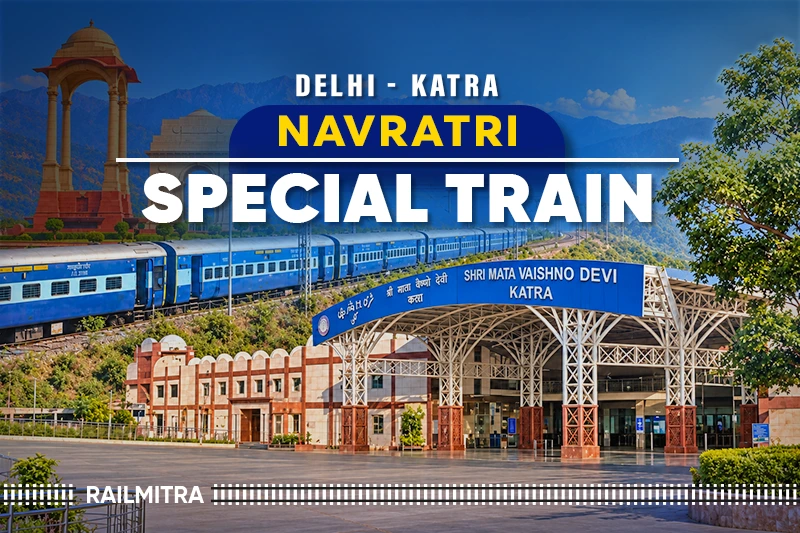
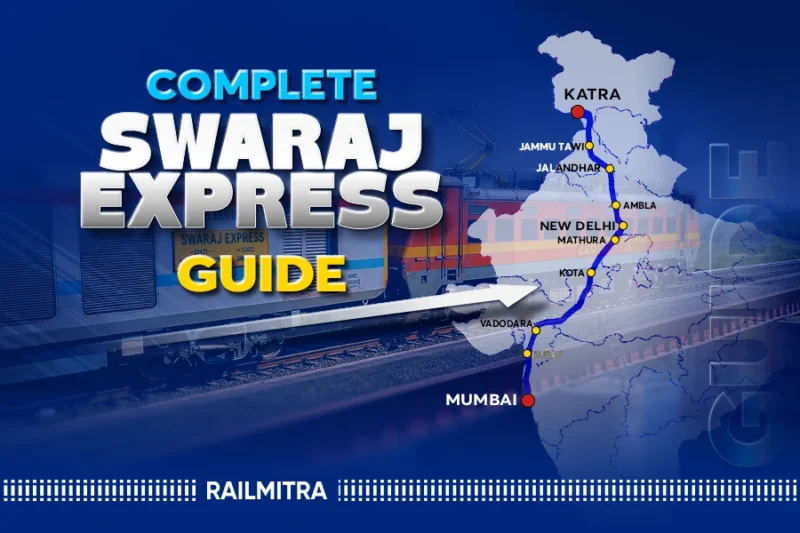
Four days a week, right around eleven in the morning, a train pulls out of Bandra Terminus and continues for the next thirty hours. It is called the Swaraj Express, one of Indian Railways’ longer single hauls, and by the time it finally reaches Shri Mata Vaishno Devi Katra in Jammu it has covered a bit over two thousand kilometres from Mumbai. Most of that distance rides on the backs of pilgrims headed toward the shrine. A fair number of Punjab based workers ride it home too, along with students on break and families visiting relatives somewhere along the way. Anyone planning this trip should probably look past just the timings, since the Swaraj Express is worth understanding properly, its history included, and what a day and a half onboard actually feels like once you are past the first few hours.

This piece gets into all of that. One small thing before anything else though: pulling up the train schedule a day or two ahead of departure is worth the habit, since halts and platform numbers on something this long shift more often than most people expect.
History of the Swaraj Express: Why This Route Exists
Swaraj Express is older than most people realize, as it goes all the way back to 1976, running out of Mumbai Central rather than Bandra Terminus at the time, though the endpoint up in Jammu never changed. Swaraj is just the Hindi word for self rule, nothing more complicated than that, and Indian Railways liked using names like this on routes built to connect regions that used to feel far apart right after independence. Mumbai and Katra simply were not connected directly back then. Someone setting out from Gujarat toward the shrine in those days would typically get stuck somewhere close to Delhi, having to scramble for a second train just to finish what was left of the trip.
That gap is basically why this service exists at all. One ticket, Mumbai through to Katra, no switching partway.
Later on, the origin station shifted to Bandra Terminus as Mumbai’s rail network grew, though the destination stayed put and so did the reason behind it. This is still mostly a pilgrim train, even after almost fifty years. The passenger mix has widened well past that original group though. Certain months see entire coaches fill up with workers heading back to Punjab. Students book it around college breaks. Plenty of families heading to Rajasthan or Gujarat book this train too, not just people going toward the shrine, and honestly there is not much else running this exact corridor even now, which probably has a lot to do with why the demand never really went away.
What Makes This Journey Feel Different
Thirty hours reads as unbearable on paper. In the coach itself it plays out differently though. Mumbai’s suburbs vanish inside the first hour or so, and after that Gujarat just opens up, flat fields running out on both sides while the whole compartment seems to slow down with it, gets quieter. Somebody offers you food within the first evening even though you were strangers three hours ago. Card games appear from nowhere. There is always someone with a spare charger to lend.
Day two brings a different kind of energy altogether. You wake up somewhere near Kota or Sawai Madhopur with Rajasthan’s dry terrain rolling past, and by the time Mathura shows up, then Delhi soon after, people are already thinking ahead toward Punjab and whatever comes at the end of this. Something shifts once New Delhi comes and goes. Conversation turns toward the shrine, toward relatives waiting somewhere near Jammu Tawi, toward the tail end of a trip that has already swallowed more than a full day by this point.
Sleeper coaches hold most of the pilgrim crowd on this route. AC coaches tend to carry more working professionals and families after a bit of quiet. Comfortable the whole way through? Not always, and not on something this long. Talk to someone who has ridden this train more than once and they will probably shrug that part off, saying the discomfort fades fast once you weigh it against actually watching the country change under you, mile by mile.
Mumbai to Vadodara: The First Stretch of the Route
You board at Bandra Terminus, and the train is gone by 11:00, cutting through Maharashtra and then straight into Gujarat territory. Borivali hardly counts as a halt at three minutes, and Palghar and Vapi go by even faster, two minutes apiece. Surat is really the first stop that matters, five minutes on the clock, then Bharuch Junction, then finally Vadodara Junction, which actually gives you a full ten minutes to work with.
| Station | Arrival | Departure | Halt |
| Bandra Terminus | Origin | 11:00 | Source station |
| Borivali | 11:19 | 11:22 | 3 minutes |
| Palghar | 12:06 | 12:08 | 2 minutes |
| Vapi | 12:58 | 13:00 | 2 minutes |
| Surat | 14:19 | 14:24 | 5 minutes |
| Bharuch Junction | 15:02 | 15:04 | 2 minutes |
| Vadodara Junction | 15:56 | 16:06 | 10 minutes |
Berth still unconfirmed at this stage of the trip? Checking train seat availability before you board saves you from finding that out somewhere mid journey instead.
Godhra to Kota: Gujarat Fades Into the Night
Vadodara is barely behind you before the light starts going, and from here on most of the ride happens in the dark. Godhra, Dahod, Meghnagar and Bamnia come and go in two minutes flat each, stops that exist for the timetable’s sake more than for anyone getting off. Ratlam Junction actually breaks that pattern, a full ten minutes, and Nagda Junction gets five right after.
| Station | Arrival | Departure | Halt |
| Godhra Junction | 17:12 | 17:14 | 2 minutes |
| Dahod | 18:00 | 18:02 | 2 minutes |
| Meghnagar | 18:26 | 18:28 | 2 minutes |
| Bamnia | 19:00 | 19:02 | 2 minutes |
| Ratlam Junction | 19:45 | 19:55 | 10 minutes |
| Nagda Junction | 20:43 | 20:48 | 5 minutes |
| Vikramgarh Alot | 21:13 | 21:15 | 2 minutes |
| Bhawani Mandi | 22:03 | 22:05 | 2 minutes |
| Kota Junction | 23:15 | 23:25 | 10 minutes |
Midnight is close by the time Kota arrives, yet the halt still runs its full ten minutes. Most of the coaches, by then, are fast asleep anyway.
Sawai Madhopur to New Delhi: Waking Up Into the Capital
Somewhere past midnight, day two begins without much fuss. Sawai Madhopur Junction and Gangapur City Junction pass by while most passengers are still fast asleep, and by three in the morning Mathura Junction offers a five minute halt. Things start picking up again around Hazrat Nizamuddin Junction.
| Station | Arrival | Departure | Halt |
| Sawai Madhopur Junction | 00:33 | 00:35 | 2 minutes |
| Gangapur City Junction | 01:13 | 01:15 | 2 minutes |
| Mathura Junction | 03:10 | 03:15 | 5 minutes |
| Hazrat Nizamuddin Junction | 05:03 | 05:05 | 2 minutes |
| New Delhi | 05:25 | 05:40 | 15 minutes |
No other halt on this route runs as long as New Delhi’s, a full fifteen minutes on the clock. Getting off, walking around a bit, grabbing breakfast before Punjab starts, it genuinely makes sense here.
Panipat to Katra: The Final Run Through Punjab
Day two’s back half belongs to Haryana and Punjab, right up until the train slips into Jammu. Panipat, Ambala Cantonment and Ludhiana Junction arrive back to back, each one giving you enough time to stretch your legs, and Jalandhar Cantonment shows up not much later. Pathankot Cantonment and Kathua lead into the final approach, and Jammu Tawi comes last before Katra itself.
| Station | Arrival | Departure | Halt |
| Panipat Junction | 07:13 | 07:15 | 2 minutes |
| Ambala Cantonment Junction | 08:47 | 08:52 | 5 minutes |
| Ludhiana Junction | 10:18 | 10:25 | 7 minutes |
| Phagwara Junction | 10:54 | 10:56 | 2 minutes |
| Jalandhar Cantonment | 11:13 | 11:16 | 3 minutes |
| Pathankot Cantonment | 13:00 | 13:03 | 3 minutes |
| Kathua | 13:31 | 13:33 | 2 minutes |
| Jammu Tawi | 14:50 | 14:55 | 5 minutes |
| Martyr Captain Tushar Mahajan | 16:33 | 16:35 | 2 minutes |
| Shri Mata Vaishno Devi Katra | 17:50 | Destination | Final stop |
Past New Delhi is usually when I would start peeking at live train running status every so often. Small delays have a habit of building up right along this Punjab leg.
Stations Worth a Quick Stop
Not every halt on this route gives you time to step off, but some genuinely do. Surat, at five minutes, is where plenty of Gujarat regulars swear by the nankhatai and locho sold right near the exit gates. Vadodara Junction gets you a longer ten minute window, and the vendors there spread out further too, fresh sandwiches, Gujarati thali packets.
Ratlam Junction, another ten minute stop, has quietly earned a name for its namkeen and sev, the sort travellers stock up on for the rest of the ride. Kota Junction also gets ten minutes, though arriving near midnight means fewer stalls stay open that late, apart from a couple near the main exit still pouring tea through the night.
New Delhi is genuinely your best bet on this whole route. Fifteen minutes is enough time for a decent stretch, a bottle refill, maybe even breakfast before Punjab properly begins. You also get a short walk in at Ambala Cantonment and Ludhiana Junction, and Ludhiana especially is known for parathas straight off the platform stalls.
Unsure whether your seat will actually get confirmed before reaching any of these stops? Sorting that out early keeps you from building a meal stop around a berth you might not even have yet.
Ordering Food on the Swaraj Express Through RailMitra
Platform vendors work fine until they do not, especially late at night, when half these stations barely keep a stall open. That is really where ordering ahead earns its keep on something this long. The train does carry a pantry car, so onboard meals such as thalis, biryani and parathas are usually around, though how good they turn out can depend on how stretched the coach staff happen to be that particular day.
For something more dependable, passengers on this route can order through RailMitra’s meals on wheels service, which gets fresh food delivered straight to your seat at one of the major halts. This works especially well at Vadodara, Ratlam, Kota and New Delhi, where the stop runs long enough for delivery staff to actually reach the right coach before departure. Rather than hoping something decent turns up on the platform, you get a real menu to pick from and know exactly what is arriving and when.
Spacing out proper meals instead of surviving on packaged snacks changes how the second day of this trip feels. Pilgrims heading toward Katra especially seem to value having something hot waiting at a mid route stop rather than scrambling around once hunger has already set in.
Why Travellers Choose This Route
There is no single reason people board the Swaraj Express. A large share are here for the pilgrimage itself, heading toward Vaishno Devi on a route that has served that purpose for close to fifty years now. Families often plan the whole trip around a religious calendar, timing things so they land in Katra just before a particular festival.
Then there is the more practical crowd. This remains one of very few direct links between Mumbai and Jammu, and for Punjab based workers employed somewhere in Maharashtra or Gujarat, one train covering the entire distance saves both money and the trouble of switching midway. Students travel home on it too, particularly around semester breaks, when a direct route matters more than a fast one.
There is also something harder to pin down on paper. Some travellers keep picking this train over flights simply because the ride itself has become part of what draws them back. A flight covers the same ground in two hours and shows you none of it, none of the actual shift from Gujarat’s farmland into Rajasthan’s dry plains, then Delhi’s sprawl, then Punjab’s fields once you get further north. Watching the country change like that, one state folding into the next, is probably what keeps certain riders coming back to this exact train regardless of the time it eats up.
What the Final Stretch Into Katra Feels Like
Ask a pilgrim how they are holding up somewhere near the end of this trip, and you usually get some version of fine, better than expected, once Jammu Tawi finally comes into view. A particular kind of energy builds through the last few hours past Pathankot Cantonment, with bags being gathered and elderly relatives being checked on while everyone starts preparing for that last short stretch toward Katra.
First time travellers often dread the length of this journey before they even board it. Most describe it differently once the trip is actually behind them though. Give it about fifteen hours and this train quietly stops being just a way to get somewhere. It turns into a shared space instead, strangers passing food back and forth, trading tips about the shrine ahead like they have known each other for years. Talk to regulars on this route and most say the same kind of thing, that the ride forces a patience faster trips never ask for, and that getting somewhere after actually earning every kilometre of it just feels different.
It hardly matters whether religion, family or plain practicality brought you onto this particular train. People who ride Indian Railways a lot still bring this stretch up as one of the more memorable long routes around, mostly for what happens inside the coaches, not for anything sitting at either end of the line.
Conclusion
Almost fifty years since it first set out, the Swaraj Express is still doing roughly what it was built to do back in 1976, carrying pilgrims and travellers from western India to Vaishno Devi Katra in one continuous run instead of forcing them to break the trip halfway. Whether you are boarding for a festival, a family visit or simply because it is the most practical option around, knowing the route and the halts ahead of time makes the whole thirty hours easier to sit through. Before you leave, check your PNR status and confirm your berth, and take a moment to mark out where along this route you might actually want to step down for food or fresh air. Get that part sorted, and the Swaraj Express stops feeling like thirty hours of travel and starts feeling like a trip you end up bringing up again afterward.