Pick any general coach on a busy express and watch how people react when they see “U” against their seat number. Some immediately start looking for someone to swap with. Others shrug and climb up. The ones who have done it before mostly stop worrying. If you have been assigned an upper berth in train and are not sure what you are getting into, or if you are trying to decide whether to request one, there is more to know than most booking pages will tell you.
What Exactly Is the Upper Berth in Train?
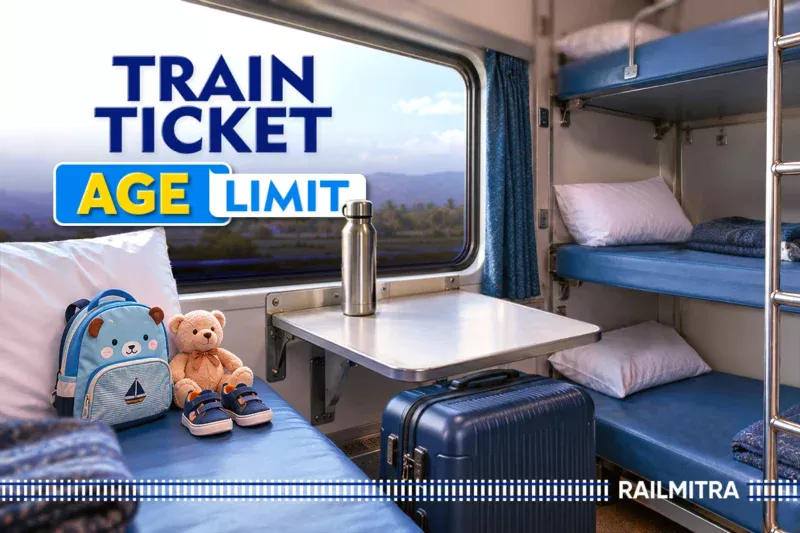
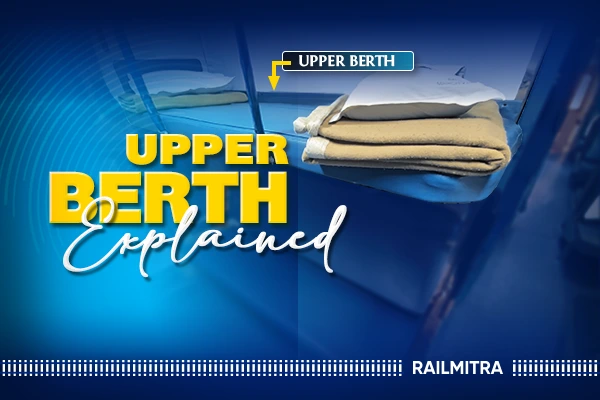
Sleeping coaches on Indian Railways run on a vertical stacking system. One bay, multiple berths, each one above the other. In a 3-tier AC coach (3A), three levels: lower, middle, upper. In a 2-tier AC coach (2A), just lower and upper. The upper berth is the topmost one.
Six to seven feet off the floor in most 3A coaches. A bit lower in 2A since there are only two levels to fit in the same height. The berth itself is full-length, same dimensions as the lower. Width, length, the mattress, all identical. The access is different. So is the feeling once you are lying there at 11 PM with the train moving and nobody bothering you. Check your train schedule on RailMitra before you head out, departure time, stops, total run time, all of it in one place.
Upper Berth Seat in Train: The Layout Across Coach Classes
Coach class changes what the upper berth seat in train looks like in practice:
3A (AC 3-Tier): Three berths per side plus side upper and side lower near the aisle. Upper berth is the third level. Most passengers run into the upper berth for the first time in 3A.
2A (AC 2-Tier): No middle berth, so upper and lower are the only two. More vertical space between them, slightly wider berth. The 2A upper is arguably the most livable of the lot.
Sleeper Class (SL): Three levels, no AC. Upper berth here sits directly under the coach roof. In summer, this matters more than people expect.
1A (First Class AC): Enclosed cabin, two berths only. Upper berth in 1A is perfectly functional, just not what most people go for when they have that cabin to themselves.
What It Actually Feels Like to Sit on the Upper Berth
Things you figure out only after you are already up there.
The upper berth in Indian Railways has one rule working entirely in your favour: nobody else is allowed on it. Lower berth passengers share their space with co-passengers from around 6 AM to 10 PM. Upper berth holders do not. You can be horizontal at noon on a 36-hour journey and no one has grounds to complain.
The second thing is the aisle. From down below, foot traffic is constant. Vendors, co-passengers, people looking for their seat. From the upper berth, all of that is happening below your eyeline. The noise is still there but it stops feeling like it involves you.
Window angle is a bonus no one mentions. During the day, the upper berth puts your head near the top of the window frame. On certain routes, especially through hills or river valleys, that view is genuinely better than what you get from the lower.
The climb, though. The fold-down ladder works but it is not designed for bad knees or a heavy bag in one hand. And in Sleeper class through a hot afternoon, the roof radiates warmth straight down onto the upper berth in a way that AC coaches simply do not.
Check live train running status on RailMitra before you head to the station. A two-hour delay standing on a platform is bad enough without also having to manage a ladder at the end of it.
Upper Berth Rules in Indian Railways
A few rules that actually affect your journey:
The official window for upper berth use is 9 PM to 6 AM. Outside those hours, the berth is meant to be folded so that other passengers downstairs can have normal seating. Of course in long-distance overnight trains, the implementation of this rule is quite lax but it becomes handy to know the rule in case a co-passenger brings it up.
Lower berths are designated with an exclusive reservation for seniors above 60 years, pregnant ladies, and physically challenged passengers. Yet, the quota system is not foolproof and a few of these passengers are given upper berths. A word to the TTE usually sorts it out, though nothing is automatic and availability in the same coach decides whether a swap happens at all.
Children under five do not need a separate berth. They travel on the parent’s berth regardless of which level it is on.
Who Should Actually Choose the Upper Berth?
A few profiles where the upper berth genuinely makes sense:
Passengers boarding at night with an early morning destination. You climb up once, sleep, climb down. The journey is effectively horizontal the whole way.
Solo travellers who would rather not spend twelve hours making conversation. The upper berth keeps you out of the natural social circle of the bay.
Anyone travelling with luggage they want left alone. Space under the lower berth technically belongs to the person sitting there, but from the upper berth your bags are your own business.
Budget matters too: the upper berth is usually priced lower than the lower berth within the same class. Confirmed waitlisted passengers often end up with upper berths for exactly this reason.
Families with small children, elderly passengers, or anyone whose joints make climbing a production: the upper berth is not the right call. Railway rules back this up.
Upper Berth and Food: What to Keep in Mind
Carrying food up a fold-down ladder is awkward. Most upper berth passengers either eat before going up or climb down for meals. This isn’t a very serious issue, but it is worth considering especially if you are on a long train journey.
Passengers can also choose train food booking with the help of platforms like RailMitra which lets you choose from the restaurants available at the upcoming stations. The delivery boy will come to your seat, you just have to pick your order and you can enjoy the meal from the comfort of your train seat only. If you are travelling on a long train journey, looking for pantry people or station vendors every few hours is impractical. You can instead prebook your meals from RailMitra, so that you can travel stress free.
How to Get the Upper Berth (or Avoid It)
At booking, you can state a berth preference: lower, middle, upper, side lower, side upper. The system does not guarantee it. Berths are auto-assigned based on availability, and preference is just that.
Book early if you want lower. Lower berths fill up first and the gap between early and late booking is often the difference between getting what you want and getting whatever remains. The senior citizen quota includes a dedicated lower berth allocation; if that applies to your journey, use it rather than leaving it to chance.
Before committing to a class, check Train Seat Availability on RailMitra. It shows live availability across berth types right now. If lower berths in 3A are already gone, sometimes moving up to 2A gives you a better upper berth situation overall, more space, less heat, fewer co-passengers in the same bay.
How to Check Your Berth Assignment Using PNR Status
Booking a seat that is really reserved for your use might not always align with your initial preference, In particular for tickets that have been waiting for confirmation. Once you receive your confirmation, go to RailMitra’s PNR Status tool, enter your 10-digit PNR, and it will provide details of your coach number, berth number, and booking status. Since the final chart is drawn up usually a day before the train’s departure, that should be the perfect time to make your check instead of discovering the same at the platform.
If the confirmed berth assigned to you is Upper berth in train and you are dissatisfied with and want to change it for medical or other reasons, the best person to contact is your TTE. Although there is no surety of swapping, TTE can take a look. If a co-passenger cooperates or there are some vacant seats on the train, you might be able to swap your upper berth seat.
Upper Berth Comfort Tips for Long Journeys
Keep a small bag on the berth with you. Water, charger, earphones, any medicine you might need overnight. Hooks near the berth handle light bags. Climbing down for every small thing adds up on a 30-hour run.
Use the individual reading light rather than asking the whole coach to stay lit.
If the journey is mostly overnight and you plan to sleep through most of it, the upper berth is genuinely the better choice. Passengers who have a lower berth in train, often get disturbed by the moving passengers, hawkers and other passerbys. People who have an upper berth in train are literally above these difficulties and can stay peacefully for the whole course of the journey.
Conclusion
The upper berth in train has a reputation that does not quite match the actual experience once you have tried it. The climb is the part people dread. Once you are up there, most of the concerns disappear. The privacy is real. The uninterrupted sleep is real. The window view during the day is better than expected. None of that is obvious from a booking screen. What works for you comes down to the journey, the company, and how your knees feel about a ladder at midnight. Check your berth details via PNR Status on RailMitra, see what is actually open using Train Seat Availability, and if you end up on the upper berth on a long overnight route, there is a decent chance you will sleep better than you expected.
FAQs for Upper Berth in Train
Q: Is the upper berth comfortable for sleeping?
Ans: For most passengers, yes. The berth dimensions are the same as lower and middle. The bigger factor is that no one else is entitled to your space at night, so once you are up there, you are not getting disturbed by people sitting down next to you or shifting around.
Q: Who should prefer an upper berth in train?
Ans: People travelling alone, younger passengers, and anyone whose main plan is to sleep through the night. The upper berth keeps you out of the shared seating dynamic of the bay, which suits solo travellers well. Families with young children or passengers who need frequent toilet access should avoid it.
Q: Is upper berth safe for elderly passengers?
Ans: The short answer is no, and Railway policy reflects that. Upper berths are not supposed to be assigned to passengers above 60, pregnant women, or those with disabilities. The ladder takes effort, and that effort is not trivial when you are getting up at 3 AM.
Q: Is upper berth cheaper than lower berth?
Ans: There is a price gap, and upper berth sits on the lower end of it. It is not a dramatic difference within the same class, but it is consistent. Part of why waitlisted passengers getting late confirmation often land on the upper berth is exactly this: the system fills cheaper berths last.
Q: Is upper berth suitable for long journeys?
Ans: It works well on long overnight journeys specifically. The freedom to lie down whenever you want, without the obligation to give up your space during the day, adds up over a 30 or 40 hour run. The trade-off is the ladder, and on very long journeys where you need to get up repeatedly, that does get old.