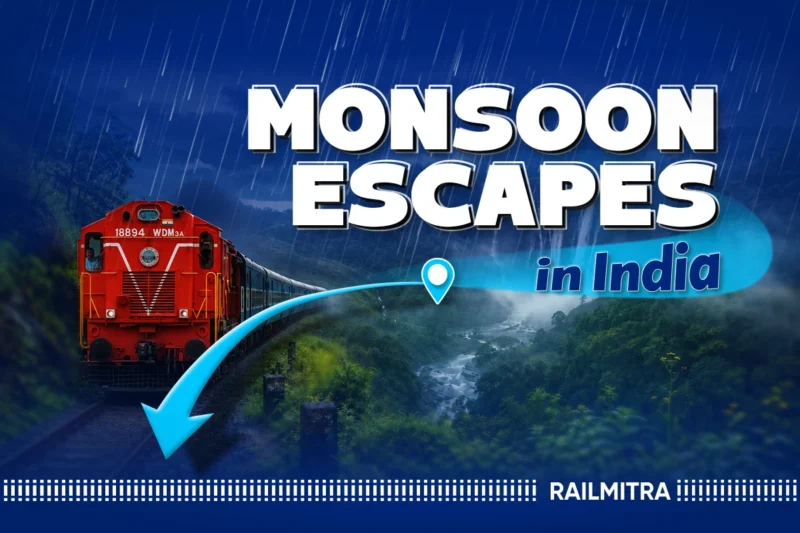
Somewhere that first drop lands on a hot tin roof first and that is how we know that the Monsoon has arrived. That sound alone rewires how the whole country feels for the next four months. Search for the best places to visit in monsoon in India and you already know what you’re chasing: dusty hill roads turning into green tunnels, rivers that were nothing but a trickle in May suddenly finding their voice again, a kind of quiet that only rain manages to bring to a place this loud otherwise. This list is not a summer itinerary with wet weather bolted on. This one’s built for the rains themselves, for travellers who want fog pressed against the window and wet earth in the air by the same afternoon. Monsoon tourism in India stretches roughly from June through September. Where you stand changes everything about how that rain actually behaves though.

Kerala gets soaked early. The Northeast barely stops. Rajasthan gets the least of it, just a few weeks of gold turning to green before the desert claims itself back, and that’s precisely why it earns a spot here. Nobody’s picking these ten places on a map. It’s the feeling of choosing: mist rolling low over a lake, a chai stall doing brisk business under a leaking tarpaulin, roads that smell entirely different after the first proper shower hits them.
Why the Rains Change Everything
Ever asked someone who’s actually driven through the Western Ghats in July whether the hassle was worth it? The answer usually shows up as a faraway look before any words follow it. Waterfalls that don’t exist for eight months of the year suddenly appear on hillsides. Tea gardens go from green to something closer to emerald. Crowds thin out because a large number of travellers still avoid the rains, which means quieter viewpoints and better hotel rates for the ones who don’t.
There is a practical side too. Temperatures drop by several degrees almost everywhere south of Delhi, humidity aside. Photography gets more dramatic, with cloud layers doing half the work a filter would otherwise do. None of this comes without a bit of planning around washed out roads and delayed transport, which is exactly why the next section matters as much as the destinations themselves.
Fun Fact: Do you remember the distinct smell that comes when the rain arrives for the first time on the dry soil? Yes, that distinct smell has a name and it’s called Petrichor!
Best Places to Visit in Monsoon in India: Why the Train Is Where the Trip Begins
Roads flood. Storm cells near an airport and flights get cancelled within the hour, that’s just how it goes during peak monsoon. Trains keep moving regardless. There’s something close to meditative about watching a monsoon landscape scroll past a train window instead of white knuckling a steering wheel through the same stretch. For most destinations on this list, a train gets you within striking distance of the final leg, after which a short cab or shared jeep finishes the job. Locking in dates? Check the Train Schedule for the relevant route first, since monsoon timetables shift around flood prone stretches in the hills and the Northeast more often than people expect. Booking two to three weeks ahead is worth it too, because monsoon travel has quietly become popular enough that the good sleeper and AC coaches fill up faster than people expect for what used to be considered an off season.
Lonavala and Khandala: The Mumbai Pune Rain Ritual
Tiger Point feels magical during a monsoon morning. Clouds drift through the viewpoint itself. They surround you instead of passing ahead. Most people skip Bhushi Dam these days. That is probably the right choice. Weekend crowds there have become overwhelming. The best spots often have no names. They sit slightly away from the main road. Locals visit hidden waterfalls not marked on maps.
The Deccan Express stops directly at Lonavala. Several other trains also serve the Mumbai Pune route. Both cities are only two to three hours away. The ghat stretch between Karjat and Lonavala steals the show. Waterfalls appear beside the train window once the rain settles in.
Munnar: Tea Gardens Wearing a Coat of Mist
Munnar in the rain looks washed clean, in the best possible sense of that phrase. Tea gardens that photograph well year round turn into something closer to a green ocean once the clouds settle low over the hills. Attukal Waterfalls, barely a trickle back in April, becomes a genuine roar by July. Locals will tell you the tea tastes different too, though that might just be the setting talking.
No train runs directly into Munnar, the hill station sits too high for the tracks, so Aluva and Ernakulam Junction do the job as gateway stations, four hours out by road from there. Rain messes with coastal Kerala schedules more than people realise. Two minutes, that’s all it takes, checking Live train running status out of Ernakulam before the wheels even start turning.
Coorg: Coffee, Cardamom, and Constant Drizzle
Wet coffee cherries have a smell. Somewhere near Madikeri, walking toward the Brahmagiri hills, that smell becomes the one thing that stays with you long after the trip ends. Abbey Falls turns properly aggressive during peak rain, throwing spray clear onto the viewing bridge, and the Barapole River, calm enough for rafting in drier months, turns into a serious white water stretch that only experienced operators will run once the rains set in.
Travellers who intend to reach Madikeri via the train can find Mysuru and Hasan as the nearest major railway stations helping them reach their destination. During the monsoons, these drives can easily get punishing rather than pleasant. However, what prevents this is the beautiful estates around this place. They can get so dense that sunrays can barely reach through them.
If you are trying to travel from Bengaluru to Mysore in the monsoon months of July and August, it is always advisable to check the train seat availability with RailMitra platform. Half of the city has the same idea of enjoying the monsoon, it thus helps if you have information about the swags before you start making your travel plans.
Udaipur: Palaces Reflected in a Full Lake
Summer leaves Lake Pichola looking tired and shallow. By July or August the lake fills back up properly, and the white marble of the City Palace starts glowing against a charcoal sky right before a storm breaks, a sight the place doesn’t offer at any other time of year. The hill above town has a palace built for exactly one purpose, watching clouds arrive from a height, and only the monsoon gives it a real reason to exist.
Trains run in from Delhi. From Ahmedabad too, and Mumbai. Udaipur City railway station handles all three without much fuss, though the Mewar Express is worth booking specifically if the goal is watching Rajasthan pass by slowly rather than skipping over it at thirty thousand feet. Then there’s the evening itself: a light drizzle, a slow boat across Fateh Sagar Lake, palace lights switching on one by one across the water. Not much else needed to fill a weekend after that.
Mahabaleshwar: Strawberries in the Fog
Arthur’s Seat won’t stay put for a photograph. Every few minutes the clouds shift and the view either vanishes or comes roaring back, depending entirely on the wind that hour. It shouldn’t feel calming, watching a viewpoint hide itself over and over, and yet somehow the waiting becomes half the appeal. Lingmala Waterfall barely registers as a photo stop in peak summer, then turns into a proper cascade the moment July arrives, and the local farms, technically past their strawberry season by then, still sell preserves and cream that carry a faint trace of the hills around them.
Pune is the nearest major junction, three hours off by road through the Western Ghats, and pairing this leg with Lonavala tends to work well since both sit along roughly the same corridor out of the city. The road connecting them does most of the scenic work on its own, honestly, no detour required.
Cherrapunji: Standing Inside the Rain Itself
Heaviest rainfall recorded anywhere on the planet. That’s Cherrapunji’s claim, and standing under it during peak monsoon, at some point weather stops being the right word for what’s happening. Feels more like an occasion you turned up for. Nearby, near Nongriat village, sit bridges that nobody built in the usual sense, roots trained and grown over generations by Khasi communities into something that carries weight across a river. Rivers rise during these months. Reaching the bridges gets harder. Somehow that’s exactly what makes standing on one feel earned rather than just photographed.
Guwahati is the rail gateway, practically speaking, though Cherrapunji sits another five to six winding hours away by road, most of it through Shillong. Long haul, this one, no way to shorten it. Still counts among the few stops here where effort and payoff actually line up.
Wayanad: Kerala’s Quieter Monsoon Face
Munnar pulls the bigger crowds, so Wayanad keeps a lower profile despite an equally dramatic monsoon transformation of its own. Dense forest cover does the filtering here, catching the rain in layers of green long before it reaches the ground. The Edakkal Caves trek shuts entirely during the worst weeks, then reopens in short windows between showers that locals somehow read better than any weather app manages to.
Kozhikode and the Kalpetta area stations plug Wayanad into the wider Kerala rail network. Two and a half hours of road cover the rest from Kozhikode, sometimes longer once monsoon traffic gets involved, which is where a food stop becomes worth planning for rather than leaving to chance. Packaged food in train service has improved noticeably on Kerala routes over the last couple of years.
Darjeeling: Tea, Toy Trains, and Colonial Fog
The rains thin out Mall Road. The town starts feeling like a real hill station again. Winter crowds rarely allow that. The Darjeeling Himalayan Railway runs slower during the monsoon. It also feels much mistier. Tea estate workers appear between cloud covered bushes. The view through the carriage window feels unforgettable.
Kolkata and Delhi both connect well to New Jalpaiguri. It is the main gateway station. The climb to Darjeeling takes about three more hours. You can travel by road or the slower toy train. Ghum Monastery sits along the same railway line. It is the line’s highest point. It remains worth visiting even when fog hides most of the monastery.
Goa: The Beach State Nobody Expects in the Rain
Shacks shut down for the season. Crowds go elsewhere. What’s left barely resembles the Goa most people picture, spice plantations gone properly lush, Dudhsagar Falls swelling from a modest trickle into a four tier roar visible from a good distance off. Old Goa’s churches usually see tour groups shuffling through in packs. Not during monsoon. Grey skies keep them nearly empty, and honestly, empty suits those old stone interiors better than a crowd ever did.
Madgaon handles most of the rail traffic into the state, Vasco da Gama too, both connected well to Mumbai, Bengaluru, points further south. Monsoon rarely disrupts the Konkan stretch. Rarely though isn’t the same as never, so a thirty second PNR Status check a day or two out tends to be time well spent.
Kodaikanal: The Princess of Hill Stations at Her Best
Coaker’s Walk truly comes alive during the monsoon. The valley keeps disappearing behind drifting clouds. It reappears moments later, creating a magical view. Soft rain makes the town’s star shaped lake perfect for boating. Most visitors find this gentle rain calming. They rarely see it as a nuisance. Even Bryant Park’s flowers seem to hold their colour better against grey skies than they ever do under a bright one.
About ninety minutes out from town sits Kodai Road railway station, linked to Chennai and the other major junctions across Tamil Nadu. The temperature drops steadily along the ghat road. By arrival, the chill becomes impossible to ignore. Local strawberry wine suddenly feels far more appealing.
Food, Warmth, and the Monsoon Table
There’s a reason hot food tastes better in the rain, and every one of these destinations seems to know it instinctively. Corn roasted in Lonavala tastes unforgettable. Strawberries and cream in Mahabaleshwar feel just as special. Spiced coffee in Coorg also tastes better. None of them feel the same on a dry, sunny afternoon. For the train journey, ordering food in train has become much easier. Hot meals now reach most long distance routes. They usually arrive before the train reaches hill station gateway stations.
Carrying a flask for the final road stretch is still worthwhile. Even the best on board meal cannot replace roadside chai. Rain drumming on a tin roof makes it even better.
Practical Notes Before You Book
Packing for the monsoon comes down to a short list, really: a light poncho over an umbrella for windy hill stations, quick dry clothing, shoes that won’t fall apart after the second river crossing. Street food deserves a bit more caution than usual during these months. Bottled water stays the safer call across most of these routes.
Trains genuinely handle monsoon disruptions better than road or air travel across most of these corridors, though delays of thirty minutes to an hour aren’t unusual on hill routes during the heaviest weeks. Checking Live train running status the morning of departure, alongside a quick look at PNR Status once tickets are booked, takes the guesswork out of an otherwise unpredictable season.
Conclusion
Whichever direction the season pulls you, whether it’s the tea gardens of Munnar or the sheer, relentless rain of Cherrapunji, this list of the best places to visit in monsoon in India was built around one idea: the rain isn’t something to travel around, it’s the entire reason to go. Pack light, book the train tickets early, and let the fog do the rest.