Train journey is the most dependable and most sought after travel option for most of the Indians. I mean, look at the rush for the train tickets. However, have you ever wondered, how much of an important role does the train berth play for your journey?

The train berth assigned to you what kind of experience you get on the train. Most passengers prefer the window seat (lower berth) or if they are solitary birds then they prefer side berths. Upper berths are for people who don’t like to be disturbed at all. While the middle berth, well if you are a people person, go for this train berth.
Passengers are advised to check the train seat availability once before making any of their train booking. This will provide all the seats available for booking on the train.
What Is a Berth in a Train?
A berth is a sleeping space in a reserved railway coach. Not a seat. A flat surface to lie down on, assigned by number, for the duration of the journey. The berth meaning in train ticketing is exactly that: a specific numbered slot in coaches like Sleeper (SL), 3AC, or 2AC, printed on the ticket, that nobody else legally occupies.
Coaches are divided into bays down the length of the train. But one wall runs differently. Along the corridor side, outside the main bay, there is a separate two-slot section. Those are the side berths. Same train, different geometry, noticeably different experience.
Types of Train Berths: The Full Layout
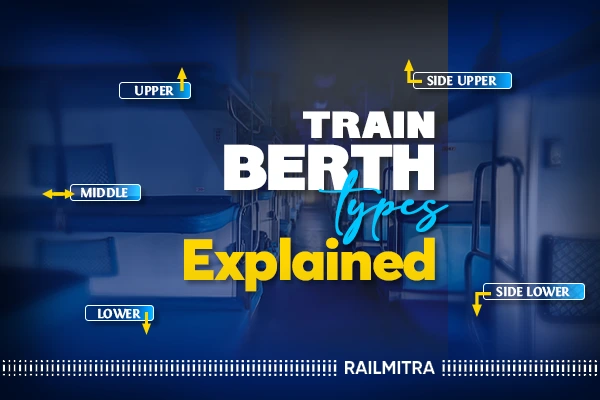
Eight berths per bay in a 3-tier coach. Lower, middle, upper stacked three-high on each side of the compartment. Then side lower and side upper against the corridor wall, outside the main bay entirely. Some older Sleeper Class coaches wedge in a folding side middle berth on that wall too, but that is less common now.
Six in the bay. Two on the side. Same pattern, coach after coach.
The layout changes by class. Pull up the train schedule before assuming: Sleeper, 3AC, 2AC, and 1AC each have different configurations.
Lower Berth in Train
Lower berth in train fills first. That’s just how bookings go.
No ladder involved, luggage fits underneath, and getting up for water or the bathroom at 3 AM doesn’t require waking anyone. For passengers with heavy bags, joint pain, or just a preference for not climbing, lower berth is the obvious pick. Indian Railways also routes lower berths automatically to senior citizens aged 60 and above, pregnant women, and passengers with disabilities, without needing a separate request.
What most people only clock on the first long journey: a lower berth through the day is not really your berth. It’s everyone’s seat. Co-passengers from the middle and upper berths come down and sit on it freely until around 10 PM. Personal space during the afternoon is thin. The window, though, is yours. On routes where the landscape is worth watching, that matters.
Bright light from the corridor, foot traffic all day, strangers brushing past on the way to the door. Worth knowing before picking it.
Middle Berth in Train
Nobody deliberately picks the middle berth in train deliberately. Lower berths ran out, upper felt too high, middle was what remained.
The day is the hard part. Middle berth folds up during daylight hours and the seat below technically belongs to the lower berth passenger. Whether they’re willing to share depends on the person, not any rule. Long daytime stretches with nothing to sit on and nowhere comfortable to be until evening is a situation that catches people off guard the first time.
After 10 PM it improves. Away from the direct draft of the corridor, less noise than the lower berth, and the climb is short. Adults manage it without much fuss.
Headroom catches people out though. Middle berth passengers actually have less space to sit up than upper berth passengers do. The upper berth is closer to the roof but wider in practice. Tall passengers on middle berths end up slouching in a way there’s no fix for.
Upper Berth in Train
Upper berth in train usually ends up with whoever drew the short straw, or whoever is young enough not to mind the climb.
Metal rungs, a narrow foothold, tight space near the ceiling when sitting upright. Those are real. What only becomes clear once you’ve actually used an upper berth: nobody else comes up. The middle and lower passengers don’t visit. No co-passenger perches on the edge asking to sit for a while. From the moment of boarding, the upper berth stays undisturbed. Lying down at 2 in the afternoon without anyone caring is something lower berth passengers never experience.
Cold nights in winter, the upper berth runs warmer. AC coach vents are positioned near the top of the coach, which some passengers love and others find too cold. Either way it’s worth knowing ahead of time.
Side Lower Berth in Train
The side lower berth in train is its own category, separate from the main bay berths in feel and function.
Daytime: it’s an open seat facing the corridor, and everyone uses it. Passengers walking through, people from neighbouring bays, co-passengers stretching their legs. In Sleeper Class, there’s no curtain or partition around side berths. Whoever sits across from you changes throughout the journey.
What most people don’t realise until they’re actually sitting there: the corridor windows run directly alongside the side berths. Daylight all day. On a route with good scenery, the side lower berth gets more of it than any other seat on the train. Access to the coach doors is easy too, which is useful on trains stopping every hour.
Bags go under the berth, same as any lower berth. Older coaches run the side berth slightly shorter than the standard length, which taller passengers feel by the second morning.
Use Trains Between Two Stations to check which trains on your route run with Sleeper or AC coaches, especially if side lower berth is a priority.
Side Upper Berth in Train
Last to fill. The side upper berth in train does not get booked by choice.
Length is the core complaint. In many coaches, particularly older stock, the side upper runs shorter than every other berth on the train. Taller passengers spend the night with their legs bent. The wall rung used to climb up is less stable than the ladder rungs in the main bay. At lights-out, the footrest area for the side upper overlaps with the side lower passenger’s head end, which needs sorting out before anyone sleeps.
Throughout the day, nobody comes up. No seating dispute, no sharing, no one parked on the berth while you’re trying to rest. Overnight trains where the only agenda is sleeping and waking up at the destination, the side upper gets the job done without much ceremony.
After booking, check PNR Status to see the actual berth number assigned. The side upper berths tend to be booked at the last when all the other seats have already been taken.
Side Middle Berth in Train
The side middle berth in train is a berth that is slowly being phased out of the train. However, it can still be found in some of the older Sleeper coaches. As the name suggests this is like a normal middle berth but on the side berth.
As you might have thought so, these side middle berth in train are very uncomfortable.The height of these coaches makes it extremely difficult to get in and sitting is out of the charts. Even the length of the train is such that most people won’t fit in these berths. This uncomfortable nature of this seat is the reason that it is slowly being phased out.
Anyone assigned a side middle berth on a journey longer than a few hours should head to the reservation counter before departure and ask about changes. RAC upgrade possibilities are also worth checking if the train has any.
Berth Preference in Train: How to Choose
Berth preference in train is selectable during booking. The options are Lower, Middle, Upper, Side Lower, Side Upper, and No Preference.
The preference field is a request, not a reservation. What actually gets assigned depends on what’s available at the time the ticket gets processed. Busy routes, festival periods, weekend departures: preferences get overridden frequently, lower berth especially.
Some passengers get lower berths without asking. Senior citizens aged 60 and above, women travelling with children under 12, passengers with disabilities: the system allocates lower berths to them first when confirmed berths are available. No counter visit, no extra step.
For everyone else, the earlier the booking the better the odds. Tickets confirmed a few days before departure on a popular route almost always come with upper or side upper berths.
Food on Your Berth: What You Can Order
At least one meal lands on the berth during a long-distance train journey. Sometimes the whole day does. Pantry cars run irregularly on many trains, and platform food at odd-hour stops is a gamble.
Train food delivery through RailMitra works by letting passengers order from restaurants at upcoming stations, delivered directly to the coach and seat number. It covers all berth types since the delivery comes to the coach door. A wide spread of stations and restaurants means overnight routes with no reliable pantry option aren’t without alternatives.
Pre-ordering breakfast before a 5 AM arrival station is the kind of thing that seems unnecessary until the train pulls in and the platform has nothing open.
Conclusion
Eight hours in the wrong train berth is long. The lower berth is easy and social and shared. The upper berth is private and slightly cramped and genuinely better than most people expect. The side lower gets the best light on the train. The side upper just gets you there. None of them are inherently bad picks once the journey demands are clear. The train berth preference field during booking is two seconds to fill in. Most passengers skip it. Most passengers also spend the first hour of the journey regretting something.
FAQs for Train Berth Types
Q: How many types of berths are available in Indian trains?
A: Six: Lower, Middle, Upper, Side Lower, Side Upper, and Side Middle. Side Middle berths only appear in some older Sleeper Class coaches. They are not part of the standard layout on newer trains.
Q: Can I choose my preferred berth while booking a train ticket?
A: The berth preference option shows up during ticket booking. Passengers can pick from Lower, Middle, Upper, Side Lower, Side Upper, or No Preference. It tells the system what to try for. Whether it works out depends on availability when the ticket is actually processed.
Q: Is berth guaranteed after ticket confirmation?
A: A confirmed ticket means a berth is guaranteed. The specific type isn’t. If the preferred berth was already taken during allocation, a different type gets assigned. The berth number on the ticket is final, and checking PNR Status shows the full details including coach and seat.
Q: Are lower berths reserved for senior citizens?
A: Lower berth allocation is automatic for passengers aged 60 and above, pregnant women, and passengers with disabilities across Sleeper and AC classes. The booking system handles it without any manual request. It applies when confirmed lower berths are available at the time of processing.
Q: Do all trains provide the same berth layout?
A: No. Sleeper Class has the six-plus-two layout and sometimes includes a side middle berth in older coaches. 3AC uses the same structure without side middle berths. 2AC has four berths per bay with side berths. 1AC runs a two-berth cabin. Vande Bharat and similar premium trains run chair car coaches only, no berths.